

Home
Class 11
PHYSICS
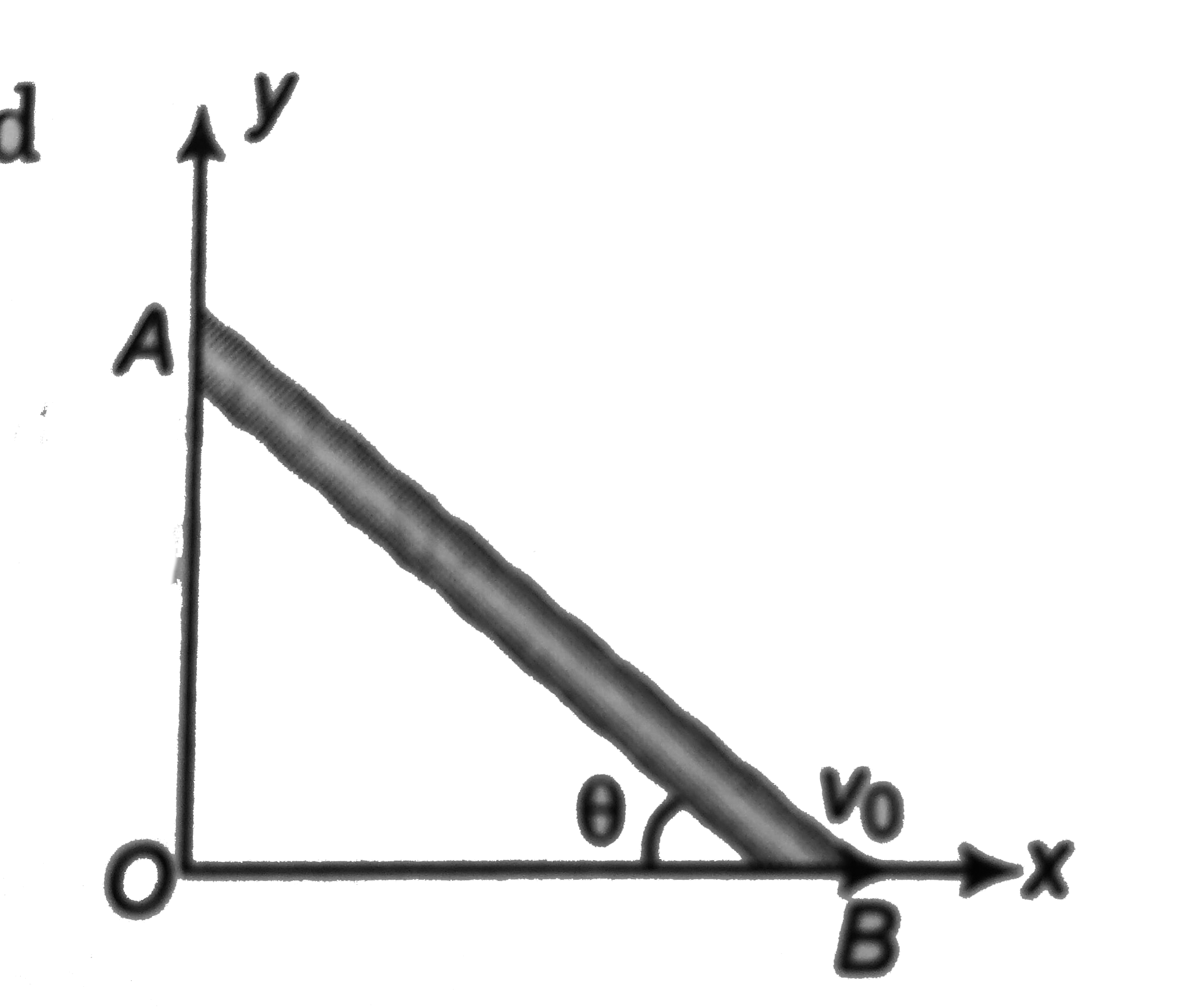
The end B of the rod AB which makes angl...


The end B of the rod AB which makes angle `theta` with the floor is being pulled with a constant velocity `v_(v)` as shown. The length of the rod is `l`.

Promotional Banner

Similar Questions

Explore conceptually related problems

The end B of the rod AB which makes angle theta with the floor is being pulled with a constant velocity v_(0) as shown. The length of the rod is l. At the instant when theta=37^(@) (A)velocity of end A is (4)/(3)v_(0) downwards (B)angular velocity of rod is (5)/(3)(v_(0))/(l) (C)angular velocity of rod is constant (D)velocity of end A is constant

End A of a rod AB is being pulled on the floor with a constant velocity v_(0) as shown. Taking the length of the rod as l , at an instant when the rod makes an angle 37^@ with the horizontal, calculate the velocity of the CM of the rod

A conducting rod AB of lemgth 2 l moves through a uniform magnetic field B. The rod makes an angle theta with the vertical while it falls with a uniform linear velocity v. The potential difference between the two ends of the rod is Bv^(2)l .

A conducting rod AB of lemgth 2 l moves through a uniform magnetic field B. The rod makes an angle theta with the vertical while it falls with a uniform linear velocity v. The potential difference between the two ends of the rod is Bv^(2)l .

A rod of length 'l' is inclined at an angle 'theta' with the floor against a smooth vertical wall. If the end A moves instantaneously with velocity v_(1) what is the velocity of end B at the instant when rod makes 'theta' angle with the horizontal .

Figure shows a rod of length £ resting on a wall and the floor. Its lower end A is pulled towards left with a constant velocity v. Find the velocity of the other end B downward when the rod makes an angle Q with the horizontal