

Home
Class 11
PHYSICS
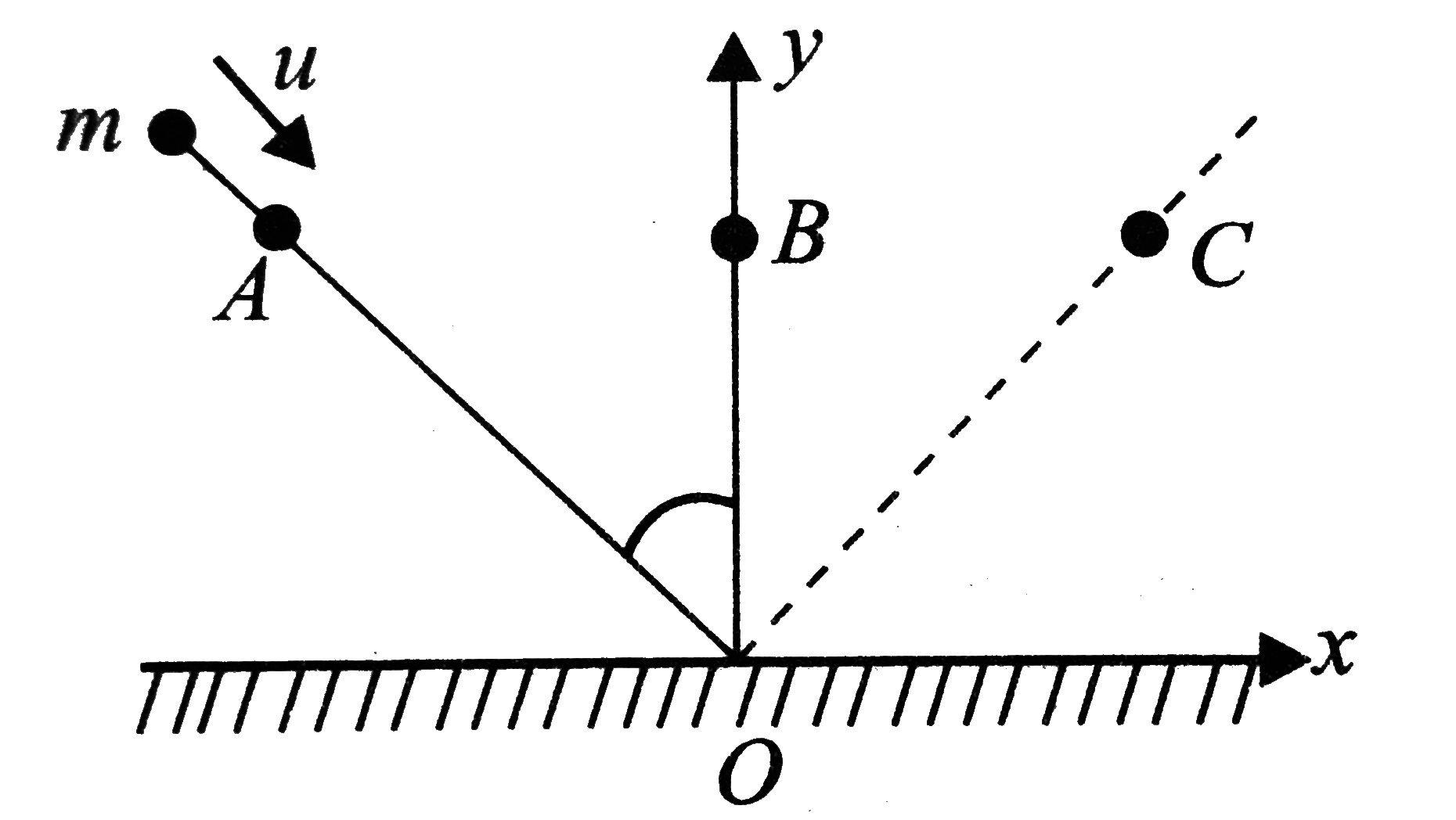
A ball of mass moving with constant velo...

A ball of mass moving with constant velocity `u` collides with a smooth horizontal surface at `O` as shown in Fig. Neglect gravity and friction. The `y`-axis is drawn normal to the horizontal surface at the point of impact `O` and `x`-axis is horizontal as shown. About which point will the angular momentum of ball be conserved?

Promotional Banner

Similar Questions

Explore conceptually related problems

A ball of mass m moving with speed u collides with a smooth horizontal surface at angle theta with it as shown in figure. The magnitude of impulse imparted to surface by ball is [Coefficient of restitution of collision is e]

A ball of mass m moving with speed u collides with a smooth horizontal surface at angle theta with it as shown in figure. The magnitude of impulse imparted to surface by ball is [Coefficient of restitution of collision is e]

A block of mass m moving with velocity v_(0) on a smooth horizontal surface hits the spring of constant k as shown. Two maximum compression in spring is

A block of mass m moving with velocity v_(0) on a smooth horizontal surface hits the spring of constant k as shown. The maximum compression in spring is

A ball of mass m moving with velocity v , collide with the wall elastically as shown in the figure. After impact the change in angular momentum about P is : .

A ball of mass m moving with velocity v , collide with the wall elastically as shown in the figure. After impact the change in angular momentum about P is : .

A ball is moving with speed 20 ms^(-2) collides with a smooth surface as shown in figure. The magnitude of change in velocity of the ball will be

A ball is moving with speed 20 ms^(-2) collides with a smooth surface as shown in figure. The magnitude of change in velocity of the ball will be

A ball is moving with speed 20 ms^(-2) collides with a smooth surface as shown in figure. The magnitude of change in velocity of the ball will be

A particle of mass m is moving with constant velocity v parallel to the x-axis as shown in the figure. Its angular momentum about origin O is