

Home
Class 12
PHYSICS
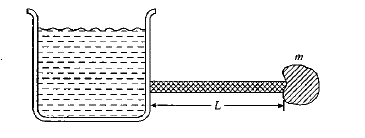
Figure-4.13 shows a water tank at a cons...

Figure-4.13 shows a water tank at a constant temperature. `T_(0)` and a small bodyof mass m, and specific heat S at a temperature `T_(1)` . Given that `T_(1) lt T_(0)`. A metal rod of length L, cross-sectional area A whose thermal conductivity is K is placed between the tank and the body to connect than. Find the temperature of body as a function of time. Given that the heat capacity of rod is negligible.

Promotional Banner

Similar Questions

Explore conceptually related problems

Figure shows a large tank of water at a constant temperature theta_(0) . and a small vessel containinng a mass m of water at an initial temperature theta(lttheta_(0). A metal rod of length L, area of cross section A and thermal conductivity K connect the two vessels. Find the time taken for the temperature of the water in the smaller vessel to become theta_(2)(theta_(1)lttheta_(2)lttheta_(0)) . Specific heat capacity of water is s and all other heat capacities are negligible.

When two bodies ofmasses m_(1) and m_(2) with specific heats s_(1) and s_(2) at absolute temperatures T_(10) and T_(20)(T_(10) gt T_(20)) are connected by a rod of length l and cross sectional area A with thermal conductivity k. Find the temperature difference of the bodies after time t. Neglect any heat loss due to radiation at any surface..

Figure shown two adiabatic vessels, each containing a mass m of water at different temperature. The ends of a metal rod of length L, area of cross section. A and thermal conductivity K, are inserted in the water as shown in the figure. Find the time taken for the difference between the temperature in the vessels to become half of the original value. The specific heat capacity of water is s. Neglect the heat capacity of the rod and the container and any loss of heat top the atmosphere.

One end of thermally insulated rod is kept at a temperature T_(1) and the other at T_(2) . The rod is composed of two section of length l_(1) and l_(2) thermal conductivities k_(1) and k_(2) respectively. The temerature at the interface of two section is

One end of a thermally insulated rod is kept at a temperature T_1 and the other at T_2 . The rod is composed of two sections of length l_1 and l_2 and thermal conductivities K_1 and K_2 respectively. The temperature at the interface of the two section is

Two adiabatic vessels, each containing the same mass m of water but at different temperatures, are connected by a rod of length L, cross-section A, and thermal conductivity K. the ends of the rod are inserted into the vessels, while the rest of the rod is insulated so that .there is negligible loss of heat into the atmosphere. The specific heat capacity of water is s, while that of the rod is negligible. The temperature difference between the two vessels reduces to l//e of its original value after a time, delta t . The thermal conductivity (K) of the rod may be expressed by:

One end of a rod, enclosed in a thermally insulating sheath, is kept at a temperature T_1 while the other, at T_2 . The rod is composed of two sections whose lengths are l_1 and 1_2 and heat conductivity coefficients x_1 and x_2 . Find the temperature of the interface.

A liquid of mass m and specific heat c is heated to a temperature 2T. Another liquid of mass m/2 and specific heat 2 c is heated to a temperature T. If these two liquids are mixed, the resulting temperature of the mixture is