


Similar Questions
Explore conceptually related problems
Recommended Questions
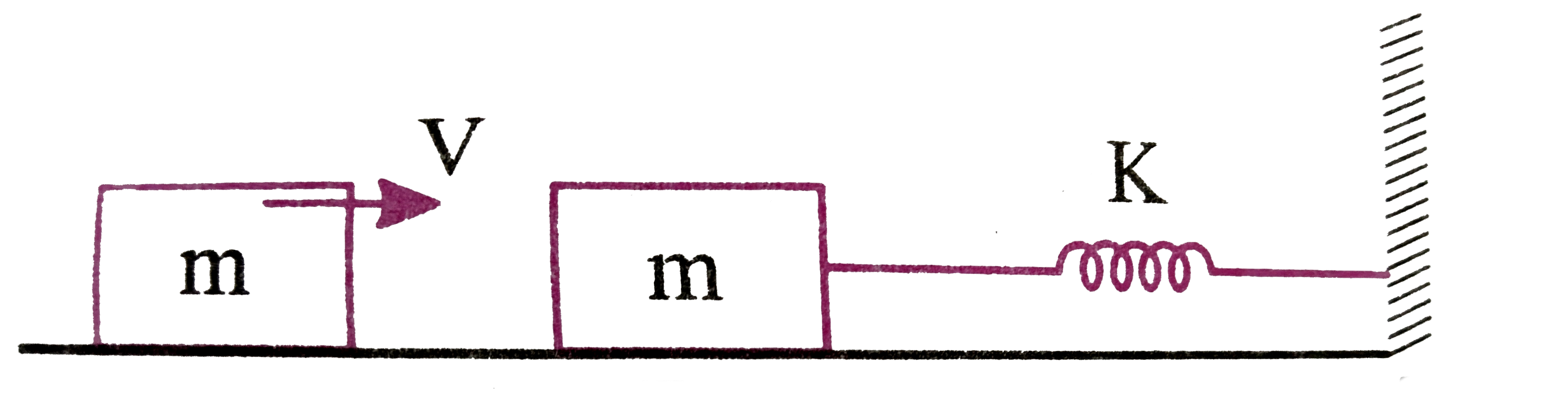
- A block of mass 'm' collides perfectly inelastically with another iden...
Text Solution
|
- A block of mass m is connect to another block of mass M by a massless ...
Text Solution
|
- A block of mass m is connected to another block of mass M by a spring ...
Text Solution
|
- A block of mass m is connected to another block of mass M by a massles...
Text Solution
|
- A block of mass 'm' collides perfectly inelastically with another iden...
Text Solution
|
- A block of mass m is connected to another .block of mass M by a massle...
Text Solution
|
- A block of mass 'm' is connected to another block of mass 'M' by a spr...
Text Solution
|
- m द्रव्यमान का एक ब्लॉक, M द्रव्यमान के दूसरे ब्लॉक से एक द्रव्यमान रह...
Text Solution
|
- A block of mass 'm' is connected to another block of mass 'M' by a spr...
Text Solution
|