


Similar Questions
Explore conceptually related problems
Recommended Questions
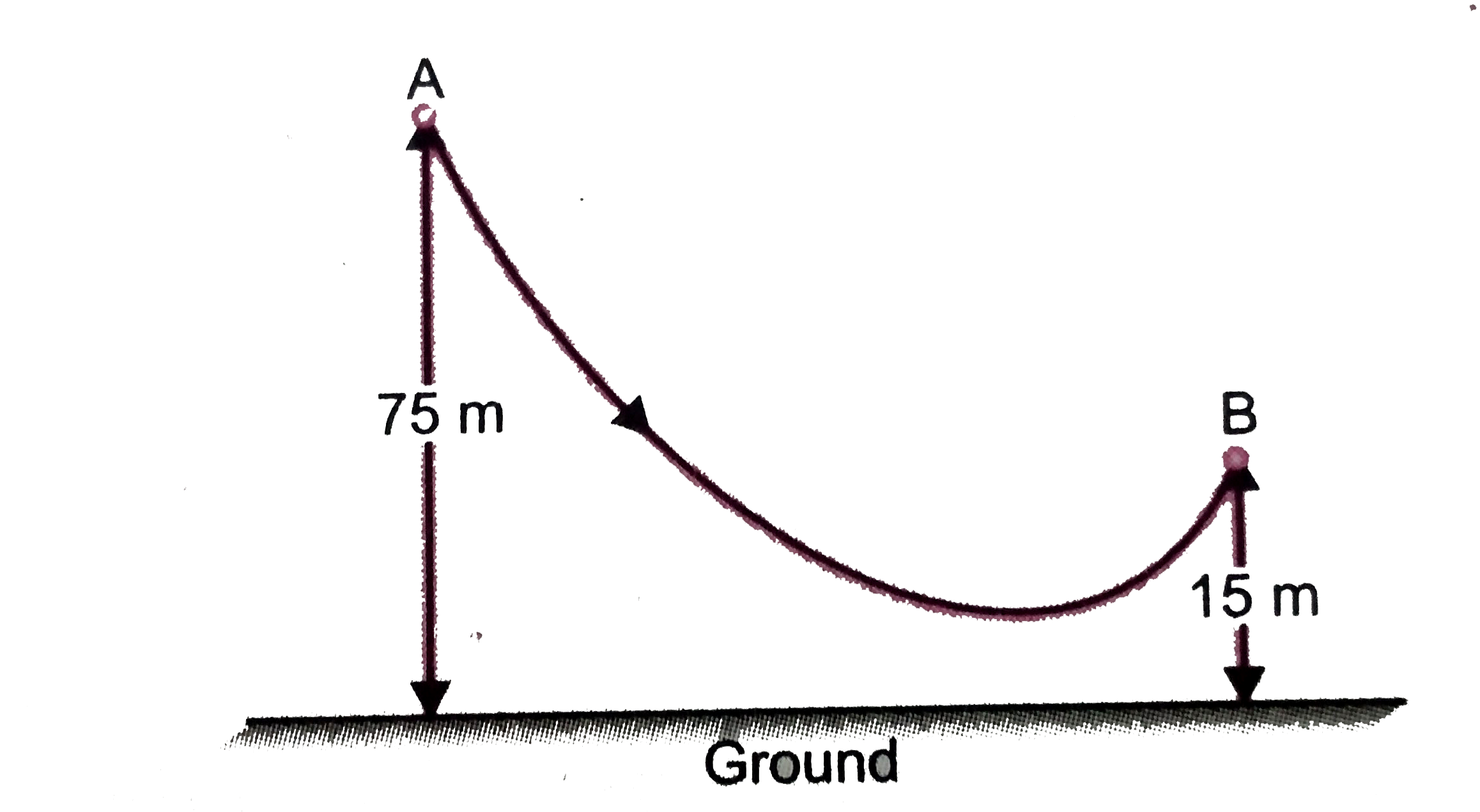
- shows a ski -jump. A skier of mass 60 kg stands at A at the top of the...
Text Solution
|
- Two persons, A of mass 60 kg and B of mass 40 kg , are standing on a h...
Text Solution
|
- Two persons, A of mass 60 kg and B of mass 40 kg , are standing on a h...
Text Solution
|
- The mass of a ball A is double the mass of another ball B. The ball a...
Text Solution
|
- shows a ski -jump. A skier of mass 60 kg stands at A at the top of the...
Text Solution
|
- While sking on snow, a skier wear skis in addition to the shoes. Why ...
Text Solution
|
- An electron in an atom jumps in such a way that its kinetic energy cha...
Text Solution
|
- If an electron jumps from orbit A to orbit B it loses energy while it ...
Text Solution
|
- An electron in an atom jumps in such a way that its kinetic energy cha...
Text Solution
|