

Home
Class 11
PHYSICS
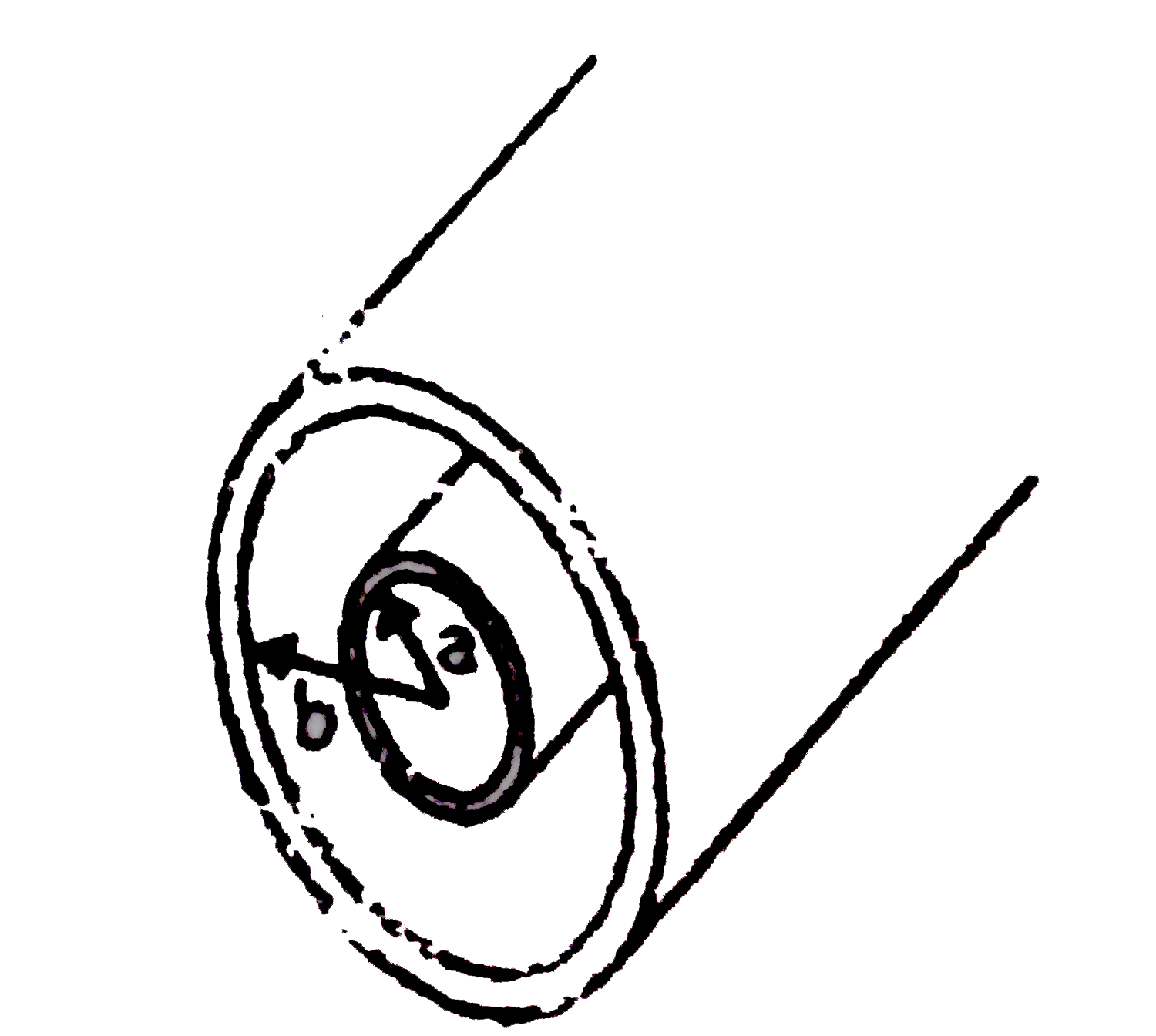
Figure shown a section through two long ...

Figure shown a section through two long thin concentric cylinders of radii a & b with `a gt b`. The cylinders have equal and opposite per unit length `lambda`. Find the electric field at a distance r from the axis for (i) `r lt a` (ii) `a lt r lt b` (iii) `r gt b`

Promotional Banner

Similar Questions

Explore conceptually related problems

A cylinder space of radius R is filled with a unifrom magnetic induction a parallel to the axis of the space . If B change at the rate .Find the electric field at a distance (i) rlt R (ii) rgt R

Consider a system of two long coaxial cylinders: solid (of radius a carrying i current in positive z direction) and hollow (or radius b carrying current i in negative z direction). Find the magnetic field at a point distant r from of the cylinders for (i) r le a (ii) a lt r lt b (iii) r gt b

Consider a system of two long coaxial cylinders: solid (of radius a carrying i current in positive z direction) and hollow (or radius b carrying current i in negative z direction). Find the magnetic field at a point distant r from of the cylinders for (i) r le a (ii) a lt r lt b (iii) r gt b

The electric field at a distance r from a long wire having charge per unit length lambda is

A coaxial cable carries the a current i in the inside conductor of radius a as shown in figure-4.80 and the outer conductor of inner radius b and outer radius c carries a current i' in opposite direction. Find the magnetic induction due to the coaxial cable at distance r from the central axis of the cable for (a) r gt a , (b) a lt r lt b and (c) b gt r gt c

A currents I flows along a long, thin-walled tube of radius R with a long longitudinal slit of width h. Find the induction of the magnetic field at a distance r lt R from the axis of the tube under the condition h lt lt R .

Suppose that the current density in a wire of radius a varius with r according to Kr^2 where K is a constant and r is the distance from the axis of the wire. Find the magnetic field at a point at distance r form the axis when (a) r lt a and (b) r gt a.