

Home
Class 11
PHYSICS
In the figure shown, the two identical b...

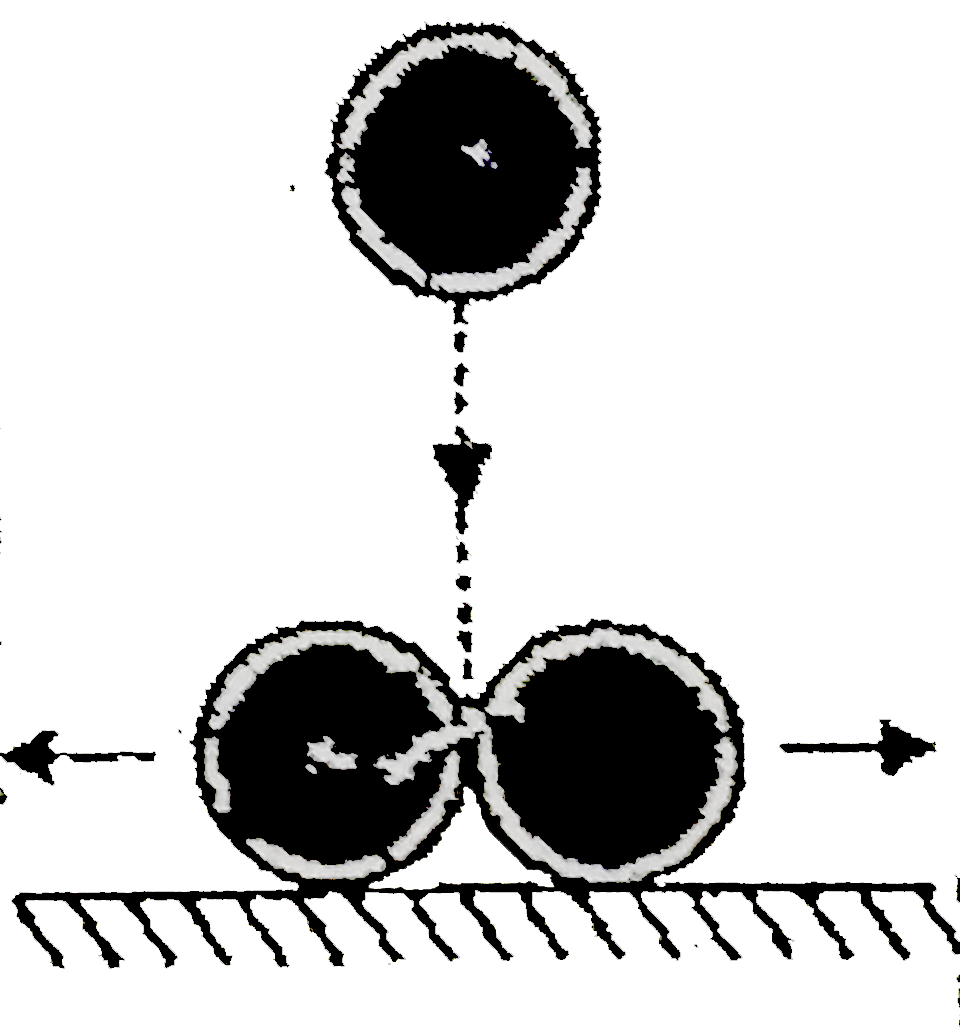
In the figure shown, the two identical balls of mass M and radius R each, are placed in contact with each other on the frictionless horizontal surface. The third ball of mass M and radius `(R )/(2')` is coming down vertically and has a velocity `=upsilon_(0)` when it simultaneously hits the two balls and itself comes to rest. Then, each of the two bigger balls will move after collision with a speed equal to :

Promotional Banner

Similar Questions

Explore conceptually related problems

In the figure shown, the two identical balls of mass M and radius R each, are placed in contact with each other on the frictionless horizontal surface. The third ball of mass M and radius R//2 , is coming down vertically and has a velocity = v_(0) when it simultaneously hits the two balls and itself comes to rest. Then, each of the two bigger balls will move after collision with a speed equal to

In the figure shown, the two identical balls of mass M and radius R each, are placed in contact with each other on the frictionless horizontal surface. The third ball of mass M and radius R/2, is coming down vertically and has a velocity = v_(0) when it simultaneously hits the two balls and itself comes to rest. The each of the two bigger balls will move after collision with a speed equal to

Two balls, each of radius R, equal mass and density are placed in contact, then the force of gravitation between them is proportional to

Two balls, each of radius R, equal mass and density are placed in contact, then the force of gravitation between them is proportional to

Two balls, each of radius R, equal mass and density are placed in contact, then the force of gravitation between them is proportional to

Two balls of radius r each are placed at a distance R and released . The speed of each ball when they collide

Two balls of radius r each are placed at a distance R and released . The speed of each ball when they collide

Radius of an iron is 2 cm. The ball is kept at rest on a frictionless horizontal surface. Another ball of radius 4 cm ,moving with velocity 81 cm*s^(-1) , collides with it. Find the velocities of both the balls after collision.