


Similar Questions
Explore conceptually related problems
Recommended Questions
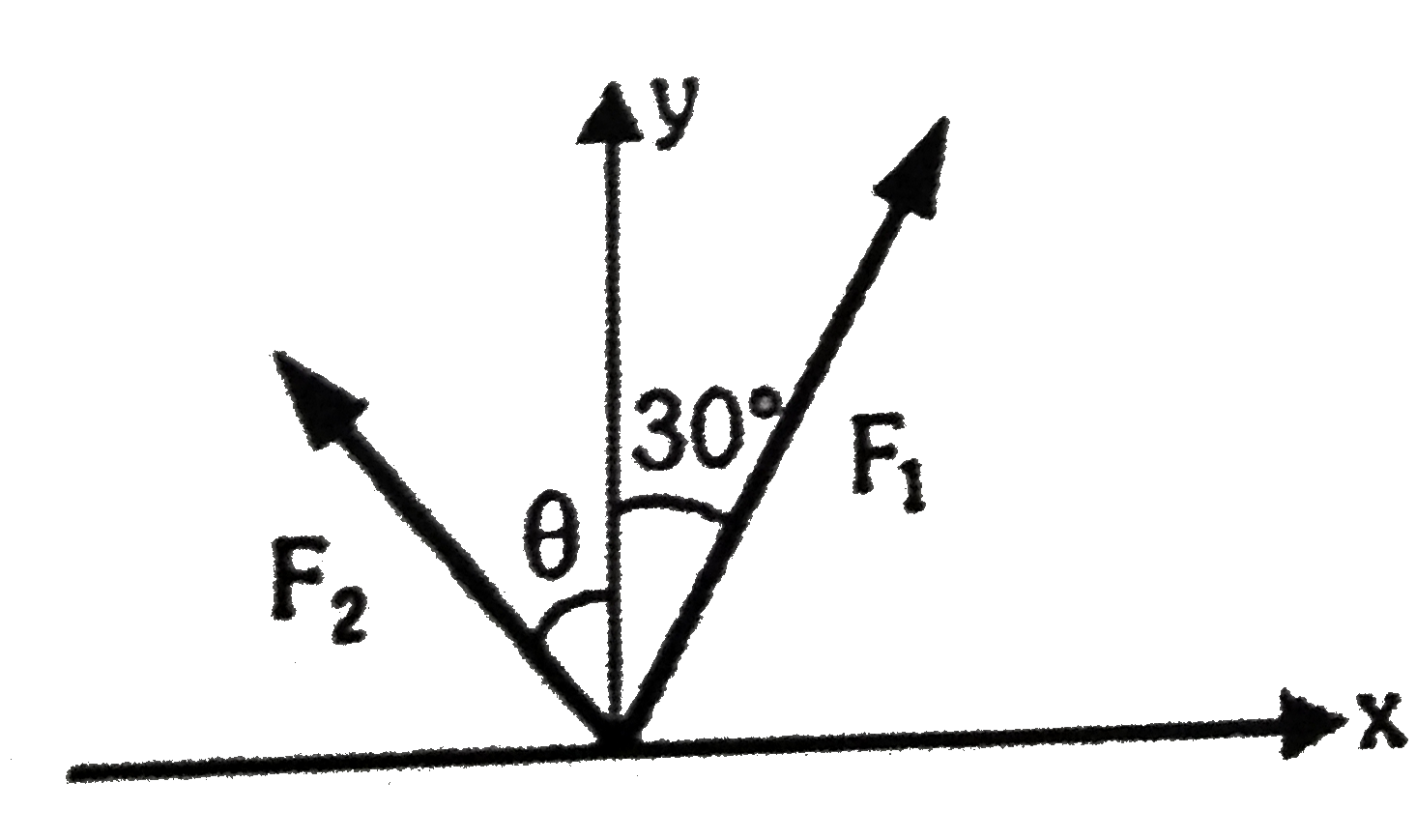
- In the figure, F(1) " and " F(2), the two unkown forces give a resulta...
Text Solution
|
- An object is in equilibrium under four concurrent forces in the direct...
Text Solution
|
- Two forces F(1) and F(2) are acting at a point, whose resultant is F ....
Text Solution
|
- Six forces are acting on a particle. Angle between two adjacent force ...
Text Solution
|
- In the figure, F(1) " and " F(2), the two unkown forces give a resulta...
Text Solution
|
- Given F(1)=1, F(2)=3 and F(n)=F(n-1)+F(n-2) then F(5) is
Text Solution
|
- The resultant of two forces F(1) and F(2) is P. If F(2) is reversed , ...
Text Solution
|
- Given F(1)=1, F(2)=3 and F(n)=F(n-1)+F(n-2) then F(3) is .
Text Solution
|
- Two forces of mangitude F(1) and F(2) are acting on an object.The magn...
Text Solution
|