

Home
Class 12
PHYSICS
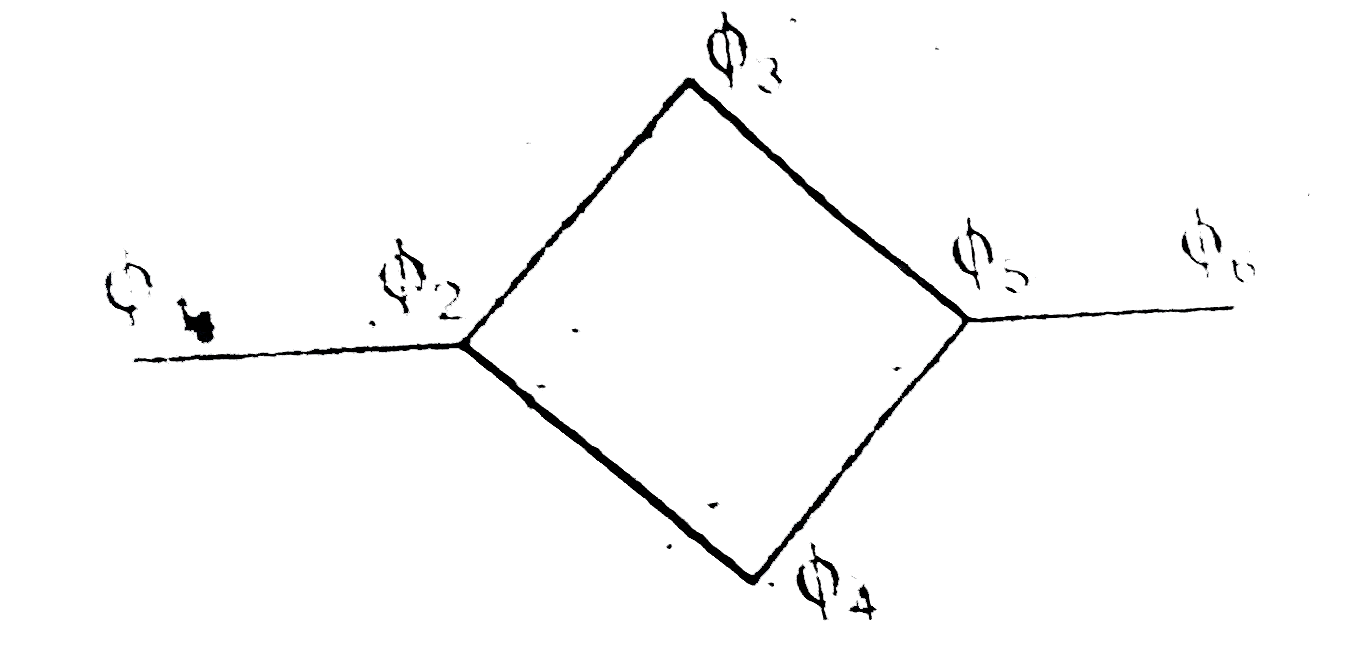
Six identical conducting rods are connec...

Six identical conducting rods are connected as shown in figure. In steady state temperature of point `phi_(1)` is fixed at `100^(@)C` and temperature of `phi_(6)` at `-80^(@)C`

Q. What is the temperature of `phi_(3)`?

Promotional Banner

Similar Questions

Explore conceptually related problems

Six identical conducting rods are connected as shown in figure. In steady state temperature of point phi_(1) is fixed at 100^(@)C and temperature of phi_(6) at -80^(@)C Q. What is the temperature of phi_(5) ?

Six identical conducting rods are connected as shown in figure. In steady state temperature of point phi_(1) is fixed at 100^(@)C and temperature of phi_(6) at -80^(@)C Q. What is the temperature of phi_(2) ?

Six identical conducting rods are connected as shown in figure. In steady state temperature of point phi_(1) is fixed at 100^(@)C and temperature of phi_(6) at -80^(@)C Q. What is the temperature of phi_(2) ?

Six identical conducting rods are connected as shown in figure. In steady state temperature of point phi_(1) is fixed at 100^(@)C and temperature of phi_(6) at -80^(@)C Q. What is the temperature of phi_(5) ?

A rod is heated at one end as shown in figure. In steady state temperature of different sections becomes constant but not same. Why so? .

A rod is heated at one end as shown in figure. In steady state temperature of different sections becomes constant but not same. Why so? .

Six identical cunducting rods are joined as shown in Fig. Points A and D are maintained at temperatures 200^@C and 20^@C respectively. The temperature of junction B will be

Six identical cunducting rods are joined as shown in Fig. Points A and D are maintained at temperatures 200^@C and 20^@C respectively. The temperature of junction B will be

Six identical cunducting rods are joined as shown in Fig. Points A and D are maintained at temperatures 200^@C and 20^@C respectively. The temperature of junction B will be

Six identical cunducting rods are joined as shown in Fig. Points A and D are maintained at temperatures 200^@C and 20^@C respectively. The temperature of junction B will be