

Home
Class 11
PHYSICS
A disc of radius R and mass M is rolling...

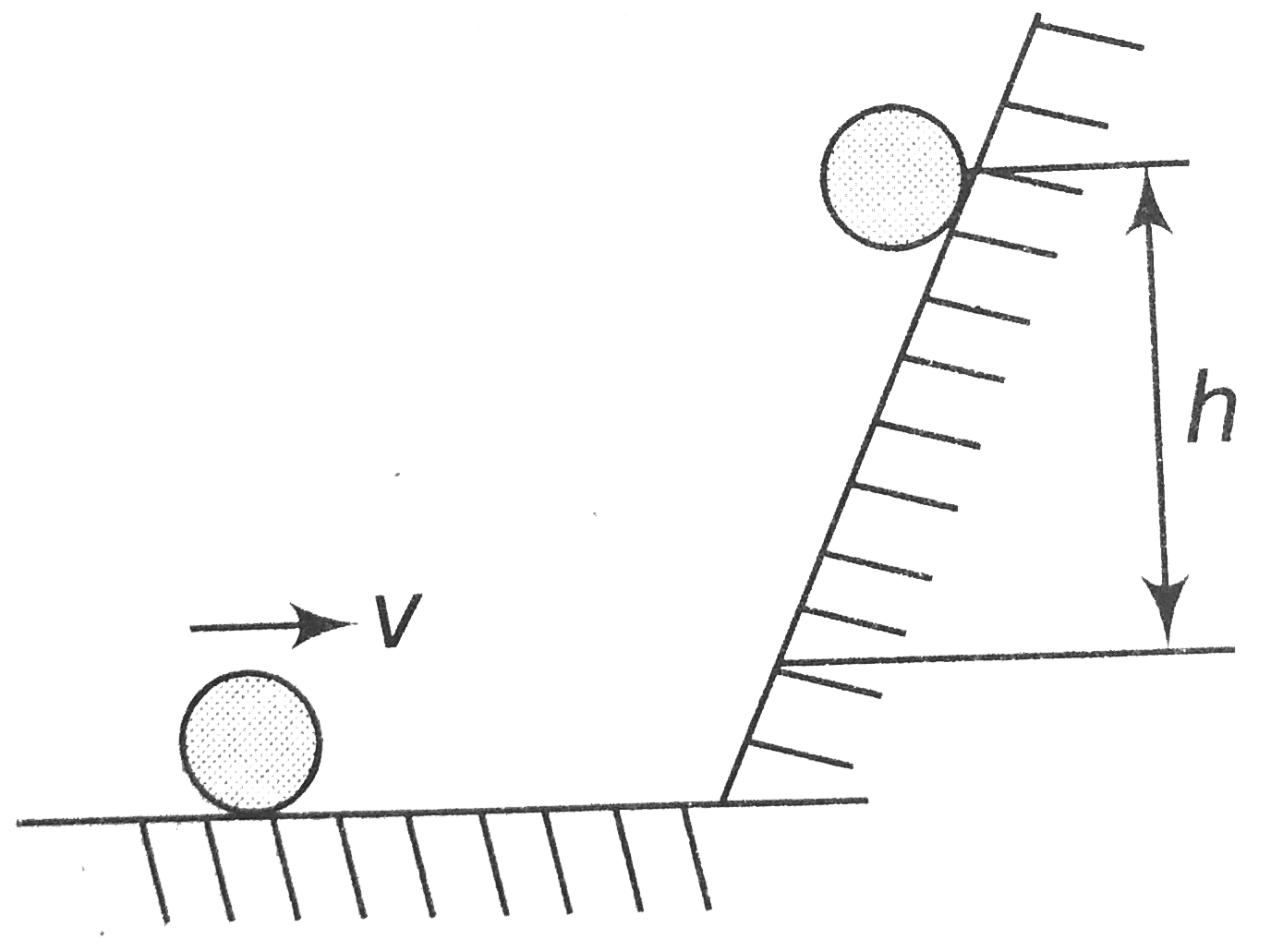
A disc of radius `R` and mass `M` is rolling horizontally without slipping with speed with speed `v`. It then moves up an incline as shown in figure. The maximum height upto which it can reach is.
.

Promotional Banner

Similar Questions

Explore conceptually related problems

A body of radius R and mass m is rolling horizontally without slipping with a unifrom speed v. It then rolls up in an inclined plane to a maximum height of h. If h = (3v^2)/(4g) , determine the MI of the body about its axis of rotation.

An object of radius R and mass M is rolling horizontally without slipping with speed v . It then rolls up the hill to a maximum height h = (3v^(2))/(4g) . The moment of inertia of the object is ( g = acceleration due to gravity)

An object of radius R and mass M is rolling horizontally without slipping with speed v . It then rolls up the hill to a maximum height h = (3v^(2))/(4g) . The moment of inertia of the object is ( g = acceleration due to gravity)

An object of radius 'R' and mass 'M' is rolling horizontally without slipping with speed 'v'. It then rolls up the hill to a maximum height h = (3v^2)/(4g) The moment of inertia of the object is (g = acceleration due to gravity)

A ring, disc, spherical shell and solid sphere of same mass and radius are rolling on a horizontal surface without slipping with same velocity. If they move up an inclined plane, which can reach to a maximum height on the inclined plane?

A body of mass M and radius R is rolling horizontally without slipping with speed v . It then rolls up a hill to a maximum height h . If h = (5v^(2))/(6g) , what is the M.I of the body ?

A mass m of radius r is rolling horizontally without any slip with a linear speed v . It then rolls up to a height given by (3)/(4)(v^(2))/(g)