

Home
Class 12
PHYSICS
Two 20g worms climb over a 10cm high, ve...

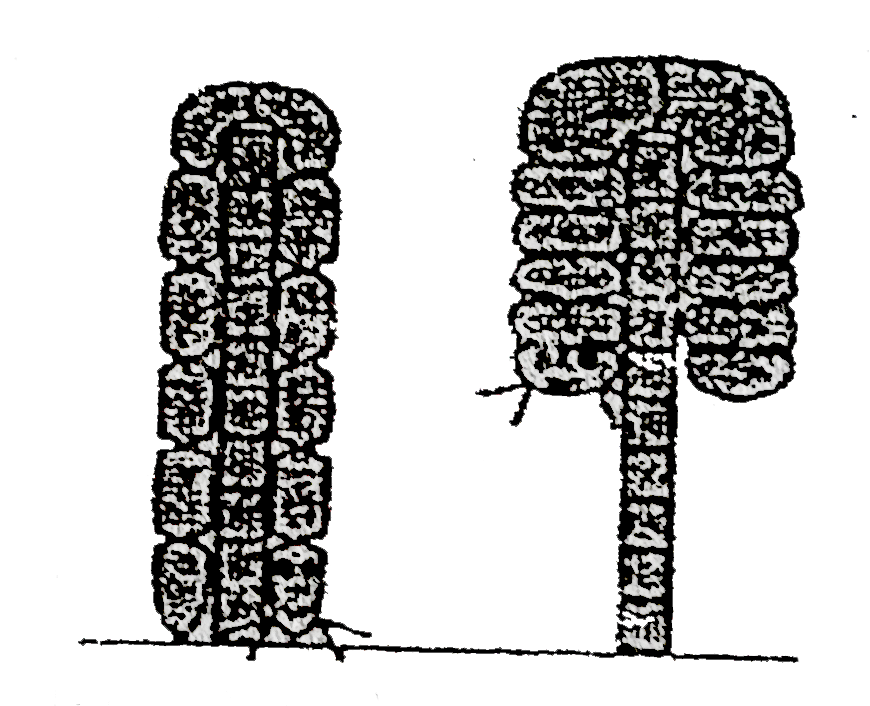
Two `20g` worms climb over a `10cm` high, very then wall. One worm is thin and `20cm` long the other is fat and only `10cm` long. What is the ratio of the potential energy (w.r.t. the base of wall) of the thin worm as comparses to that of the fat worm when each is half way over the top of the wall as shown?

Promotional Banner

Similar Questions

Explore conceptually related problems

Two 20g flatworms climb over a veruy thin walll, 10 cm high.One of the wrom is 20 cm long, the other is wider and only 10 cm long. Which of the following statement is correct reagarding them?

Two 20g flatworms climb over a veruy thin walll, 10 cm high.One of the wrom is 20 cm long, the other is wider and only 10 cm long. Which of the following statement is correct reagarding them?

Two cylinder cans have bases of the same size. The diameter of each is 14cm. One of the canes is 10cm high and the other is 20cm high. Find the ratio of their volumes.

Two cylinder cans have bases of the same size. The diameter of each is 14cm. One of the canes is 10cm high and the other is 20cm high. Find the ratio of their volumes.

Aladder of 5 m long rest with one end against a vertical wall of height 3 m and the other end on the lower ground. If its top slides down at the rate of 10 cm/sec, find the rate at which the foot of the ladder is sliding.

Two straight thin bars, one of brass and the other of steel are joined together side by side by short steel cross-pieces at 0^(@)C , one cm long, the centre lines of the bars being one cm apart. When heated to 100^(@)C , the composite bar becomes bent into the arc of a circle. Calculate the radius of this circle. alpha for brass = 19xx10^(-6)per""^(@)C,andalpha for steel = 11xx10^(-6)per""^(@)C ,