

Home
Class 11
PHYSICS
A small uniform tube is bent into a circ...

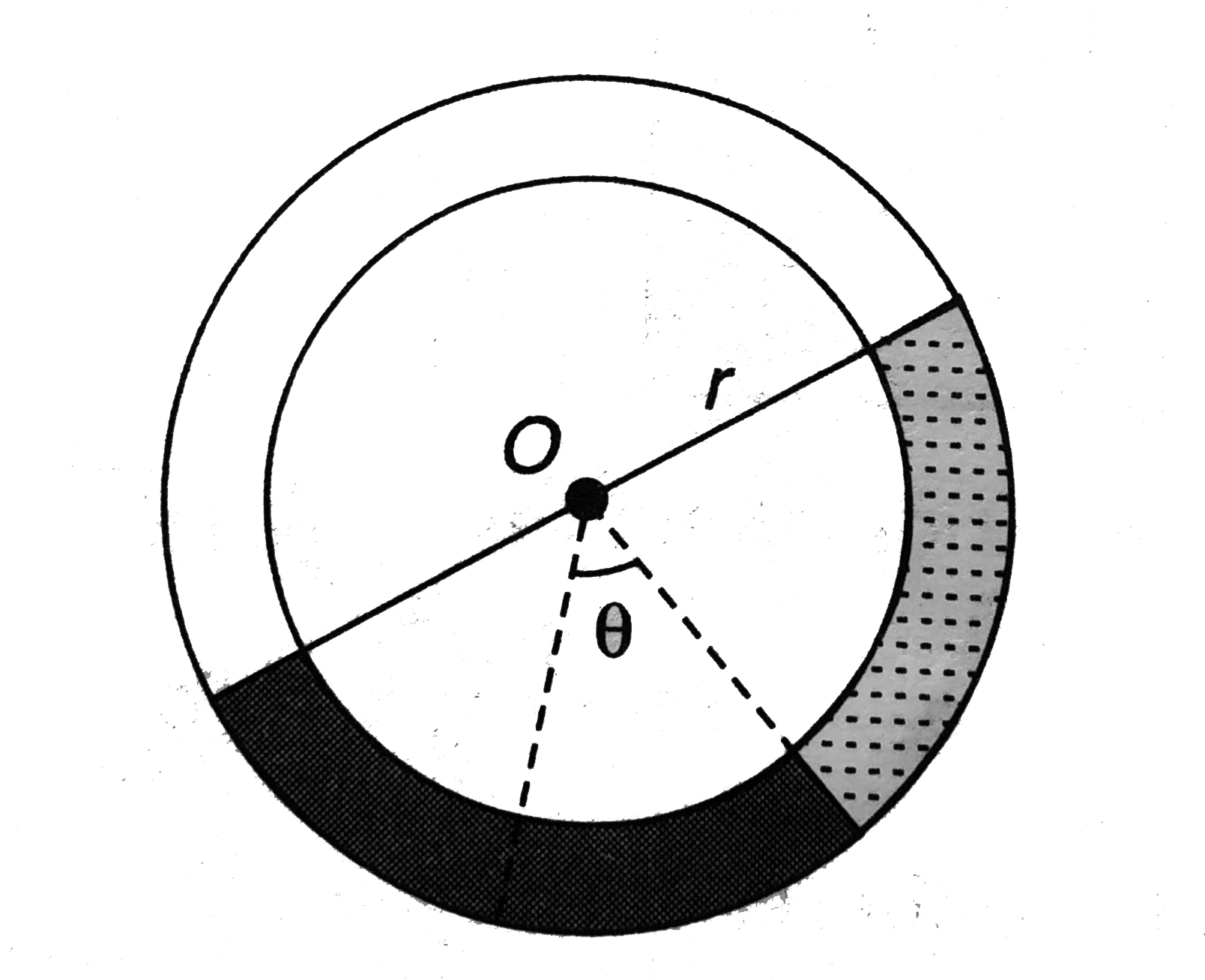
A small uniform tube is bent into a circle of radius r whose plane is vertical. Equal volumes of two fluids whose densities are`rho` and `sigma(rhogtsigma)` fill half the circle. Find the angle that the radius passing through the interface makes with the vertical.

Promotional Banner

Similar Questions

Explore conceptually related problems

A thin uniform tube is bent into a circle of radius r in the vertical plane. Equal volumes of two immiscible liquids, whose densities are rho_(1) and rho_(2) (rho_(1) gt rho_(2)) fill half the circle. The angle theta between the radius vector passing though the common interface and the vertical is :

A thin uniform circular tube is kept in a vertical plane. Equal volume of two immiscible liquids whose densites are rho_(1) and rho_(2) fill half of the tube as shown. In equilibrium the radius passing through the interface makes an angle of 30^(@) with vertical. The ratio of densities (rho_(1)//rho_(2)) is equal to

A thin uniform circular tube is kept in a vertical plane. Equal volume of two immiscible liquids whose densites are rho_(1) and rho_(2) fill half of the tube as shown. In equilibrium the radius passing through the interface makes an angle of 30^(@) with vertical. The ratio of densities (rho_(1)//rho_(2)) is equal to

A uniform long tube is bent into a circle of radius R and it lies in vertical plane. Two liquids of same volume but densities rho " and " delta fill half the tube. The angle theta is

A uniform long tube is bent into a circle of radius R and it lies in vertical plane. Two liquids of same volume but densities rho " and " delta fill half the tube. The angle theta is

A uniform long tube is bent into a circle of radius R and it lies in a vertical plane. Two liquids of same volume but densities rho and delta fill half the tube. The angle theta is

Two non - viscous, incompressible and immiscible liquids of densities (rho) and (1.5 rho) are poured into the two limbs of a circular tube of radius ( R) and small cross section kept fixed in a vertical plane as shown in fig. Each liquid occupies one fourth the cirumference of the tube. Find the angle (theta) that the radius to the interface makes with the verticles in equilibrium position.

There is a circular tube in a vertical plane. Two liquids which do not mix and of densities d_1 and d_2 are filled in the tube. Each liquid subtends 90^@ angle at centre. Radius joining their interface make an angle alpha with vertical. Ratio (d_1)/(d_2) is :