

Home
Class 10
MATHS
Sea ice extent is a measurement of the a...

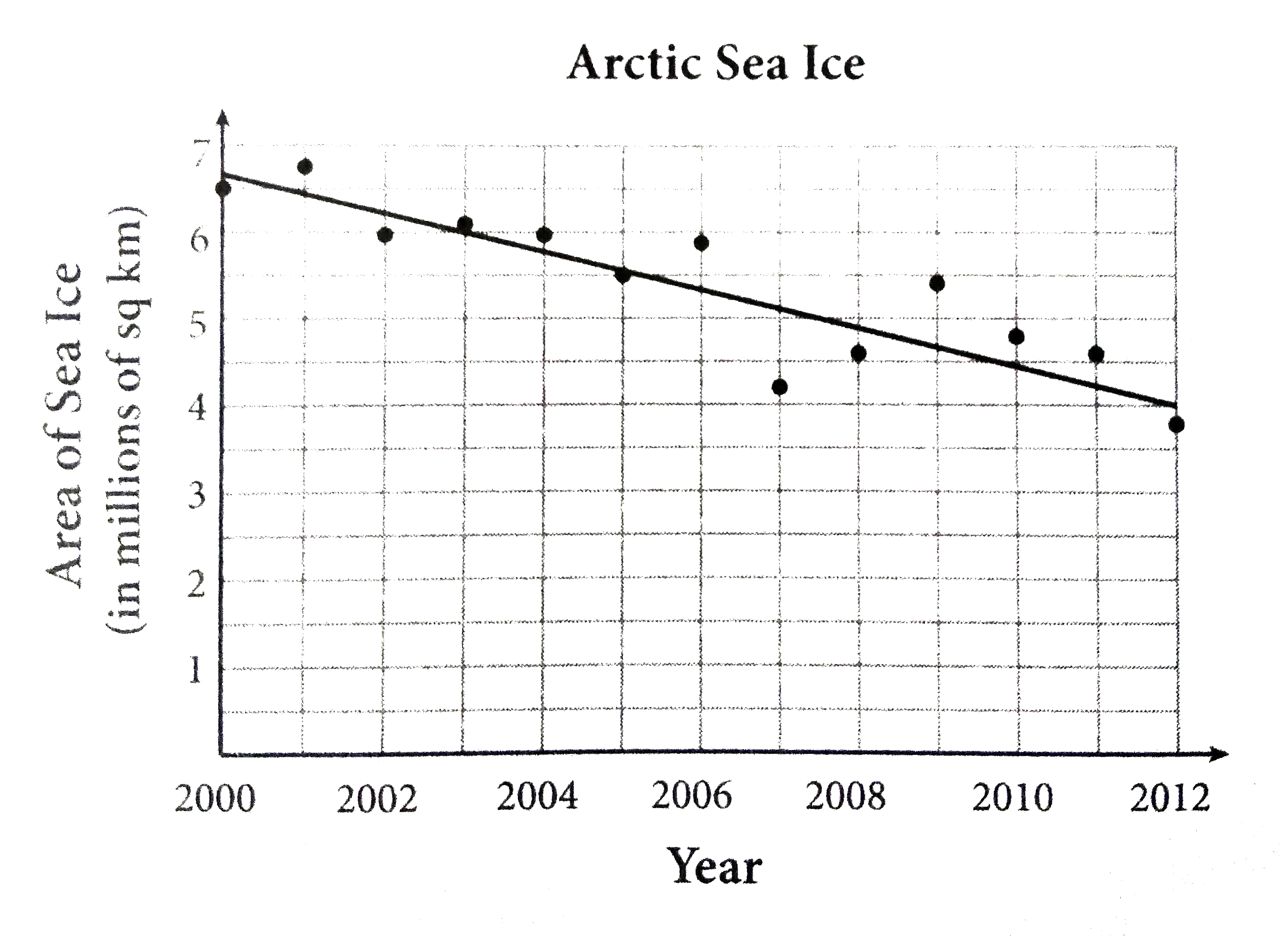
Sea ice extent is a measurement of the area of ocean with at least 15% sea ice. The graph below shows data for the extent of Artic sea ice between 2000 and 2012 as reported by the National Snow and Ice Data Center. The line of best fit is also shown. The equations of the line is `A(t)=-0.187t+380.5`, where A(t) represents the area of measurement sea ice in the Artic Ocean in the year t.

Q. Assuming the trend of the data continues in what year will the measurable sea ice in the Arctic Ocean cease to exist?

Promotional Banner

Similar Questions

Explore conceptually related problems

Sea ice extent is a measurement of the area of ocean with at least 15% sea ice. The graph below shows data for the extent of Artic sea ice between 2000 and 2012 as reported by the National Snow and Ice Data Center. The line of best fit is also shown. The equations of the line is A(t)=-0.187t+380.5 , where A(t) represents the area of measurement sea ice in the Artic Ocean in the year t. Q. Assuming the trand of the data continues, what is the predicted area, in millions of square kilometers, of measurable Arctic sea ice in the year 2020?

Sea ice extent is a measurement of the area of ocean with at least 15% sea ice. The graph below shows data for the extent of Artic sea ice between 2000 and 2012 as reported by the National Snow and Ice Data Center. The line of best fit is also shown. The equations of the line is A(t)=-0.187t+380.5 , where A(t) represents the area of measurement sea ice in the Artic Ocean in the year t. Q. Based on the equation of the line of best fit, which of the following statements accurately of measurable Arctic sea ice during the given times period?

The area where river join the sea/ocean.

If represents 18 ice creams, then how many ice creams represents ?

Snow is more heat insulating than ice, because

Snow is more heat insulating than ice, because

Snow and ice both are solid forms of water

Snow is a better heat-insulator than ice, why?

Explain how marine animals can survive under ice on a frozen sea.