

Home
Class 11
PHYSICS
In the figure shown, the mass of the tro...

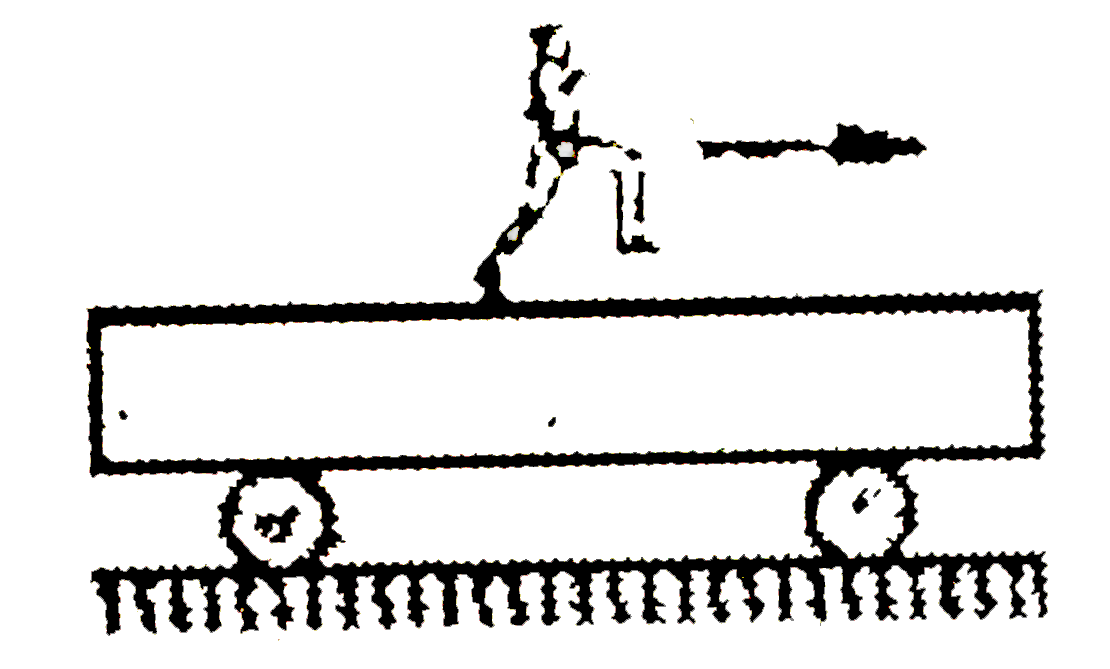
In the figure shown, the mass of the trolley is 100 kg and it can move without friction on the horizontal floor. It length is 12 cm. The mass of the girl is 50 kg. Friction exists between is 12 m. The mass of the girl is 50 kg. Friction exists between the shoes of the girl and the trolley's upper surface, with `mu = 1//3`, The girl can run with a maximum speed `= 9 m//s` on the surface of the trolley, with respect to the surface `= 9 m//s` on the surface of thr trolley, with respect to the surface. At `t=0` the girlm starts running from left to the right. The trolley was initially stationary. `(g = 10 m//s^(2))`

The displacement of the trolley by the time the girl reaches the right end of the trolley is :

Promotional Banner

Similar Questions

Explore conceptually related problems

In the figure shown, the mass of the trolley is 100 kg and it can move without friction on the horizontal floor. It length is 12 cm. The mass of the girl is 50 kg. Friction exists between is 12 m. The mass of the girl is 50 kg. Friction exists between the shoes of the girl and the trolley's upper surface, with mu = 1//3 , The girl can run with a maximum speed = 9 m//s on the surface of the trolley, with respect to the surface = 9 m//s on the surface of thr trolley, with respect to the surface. At t=0 the girlm starts running from left to the right. The trolley was initially stationary. (g = 10 m//s^(2)) The total kinetic energy of system (trolley + girl) at the instant the girl acquires her maximum relative speed with respect to trolley, is :

In the figure shown, the mass of the trolley is 100 kg and it can move without friction on the horizontal floor. It length is 12 cm. The mass of the girl is 50 kg. Friction exists between is 12 m. The mass of the girl is 50 kg. Friction exists between the shoes of the girl and the trolley's upper surface, with mu = 1//3 , The girl can run with a maximum speed = 9 m//s on the surface of the trolley, with respect to the surface = 9 m//s on the surface of thr trolley, with respect to the surface. At t=0 the girlm starts running from left to the right. The trolley was initially stationary. (g = 10 m//s^(2)) The minimum time in which the girl can acquire her maximum speed, for no slipping is :

In the figure shown, the mass of the trolley is 100 kg and it can move without friction on the horizontal floor. It length is 12 cm. The mass of the girl is 50 kg. Friction exists between is 12 m. The mass of the girl is 50 kg. Friction exists between the shoes of the girl and the trolley's upper surface, with mu = 1//3 , The girl can run with a maximum speed = 9 m//s on the surface of the trolley, with respect to the surface = 9 m//s on the surface of thr trolley, with respect to the surface. At t=0 the girlm starts running from left to the right. The trolley was initially stationary. (g = 10 m//s^(2)) The minimum time in which the girl can stop from 9 m/s relative speed, to zero relative speed, without causing her shoes to slip is :

A mass m rests under the action of a force F as shown in the figure-2.158 on a horizontal surface. The coefficient of friction between the mass and the surface is mu . The force of friction between the mass and the surface is :

A boy of mass 50 kg jumps with horizontal velocity of 1 m/s on to a stationary cart. If mass of the cart will be 5 kg[Assume friction between the wheels the cart and road is zero ]

A girl of mass 25 kg running with a speed of 1*5 m/s jumps on a skateboard of mass 2 kg kept on a surface . What will be their combined velocity ?

A girl of mass 25 kg running with a speed of 1*5 m/s jumps on a skateboard of mass 2 kg kept on a surface . What will be their combined velocity ?