

Home
Class 12
PHYSICS
A toy car of mass m is having two simila...

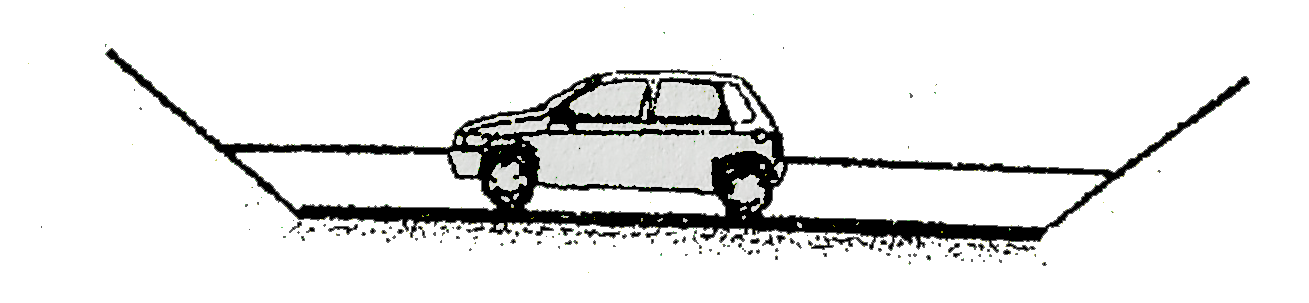
A toy car of mass `m` is having two similar rubber ribbons attached to it as shown in the figure. The force constant of each rubber ribbon is `k` and surface is frictionless. The car is displaced from mean position by `x cm` and released. At the mean position the ribbons are undeformed. Vibration period is

Promotional Banner

Similar Questions

Explore conceptually related problems

A trolley of mass 3.0 kg is connected to two identical rubber bands each of force constant 600Nm^(-1) as shown in figure. If the trolley is displaced from an equilibrium position by 5.0 cm and released, what is the period of ensuing oscillations?

Find the time period of mass M when displaced from its equilibrium position and then released for the system shown in figure. .

Two blocks each of mass m are connected with springs each of force constant K as shown in fig. The mass A is displaced to the left & B to the right by the same amount and released then the time period of oscillation is -

Two blocks each of mass m are connected with springs each of force constant K as shown in fig. The mass A is displaced to the left & B to the right by the same amount and released then the time period of oscillation is -

Find the time period of mass M when displaced from its equilibrium position and then released for the system shown in figure.

Find the time period of mass M when displaced from its equilibrium position and then released for the system shown in figure.

Find the time period of mass M when displaced from its equilibrium position and then released for the system shown in figure.

Three springs of each force constant k are connected as shown figure. Point mass m is slightly displaced to compress A and released. Time period of oscillation is

A system shown in the figure consists of a massless pulley, a spring of force constant k displaced vertically downwards from its equilibrium position and released, then the Period of vertical oscillations is

A system shown in the figure consists of a massless pulley, a spring of force constant k displaced vertically downwards from its equilibrium position and released, then the Period of vertical oscillations is