

Home
Class 12
PHYSICS
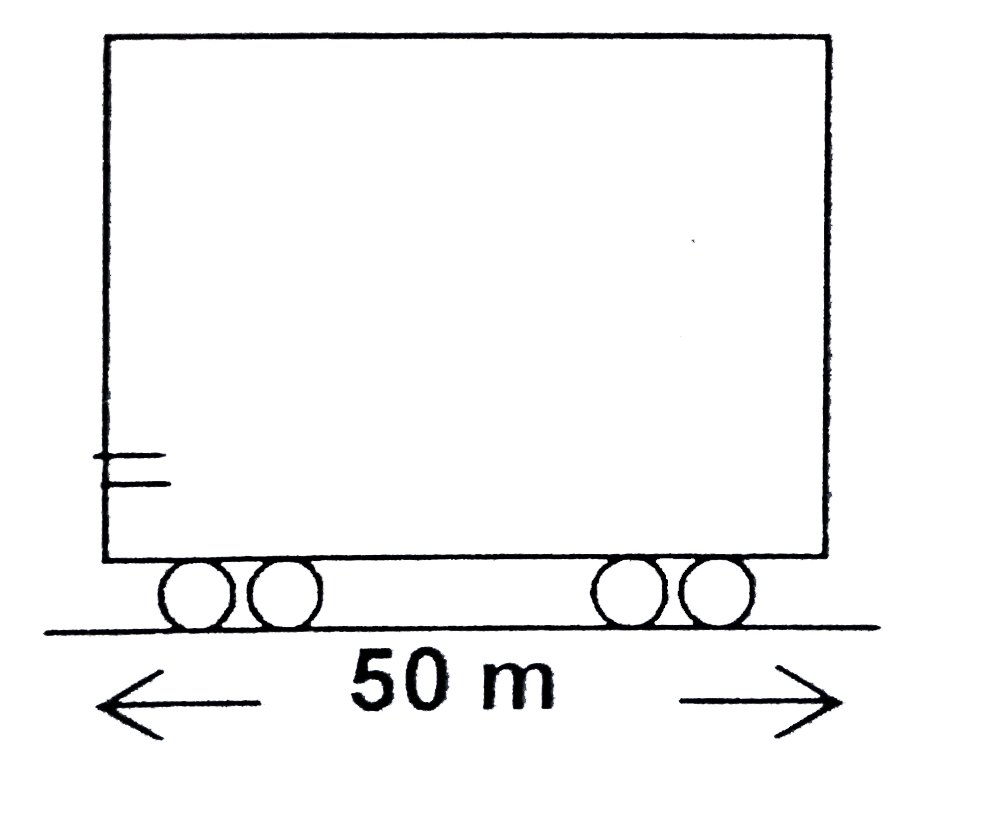
A cannon-ball is fired with a speed 50 m...

A cannon-ball is fired with a speed `50 m//sec` with respect to ground from one end of a stationary railroad car which rests on a smooth track. The ball collides with opposite wall and stops. How much distance did the railroad car cover just before the collision? Given that the ratio of the mass of the ball to that of the railroad car is `1//99` and the length of the car is `50m`

Promotional Banner

Similar Questions

Explore conceptually related problems

A car runs 20 times around a rectangular track which is 200-m long and 150-m wide. How much distance does the car cover ?

An iron ball A collides with another stationary iron ball B If the ratio of radii of the balls is n = 2, find the ratio of their speeds just after the collision (e = 0.5)

An iron ball A collides with another stationary iron ball B If the ratio of radii of the balls is n = 2, find the ratio of their speeds just after the collision (e = 0.5)

A ball moving with speed u collides with an identical ball at rest. The velocities of two balls after collision are (If the collision is elastic):

A glass ball collides with an identical ball at rest with v_(0)=2 m/sec. If the coefficient of restitution of collision is e = 0.5, find the velocities of the glass balls just after the collision.

A glass ball collides with an identical ball at rest with v_(0)=2 m/sec. If the coefficient of restitution of collision is e = 0.5, find the velocities of the glass balls just after the collision.

A particle of mass m is projected towards a wall such that the angle of incidence is theta and the speed just before collision is u. Assuming that the wall is smooth and the collision is elastic, show that the ball rebounds at same angle.

A particle of mass m is projected towards a wall such that theangle of incidence is theta and the speed just before collision is u. Assumming that the wall is smooth and the collision is elastic,show that the ball rebonunds at same angle.

If the speed of a motor car is doubled , how much more distance will it cover before stopping under the same retarding force ?