


Similar Questions
Explore conceptually related problems
Recommended Questions
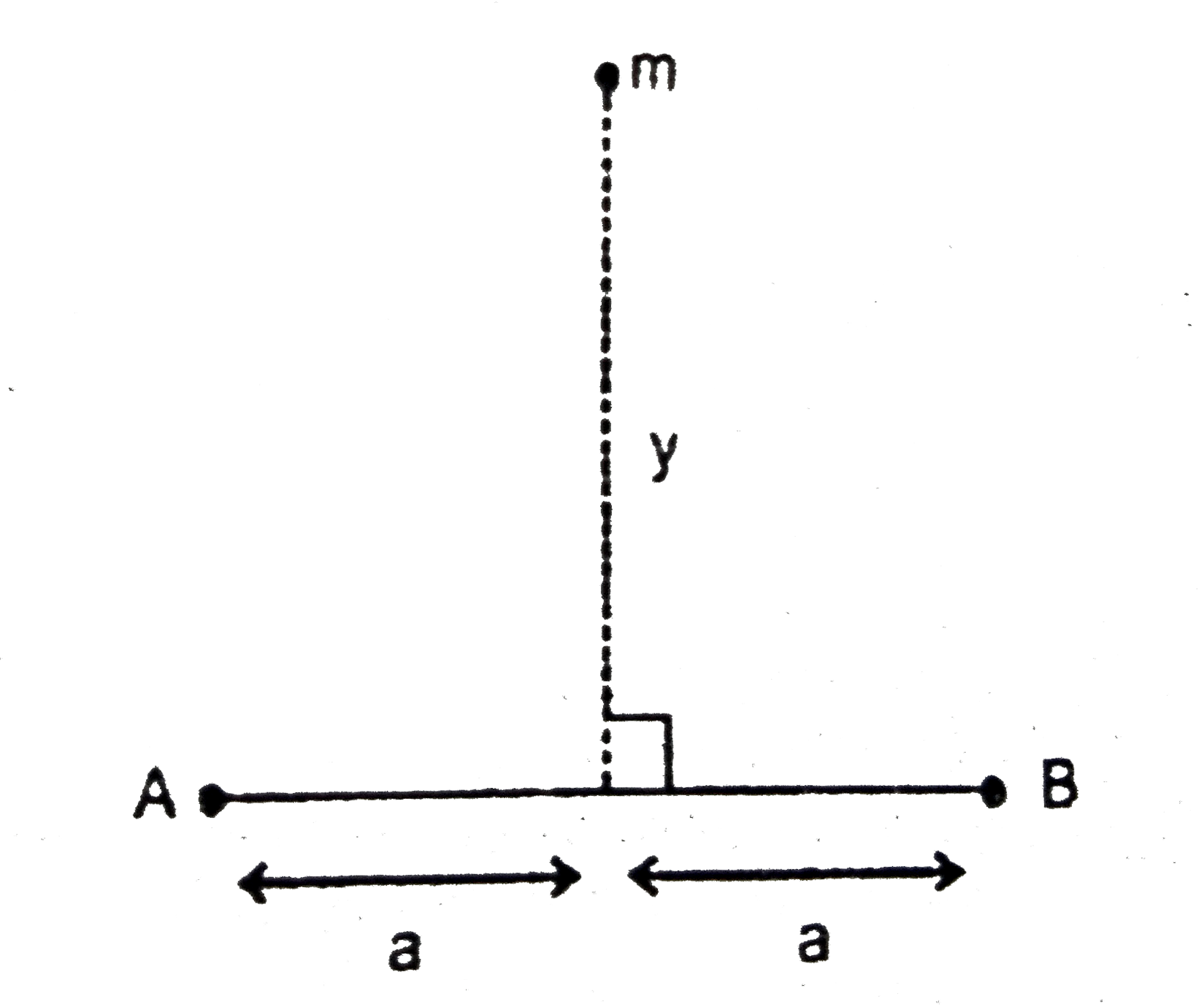
- Potential energy of a particle of mass m, depends on distance y from l...
Text Solution
|
- Distance of origin from the line (1+sqrt(3))y+(1-sqrt(3))x=10 along th...
Text Solution
|
- The potential energy of a particle of mass m free to move along the x-...
Text Solution
|
- Potential energy of a particle of mass m, depends on distance y from l...
Text Solution
|
- The potential energy of a particle of mass m is given by U=1/2kx^(2) ...
Text Solution
|
- The potential energy of a particle in the X-Y plane is given by U=k(x+...
Text Solution
|
- [" The acceleration "a" of a particle moving with an initial velocity ...
Text Solution
|
- A particle moves with an initial velocity V(0) and retardation alpha v...
Text Solution
|
- abs(sqrt (x^2+(y-1)^2)- sqrt (x^2+(y+1)^2) )=k
Text Solution
|