

Home
Class 11
PHYSICS
A spring of spring constant 200N//m has ...

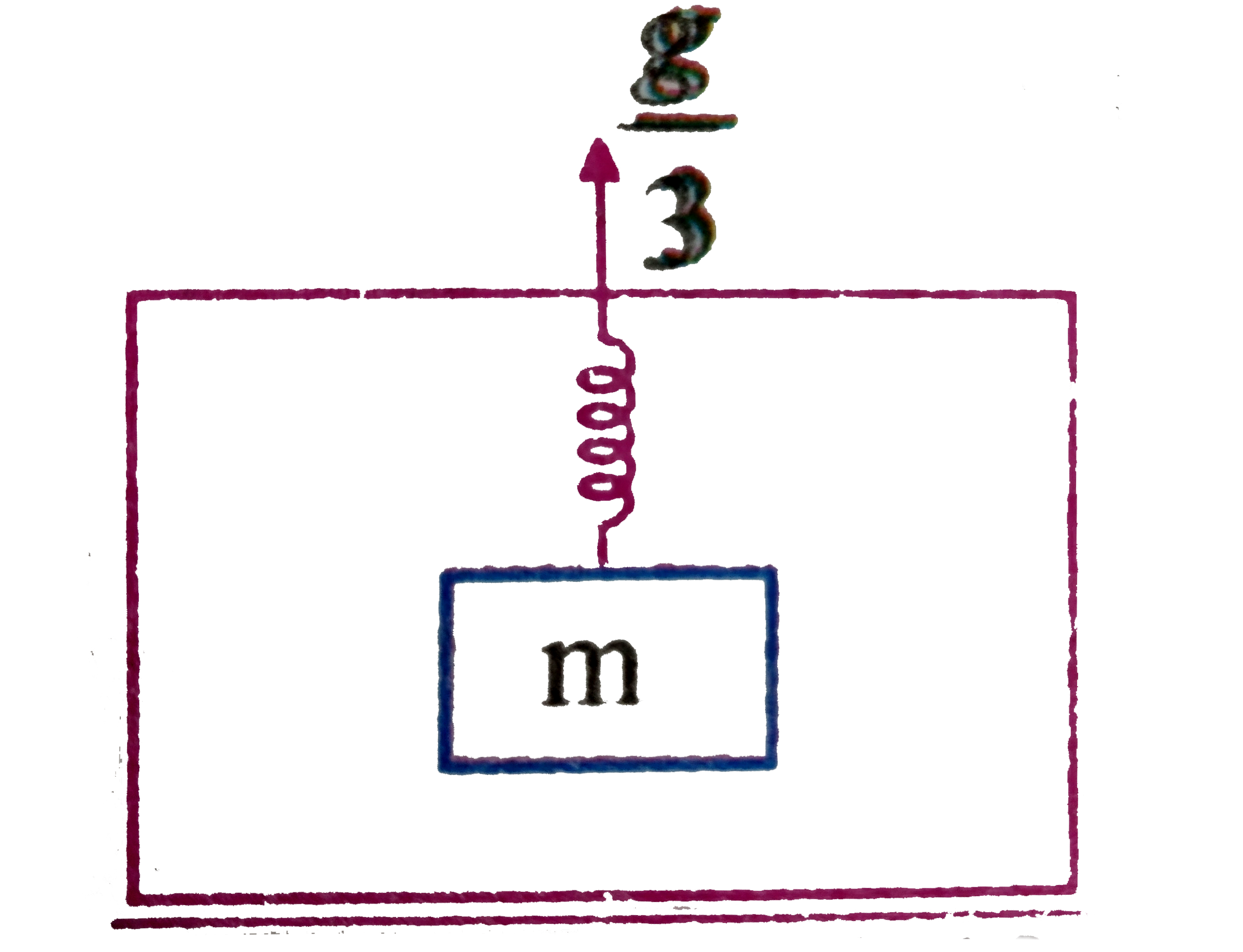
A spring of spring constant `200N//m` has a block of mass `1kg` hanging at its one end and other end of spring is attached to ceiling of an elevator. The elevator is rising upwards with an acceleration `g//3`. What should be the angular frequency and elongation during the time when the elevator is accelerating?

Promotional Banner

Similar Questions

Explore conceptually related problems

A spring of spring constant 200 N//m has a block of mass 1 kg hanging at its one end and form the other and the spring is attached to a celling of an elevator. The elevator rises upwards with an acceleration of g//3 . When acceleration is suddenly ceased , then what should be the angular frequency and elongationduring the time when the elevator is accelerating?

A spring of spring constant 200 N//m has a block of mass 1 kg hanging at its one end and form the other and the spring is attached to a ceiling of an elevator. The elevator rises upwards with an acceleration of g//3 . When acceleration is suddenly ceased , then what should be the angular frequency and elongation during the time when the elevator is accelerating?

A spring of force constant 200Nm^(-1) has a block of mass 10 kg hanging at its one end and the other end of the spring is attached to the celling of an elevator. The elevator is rising upwards with an acceleration of g/4 and the block is in equilibrium with respect to the elevator . when the acceleration of the elevator suddenly ceases , the block starts oscillating . What is the amplitude (in m) of these oscillations ?

A spring of force constant 200Nm^(-1) has a block of mass 10 kg hanging at its one end and the other end of the spring is attached to the celling of an elevator. The elevator is rising upwards with an acceleration of g/4 and the block is in equilibrium with respect to the elevator . when the acceleration of the elevator suddenly ceases , the block starts oscillating . What is the amplitude (in m) of these oscillations ?

A block of mass 1kg hangs without vibrations at the end of a spring with a force constant 1 N//m attached to the ceilling of an elevator. The elevator is rising with an upward acceleration of g//4 . The acceleration of the elevator suddenly ceases. What is the amplitude of the resulting oscillations?

A block of mass 1kg hangs without vibrations at the end of a spring with a force constant 1 N//m attached to the ceilling of an elevator. The elevator is rising with an upward acceleration of g//4 . The acceleration of the elevator suddenly ceases. What is the amplitude of the resulting oscillations?

A block of mass 1kg hangs without vibrations at the end of a spring with a force constant 1 N//m attached to the ceilling of an elevator. The elevator is rising with an upward acceleration of g//4 . The acceleration of the elevator suddenly ceases. What is the amplitude of the resulting oscillations?

A block with a mass of 2 kg hangs without vibrating at the end of a spring of spring constant 500N//m , which is attached to the ceiling of an elevator. The elevator is moving upwards with an acceleration (g)/(3) . At time t = 0 , the acceleration suddenly ceases. (a) What is the angular frequency of oscillation of the block after the acceleration ceases ? (b) By what amount is the spring stretched during the time when the elevator is accelerating ? (c )What is the amplitude of oscillation and initial phase angle observed by a rider in the elevator in the equation, x = Asin (omega t + phi) ? Take the upward direction to be positive. Take g = 10.0 m//s^(2) .

A block with a mass of 2 kg hangs without vibrating at the end of a spring of spring constant 500N//m , which is attached to the ceiling of an elevator. The elevator is moving upwards with an acceleration (g)/(3) . At time t = 0 , the acceleration suddenly ceases. (a) What is the angular frequency of oscillation of the block after the acceleration ceases ? (b) By what amount is the spring stretched during the time when the elevator is accelerating ? (c )What is the amplitude of oscillation and initial phase angle observed by a rider in the elevator in the equation, x = Asin (omega t + phi) ? Take the upward direction to be positive. Take g = 10.0 m//s^(2) .