

Home
Class 12
BIOLOGY
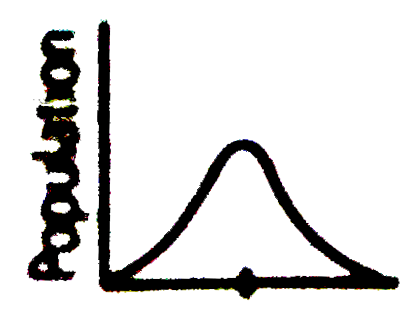
The given graph shows the range of varia...

The given graph shows the range of variation among population members for a trait determined by multiple genes. If this population is subjected to disruptive selection for several generations, which of the following distributions is most likely to result?

Promotional Banner

Similar Questions

Explore conceptually related problems

The following graph shows the range of variation among population members for a trait determined by multiple genes. If this population is subject to stabilizing selection for several generations, which of the distribution is most likely to result ?

The graph shows the percenatge of population owining TV sets in various countries . Assuming that the population of all the countries is the same and remains constant for the given years, which fo the following opitons in INCORRECT ?

The graph given below shows the variations in the population of producers, primary consumers and secondary consumers as well as the amount of dissolved mineral salts in a pond Which one of the following correctly matches each graph?

The graph given below shows the variations in the population of producers, primary consumers and secondary consumers as well as the amount of dissolved mineral salts in a pond Which one of the following correctly matches each graph?

The graph given below shows the variations in the population of producers, primary consumers and secondary consumers as well as the amount of dissolved mineral salts in a pond Which one of the following correctly matches each graph?

The graph given below shows the variations in the population of producers, primary consumers and secondary consumers as well as the amount of dissolved mineral salts in a pond Which one of the following correctly matches each graph?

The graph above shows how the size of a country's population has changed over time. Which of the following are the most likely underlying reasons for the type of graph shown?

According to Hardy-Weinberg principle, allele and genotype frequencies in a population will remain constant from generation to generation in the absence of other evolutionary influences. It makes several assumptions which were given below. i. Random Mating ii. Sexual Reproduction iii. Non-overlapping Generations iv. Occurrence of Natural Selection v. Small size of population. Identify two assumptions which do not meet for a population to reach Hardy-Weinberg Equilibrium?