

Home
Class 12
PHYSICS
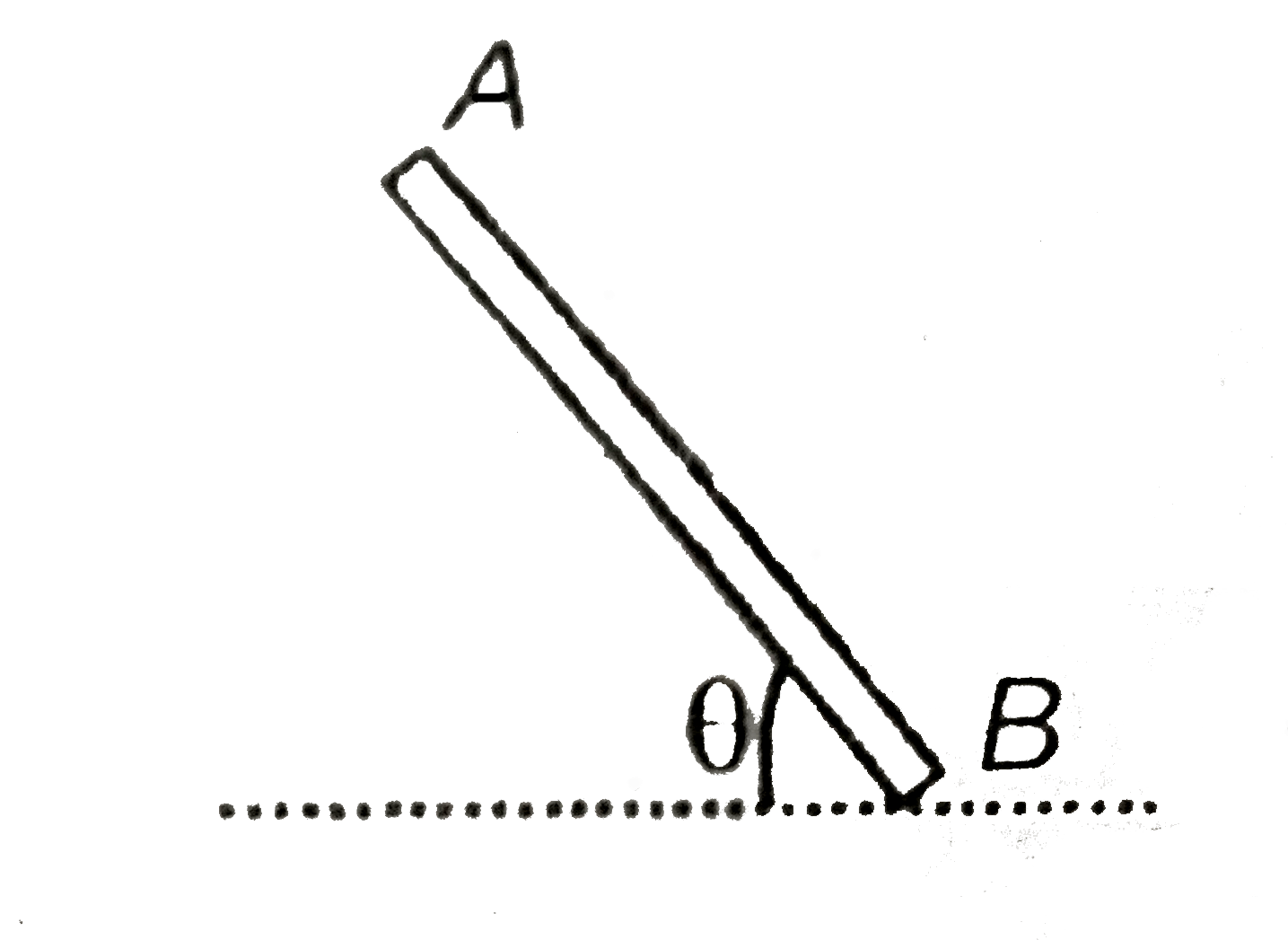
A rod AB of mass M and length L is shown...

A rod `AB` of mass `M` and length `L` is shown in figure. End `A` of rod is hinged and end `B` is lying on the ground. Find the

Horizontal component of the force applied by the hinge

Promotional Banner

Similar Questions

Explore conceptually related problems

A rod AB of mass M and length L is shown in figure. End A of rod is hinged and end B is lying on the ground. Find the Vertical component of the force applied by the hinge Vertical component of the force applied by the hinge

A rod AB of mass M and length L is shown in figure. End A of rod is hinged and end B is lying on the ground. Find the Vertical component of the force applied by the hinge

A rod AB of mass M and length L is shown in figure. End A of rod is hinged and end B is lying on the ground. Find the Normal reaction by ground on the rod

A rod AB of mass M and length L is shown in figure. End A of rod is hinged and end B is lying on the ground. Find the Normal reaction by ground on the rod

A rod of mass m and length L is hinged at its top end. If the rod is in equilibrium making an angle of 30^(@) with the vertical when a horizontal force F is applied as shown in figure, then the value of F is:

A rod of mass m and length L is hinged at its top end. If the rod is in equilibrium making an angle of 30^(@) with the vertical when a horizontal force F is applied as shown in figure, then the value of F is:

A uniform rod AB of mass m and length l is at rest on a smooth horizontal surface. An impulse J is applied to the end B perpendicular to the rod in horizontal direction. Speed of the point A of the rod after giving impulse is:

A rod of mass m and length l is hinged at 'its' end and released from rest in position shown. Find the force exerted by the hinge when the rod becomes horizontal

A rod PQ of mass M and length L is hinged at end P. The rod is kept horizontal by a mass less than string tied at a point Q as shown in figure. When string is cut, the initial acceleration rod is: