

Home
Class 12
PHYSICS
A diode made forward biased by a two vol...


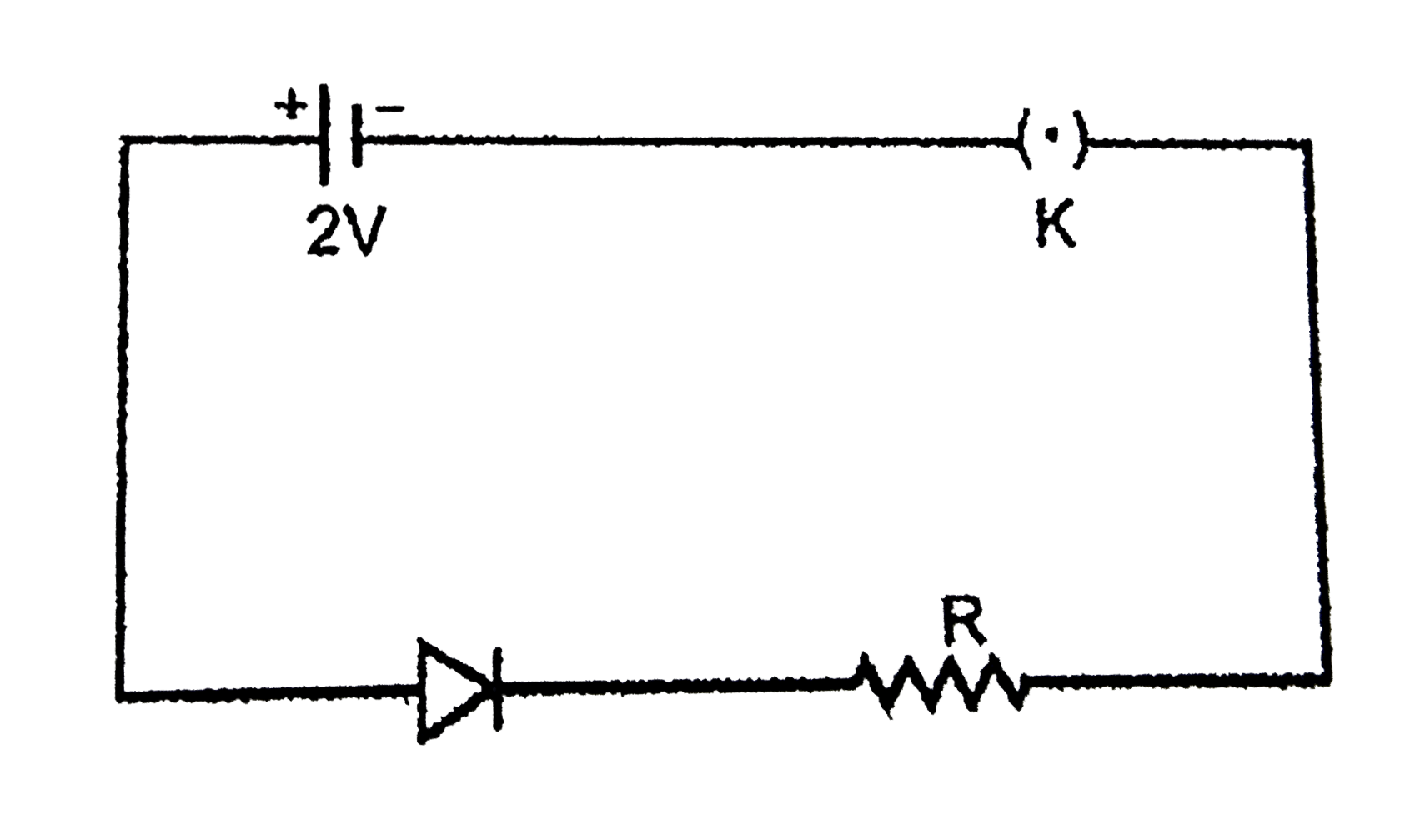
A diode made forward biased by a two volt battery however there is a drop of 0.5 V across the diode which is independent of current. Also a current greater then 10 mA produces large joule loss and damages diode. If diode is to be operated at 5 mA, the series resistance to be put is

Promotional Banner

Similar Questions

Explore conceptually related problems

A two volt battery forward biased and a diode. However, there is a drop of 0.5 V across the diode which is independent of current. Also, a current greater than 10 mA produces large joule loss and damages diode. If diode is to be operated at 5 mA, then the series resistance to be put is

A PN junction diode when forward biased has a drop of 0.5 V which is assumed to be independent of current. The current in excess of 10 mA through the diode produces large joule heating which damages the diode. If we want to use a 1.5V battery to forward bias the diode, the resistor used in series with the diode so that the maximum current does not exceed 5 mA is. .

A PN junction diode when forward biased has a drop of 0.5 V which is assumed to be independent of current. The current in excess of 10 mA through the diode produces large joule heating which damages the diode. If we diode, the resistor used in series with the diode so that the maximum current does not exceed 5 mA

A PN junction diode when forward biased has a drop of 0.5 V which is assumed to be independent of current. The current in excess of 10 mA through the diode produces large joule heating which damages the diode. If we diode, the resistor used in series with the diode so that the maximum current does not exceed 5 mA is. .

A p-n junction diode when forward baiased has a drop of 0.5 V which is assumed to be independent of current. The current in excess of 10 mA through the diode produces a large joule heating which damages (burns) the diode. If we want to use a 15.V battery to forward bias diode a resistor of resistance axx10^(2)Omega is to be used in serise with the diode so that the maximum current does not exceed 5mA. what is the value of a?

A p-n junction diode when forward biased has a drop of 0.5V which is assumed to be independent of current. The current in excess of 10mA through the diode produces a large Joule heating which damages (burns) the diode. If we want to use a 1.5V battery to forward bias the diode, what should be the vlaue of resistor used in series with the diode so that the maximum current does not exceed 5mA ?

A p-n junction diode when forward biased has a drop of 0.4 V which is assumed to be independent of current. A current excess of 10 mA through the diode damages (burns ) the diode. If we want to use a 2 V battery to forward bias the diode, what should be the value of resistor used in series with the diode so that the maximum current does not exceed 5 mA?

a p-n junction diode when forward biased has a drop of 0.4 V which is assumed to be independent of currebnt A. a current excess of 10mA through the diode damages (burns) the diode .if we want to use a 2 V battrey to forwqard bias the diode, what should be the avlue of resistor used in series with the diode so thatthe maximum current does NOT exced 5mA?

A p-n junction when forward biased has a drop of 0.6 V which is assumed to be independent of current. The current in excess of 10 mA through the diode produces a large joule heating effect which burns the diode. If we want to use 1.5 V battery to forward bias the diode, what should be the value of resistor used in series with the diode so that the maximum current does not exceed 6 mA?

A p-n jucntion when forward biased has a drop of 0.7 V which is assumed to be independent of current. The current in excess of 10 Ma through the diode produces a large joule heating effect which burns the diode. If we want to use 1.6 V battery to forward ibas the diode, the value of resistor used in series with the diode so that the maximum current does not exceed 6 mA should be