


Similar Questions
Explore conceptually related problems
Recommended Questions
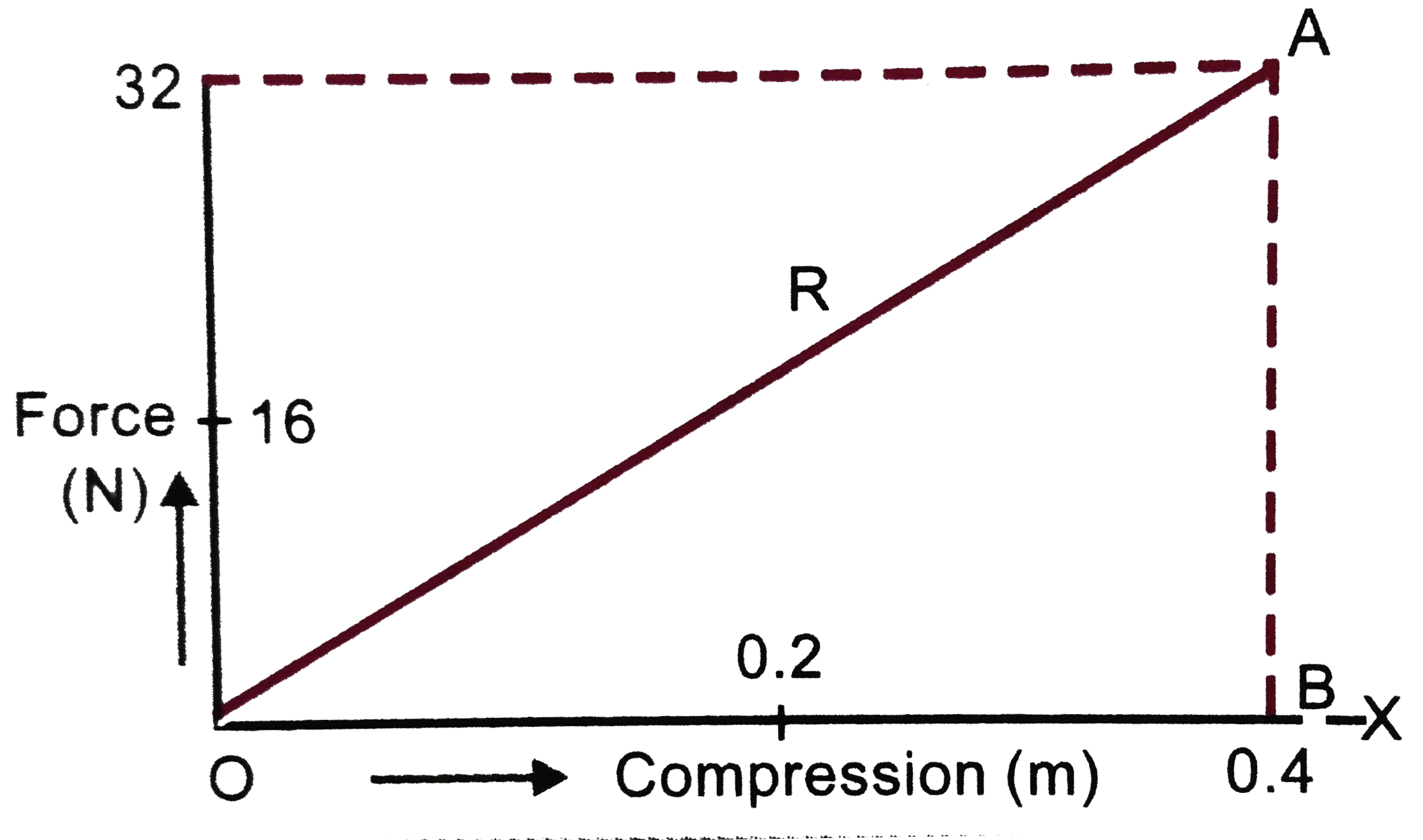
- Figure shows a force compression curve of a spring. A body of mass 5kg...
Text Solution
|
- Figure shows a force compression curve of a spring. A body of mass 5kg...
Text Solution
|
- A block of mass m moving at a speed v0 compresses a spring of spring c...
Text Solution
|
- A body of mass 0.1 g moving with a velocity of 10 m/s hits a spring (f...
Text Solution
|
- 10 किग्रा द्रव्यमान का एक पिण्ड 2 मी/से के वेग से गति करता हुआ 4xx10^(...
Text Solution
|
- द्रव्यमान 0.1 किग्रा का एक पिण्ड वेग 10 मीटर/सेकण्ड से बल नियतांक 1000...
Text Solution
|
- 4 किग्रा द्रव्यमान का एक पिंड 20 मीटर/सेकंड की चाल से चलकर एक आदर्श स्...
Text Solution
|
- दिए गये चित्र में स्प्रिंग पर लगाए गये बल तथा उसमें उत्पन्न संपीडन के ...
Text Solution
|
- 9 किलोग्राम द्रव्यमान का एक पिण्ड घर्षण रहित पृष्ठ पर4m/s के वेग स...
Text Solution
|