Distance is a scalar quantity. Displacement is a vector quqntity. The magnitude of displacement is always less than or equal to distance. For a moving body displacement can be zero but distance cannot be zero. Same concept is applicable regarding velocity and speed. Acceleration is the rate of change of velocity. If acceleration is constant, then equations of kinematics are applicable for one dimensional motion under the gravity in which air resistance is considered, then the value of acceleration depends on the density of medium. Each motion is measured with respect of frame of reference. Relative velocity may be greater`//` smaller to the individual velocities.
A particle moves from A to B. Then the ratio of distance to displacement is :-
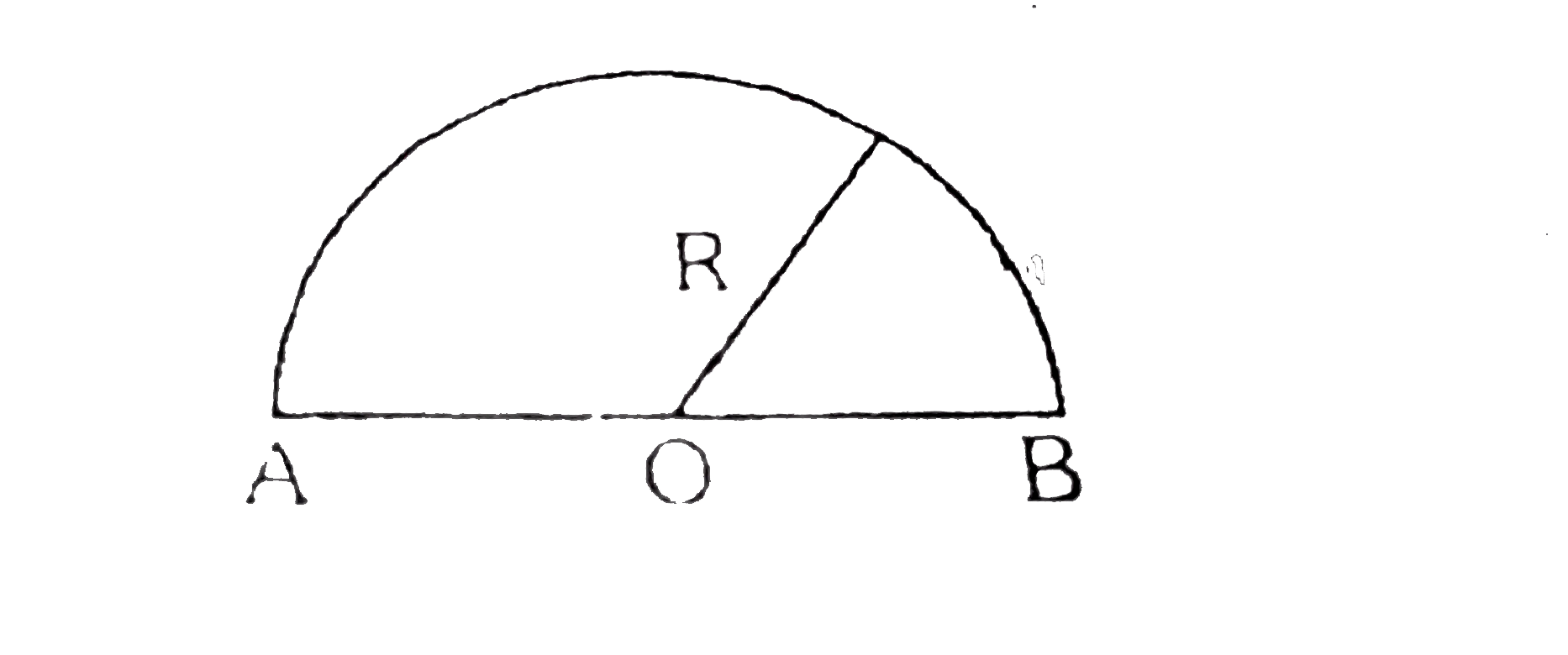
Distance is a scalar quantity. Displacement is a vector quqntity. The magnitude of displacement is always less than or equal to distance. For a moving body displacement can be zero but distance cannot be zero. Same concept is applicable regarding velocity and speed. Acceleration is the rate of change of velocity. If acceleration is constant, then equations of kinematics are applicable for one dimensional motion under the gravity in which air resistance is considered, then the value of acceleration depends on the density of medium. Each motion is measured with respect of frame of reference. Relative velocity may be greater`//` smaller to the individual velocities.
A particle moves from A to B. Then the ratio of distance to displacement is :-
A particle moves from A to B. Then the ratio of distance to displacement is :-



Similar Questions
Explore conceptually related problems
Distance is a scalar quantity. Displacement is a vector quqntity. The magnitude of displacement is always less than or equal to distance. For a moving body displacement can be zero but distance cannot be zero. Same concept is applicable regarding velocity and speed. Acceleration is the rate of change of velocity. If acceleration is constant, then equations of kinematics are applicable for one dimensional motion under the gravity in which air resistance is considered, then the value of acceleration depends on the density of medium. Each motion is measured with respect of frame of reference. Relative velocity may be greater // smaller to the individual velocities. A particle is moving along the path y=4x^(2) . The distance and displacement from x=1 to x=2 is (nearly) :-
Distance is a scalar quantity. Displacement is a vector quqntity. The magnitude of displacement is always less than or equal to distance. For a moving body displacement can be zero but distance cannot be zero. Same concept is applicable regarding velocity and speed. Acceleration is the rate of change of velocity. If acceleration is constant, then equations of kinematics are applicable for one dimensional motion under the gravity in which air resistance is considered, then the value of acceleration depends on the density of medium. Each motion is measured with respect of frame of reference. Relative velocity may be greater // smaller to the individual velocities. A particle is moving along the path y=4x^(2) . The distance and displacement from x=1 to x=2 is (nearly) :-
Distance is a scalar quantity. Displacement is a vector quqntity. The magnitude of displacement is always less than or equal to distance. For a moving body displacement can be zero but distance cannot be zero. Same concept is applicable regarding velocity and speed. Acceleration is the rate of change of velocity. If acceleration is constant, then equations of kinematics are applicable for one dimensional motion under the gravity in which air resistance is considered, then the value of acceleration depends on the density of medium. Each motion is measured with respect of frame of reference. Relative velocity may be greater // smaller to the individual velocities. A particle is moving along the path y=4x^(2) . The distance and displacement from x=1 to x=2 is (nearly) :-
Distance is a scalar quantity. Displacement is a vector quqntity. The magnitude of displacement is always less than or equal to distance. For a moving body displacement can be zero but distance cannot be zero. Same concept is applicable regarding velocity and speed. Acceleration is the rate of change of velocity. If acceleration is constant, then equations of kinematics are applicable for one dimensional motion under the gravity in which air resistance is considered, then the value of acceleration depends on the density of medium. Each motion is measured with respect of frame of reference. Relative velocity may be greater // smaller to the individual velocities. A person is going 40 m north, 30m east and then 30sqrt(2) m southwest. The net displacement will be
Distance is a scalar quantity. Displacement is a vector quqntity. The magnitude of displacement is always less than or equal to distance. For a moving body displacement can be zero but distance cannot be zero. Same concept is applicable regarding velocity and speed. Acceleration is the rate of change of velocity. If acceleration is constant, then equations of kinematics are applicable for one dimensional motion under the gravity in which air resistance is considered, then the value of acceleration depends on the density of medium. Each motion is measured with respect of frame of reference. Relative velocity may be greater // smaller to the individual velocities. A person is going 40 m north, 30m east and then 30sqrt(2) m southwest. The net displacement will be
Distance is a scalar quantity. Displacement is a vector quqntity. The magnitude of displacement is always less than or equal to distance. For a moving body displacement can be zero but distance cannot be zero. Same concept is applicable regarding velocity and speed. Acceleration is the rate of change of velocity. If acceleration is constant, then equations of kinematics are applicable for one dimensional motion under the gravity in which air resistance is considered, then the value of acceleration depends on the density of medium. Each motion is measured with respect of frame of reference. Relative velocity may be greater // smaller to the individual velocities. A person is going 30 m north, 20m east and then 30sqrt(2) m southwest. The net displacement will be
Give reason for the following. Displacement can become zero, but distance cannot
For body in motion, magnitude of displacement is less than or equal to the distance travelled, the statement is true.
Acceleration is defined as the rate of change of velocity. Obtain the equation for displacement in time t .
Assertion: A body having non zero acceleration can have a constant velocity. Reason: Acceleration is the rate of change of velocity.
Recommended Questions
- Distance is a scalar quantity. Displacement is a vector quqntity. The ...
Text Solution
|
- Distance is a scalar quantity. Displacement is a vector quqntity. The ...
Text Solution
|
- Distance is a scalar quantity. Displacement is a vector quqntity. The ...
Text Solution
|
- Distance is a scalar quantity. Displacement is a vector quqntity. The ...
Text Solution
|
- Assertion : If the displacement of the body is zero, the distance cov...
Text Solution
|
- Define distance, displacement, speed, velocity and acceleration.
Text Solution
|
- दूरी, विस्थापन, चाल तथा वेग में कौन सी राशि अदिश है तथा कौन सी राशि सद...
Text Solution
|
- INTRODUCTION TO KINEMATICS| SPEED|DISTANCE| DISPLACEMENT| VELOCITY|ACC...
Text Solution
|
- निम्न भौतिक राशियों को अदिश व सदिश राशियों में वर्गीकृत कीजिए| चाल, ...
Text Solution
|