Home
Class 12
CHEMISTRY
A catalyst alters the rate of a reaction...

A catalyst alters the rate of a reaction by leading of increasing the energy of activation, In Heterogeneus catalysis adrosption mechanism occurs and Hemogeneus. Catalysis intermediate formation occurs. In auto catalysis one of the products acts on catalyst.
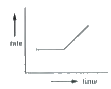
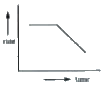
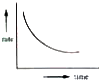
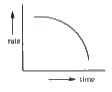
`AsH_3 to As + 3H_2`. The reaction is auto catalysed. Which graph is correct for it? 

A

B

C

D

Text Solution

Verified by Experts

The correct Answer is:

A

In auto catalysis first reaction is slow after some time reaction is fast
Promotional Banner

Topper's Solved these Questions

  • SURFACE CHEMISTRY

    AAKASH SERIES|Exercise PRACTICE SHEET - 3 (MATCH THE FOLLOWING QUESTIONS)|2 Videos
  • SURFACE CHEMISTRY

    AAKASH SERIES|Exercise PRACTICE SHEET - 3 (INTEGER ANSWER TYPE QUESTIONS)|6 Videos
  • SURFACE CHEMISTRY

    AAKASH SERIES|Exercise PRACTICE SHEET - 3 (SINGE OR MORE THAN ONE OPTION QUESTIONS)|16 Videos
  • STOICHIOMETRY

    AAKASH SERIES|Exercise PRACTICE SHEET (ADVANCED) (INTEGER TYPE QUESTION)|2 Videos
  • VA GROUP ELEMENTS

    AAKASH SERIES|Exercise PRACTICE EXERCISE|51 Videos

Similar Questions

Explore conceptually related problems

A catalyst alters the rate of a reaction by leading of increasing the energy of activation, In Heterogeneus catalysis adrosption mechanism occurs and Hemogeneus. Catalysis intermediate formation occurs. In auto catalysis one of the products acts on catalyst. 2SO_2 + O_(2) overset(NO(g))(rarr)2SO_3 . This reaction is carried out through formation of ----- intermediate.

A catalyst alters the rate of a reaction by leading of increasing the energy of activation, In Heterogeneus catalysis adrosption mechanism occurs and Hemogeneus. Catalysis intermediate formation occurs. In auto catalysis one of the products acts on catalyst. The DeltaH of a reaction A + B to C is d -20 KJ mol^(-1) . When a catalyst is used. What is DeltaH for the reaction without catalyst (magnitude)

(A) Rate of reaction can also increase with the formation of product, if one of the products acts as a catalyst. (R ) A catalyst lowers the activation energy of the reaction

Arrhenius studied the effect of temperature on the rate of a reaction and postulated that rate constant varies with temperature exponentially as k=Ae^(-E_(a)//RT) . For most of the reactions it was found that the temperature coefficient of the reaction lies between 2 to 3. The method is generally used for finding the activation energy of a reaction. Keeping temperature constant, the effect of catalyst on the activation energy has also been studied by studying how much the rate of reaction changes in the presence of catalyst. In most of the cases, it is observed that catalyst lowers the activationenergy barrier and increases the rate of reaction. If the rate oc reaction grwos 15.6 times on increasing the temperature by 30 K the temperature coefficient of the reaction will be nearly

Arrhenius studied the effect of temperature on the rate of a reaction and postulated that rate constant varies with temperature exponentially as k=Ae^(-E_(a)//RT) . For most of the reactions it was found that the temperature coefficient of the reaction lies between 2 to 3. The method is generally used for finding the activation energy of a reaction. Keeping temperature constant, the effect of catalyst on the activation energy has also been studied by studying how much the rate of reaction changes in the presence of catalyst. In most of the cases, it is observed that catalyst lowers the activationenergy barrier and increases the rate of reaction. Which of the following plot will be linear?

Arrhenius studied the effect of temperature on the rate of a reaction and postulated that rate constant varies with temperature exponentially as k=Ae^(-E_(a)//RT) . For most of the reactions it was found that the temperature coefficient of the reaction lies between 2 to 3. The method is generally used for finding the activation energy of a reaction. Keeping temperature constant, the effect of catalyst on the activation energy has also been studied by studying how much the rate of reaction changes in the presence of catalyst. In most of the cases, it is observed that catalyst lowers the activationenergy barrier and increases the rate of reaction. The pre-exponential factor in the Arrhenius equation of a second order reaction has the units

For a spontaneous reaction, the free energy change must be negative. DeltaG=DeltaH-TDeltaS is the enthalpy change during the reaction. T is absolute temperature, and AS is the change in entropy during the reaction. Consider a reaction such as the formation ofan oxide . M+O_(2) MO Dloxygen is used wp in the course of this reaction. Gases have a more random structure (less ordered) than liquid or solids consequently gases have a higher entropy than liquids and solids, in this reaction (entropy or randomness) decreases, hence is negative. Thus, the temperature is raised the DeltaS becomes more negative. Since, TDeltaS is subtracted in the equation, then SG becomes less negative. Thus, the free energy changes increases with the increase in temperature. The free energy changes that occur when one mole of common reactant in this case dioxygen) is we may e plotted graphically against temperature for a number of reactions of metals to their oxides. The following plot is called an Ellingham diagram for metal oxide. Understanding of Ellingham diagram is extremely important for the efficient extraction of metals. As per the Ellingham diagram of oxides which of the following conclusion is true?

For a spontaneous reaction, the free energy change must be negative. DeltaG=DeltaH-TDelaS is the enthalpy change during the reaction. T is absolute temperature, and AS is the change in entropy during the reaction. Consider a reaction such as the formation ofan oxide . M+O_(2) MO Dloxygen is used wp in the course of this reaction. Gases have a more random structure (less ordered) than liquid or solids consequently gases have a higher entropy than liquids and solids, in this reaction (entropy or randomness) decreases, hence is negative. Thus, the temperature is raised the DeltaS becomes more negative. Since, TDeltaS is subtracted in the equation, then SG becomes less negative. Thus, the free energy changes increases with the increase in temperature. The free energy changes that occur when one mole of common reactant in this case dioxygen) is we may e plotted graphically against temperature for a number of reactions of metals to their oxides. The following plot is called an Ellingham diagram for metal oxide. Understanding of Ellingham diagram is extremely important for the efficient extraction of metals. For the conversion of Ca(s) to CaO(s) which of the following represent the DeltaG vs T :

For a spontaneous reaction, the free energy change must be negative. DeltaG=DeltaH-TDeltaS is the enthalpy change during the reaction. T is absolute temperature, and AS is the change in entropy during the reaction. Consider a reaction such as the formation ofan oxide . M+O_(2) MO Dloxygen is used wp in the course of this reaction. Gases have a more random structure (less ordered) than liquid or solids consequently gases have a higher entropy than liquids and solids, in this reaction (entropy or randomness) decreases, hence is negative. Thus, the temperature is raised the DeltaS becomes more negative. Since, TDeltaS is subtracted in the equation, then SG becomes less negative. Thus, the free energy changes increases with the increase in temperature. The free energy changes that occur when one mole of common reactant in this case dioxygen) is we may e plotted graphically against temperature for a number of reactions of metals to their oxides. The following plot is called an Ellingham diagram for metal oxide. Understanding of Ellingham diagram is extremely important for the efficient extraction of metals. Which of the following elements can be prepared by heating the oxide above 400^(@)C ?

A certain endothermic reaction: Ato Product, DeltaH=+ve proceeds ina sequence of three elementary steps with the rate constant K_(1),K_(2) and K_(3) and each one having energy of activation E_(1),E_(2) and E_(3) respectively at 25^(@)C . The observed rate constannt for the reaction is equal to K_(3)sqrt((K_(1))/(K_(2))) . A_(1),A_(2) and A_(3) are Arrhenius parameters respectively. Which represents the correct value if catalyst is not present:
