A
B
C
D
Text Solution
Verified by Experts



Topper's Solved these Questions
STATES OF MATTER
AAKASH SERIES|Exercise LECTURE SHEET - EXERCISE - IV (LEVEL - II ADVANCED)(MATRIX MATCHING TYPE QUESTIONS)|3 VideosSTATES OF MATTER
AAKASH SERIES|Exercise LECTURE SHEET - EXERCISE - IV (LEVEL - II ADVANCED)(INTEGER TYPE QUESTIONS)|4 VideosSTATES OF MATTER
AAKASH SERIES|Exercise LECTURE SHEET - EXERCISE - IV (LEVEL - II ADVANCED)(MORE THAN ONE CORRECT ANSWER TYPE QUESTIONS)|9 VideosSATURATED HYDROCARBONS
AAKASH SERIES|Exercise QUESTIONS FOR DESCRIPTIVE ANSWERS|10 VideosSTOICHIOMETRY
AAKASH SERIES|Exercise QUESTIONS FOR DESCRIPTIVE ANSWERS|59 Videos
Similar Questions
Explore conceptually related problems
AAKASH SERIES-STATES OF MATTER-LECTURE SHEET - EXERCISE - IV (LEVEL - II ADVANCED)(LINKED COMPREHENSION TYPE QUESTIONS)
- Gases tend to behave non-ideally at low temperatures and high pressure...
Text Solution
|
- Gases tend to behave non-ideally at low temperatures and high pressure...
Text Solution
|
- Gases tend to behave non-ideally at low temperatures and high pressure...
Text Solution
|
- Ideal gas equation is represented as PV=nRT. Gases present in the univ...
Text Solution
|
- Ideal gas equation is represented as PV=nRT. Gases present in the univ...
Text Solution
|
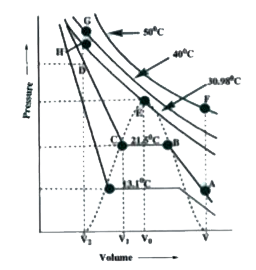
- Study the following isotherms of carbondioxide at various temperature ...
Text Solution
|
- Study the following isotherms of carbondioxide at various temperature ...
Text Solution
|
- Study the following isotherms of carbondioxide at various temperature ...
Text Solution
|