Home
Class 11
CHEMISTRY
When a beam of photons of a suitable fre...

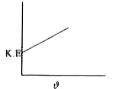
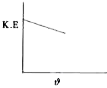
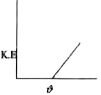
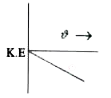
When a beam of photons of a suitable frequency strikes the metal surface, electrons are emitted from metal. This process is called photoelectric effect. The effect occurs when energy of incident beam is greater than that of the work function.
Which of the following graphs represents photoelectric effect ?

A

B

C

D

Text Solution

Verified by Experts

The correct Answer is:

C
Promotional Banner

Topper's Solved these Questions

  • ATOMIC STRUCTURE

    AAKASH SERIES|Exercise Level - II (Type-I) (Lecture Sheet - 1 (Section - B : Linked comprehension Type questions))|4 Videos
  • ATOMIC STRUCTURE

    AAKASH SERIES|Exercise Level - II (Type-I) (Lecture Sheet - 1 (Section -C : Matching/Straight objective type questions))|2 Videos
  • ATOMIC STRUCTURE

    AAKASH SERIES|Exercise Level - I (MAIN) (Exercise - VI (Miscellaneous))|23 Videos
  • AROMATIC HYDROCARBONS

    AAKASH SERIES|Exercise OBJECTIVE EXERCIES - 3 (RECENT AIPMT/NEET QUESTIONS)|10 Videos
  • CHEMICAL BONDING

    AAKASH SERIES|Exercise OBJECTIVE EXERCISE -3 (RECENT AIPMT/NEET QUESTIONS )|39 Videos

Similar Questions

Explore conceptually related problems

When a beam of photons of a suitable frequency strikes the metal surface, electrons are emitted from metal. This process is called photoelectric effect. The effect occurs when energy of incident beam is greater than that of the work function. Kinetic energy of photoelectron varies with

When light of frequency nu incidents on two metallic plates A and B photo electrons are emitted . If the work function of A is more than that of B the correct curve of the following curves drawn between stopping potential V and incident frequency nu is

The amount of energy released when an electron is added to an isolated gaseous atom to produce a monovalent anion is called electron affinity or first electron affinity or electron gain enthalpy. The first electron is given a negative sign as the addition of an electron to a neutral atom is an exoergic process. The addition of electron to A^(-1) requires energy to overcome the force of repulsion. Thus, the second electron affinity is an endoergic process. The magnitude of electron affinity depends on a number of factors such as (i) atomic size (ii) effective nuclear charge (iii) screening effect (iv) half and fully filled orbitals and (v) shape of orbital. In general, electron affinity increases as the atomic radii decrease in a period. However, there are exceptions when the atoms have stable configurations. In a group, electron affinity decreases as the size increases. However, the members of 3rd period have somewhat higher values than the members in the 2nd period of the same subgroups. Which one of the following arrangements represents the correct order of electron gain enthalpy (with negative sign) of the given atomic species ?

The work function (phi) of some metals is listed below. The number of metals which will show photoelectric effect when light of 300nm wavelength falls on the metal. The Metal is

Light of wavelength lamda falls on a metal having work function hc/ lamda . Photoelectric effect will take place only if

The photo electric threshold wavelength for a metal is 2750A^(@) , The minimum energy of a photon that can produce photoelectric effect in the metal is

The amount of energy released when an electron is added to an isolated gaseous atom to produce a monovalent anion is called electron affinity or first electron affinity or electron gain enthalpy. The first electron is given a negative sign as the addition of an electron to a neutral atom is an exoergic process. The addition of electron to A^(-1) requires energy to overcome the force of repulsion. Thus, the second electron affinity is an endoergic process. The magnitude of electron affinity depends on a number of factors such as (i) atomic size (ii) effective nuclear charge (iii) screening effect (iv) half and fully filled orbitals and (v) shape of orbital. In general, electron affinity increases as the atomic radii decrease in a period. However, there are exceptions when the atoms have stable configurations. In a group, electron affinity decreases as the size increases. However, the members of 3rd period have somewhat higher values than the members in the 2nd period of the same subgroups. Which of the following processes is endoergic in nature ?

The amount of energy released when an electron is added to an isolated gaseous atom to produce a monovalent anion is called electron affinity or first electron affinity or electron gain enthalpy. The first electron is given a negative sign as the addition of an electron to a neutral atom is an exoergic process. The addition of electron to A^(-1) requires energy to overcome the force of repulsion. Thus, the second electron affinity is an endoergic process. The magnitude of electron affinity depends on a number of factors such as (i) atomic size (ii) effective nuclear charge (iii) screening effect (iv) half and fully filled orbitals and (v) shape of orbital. In general, electron affinity increases as the atomic radii decrease in a period. However, there are exceptions when the atoms have stable configurations. In a group, electron affinity decreases as the size increases. However, the members of 3rd period have somewhat higher values than the members in the 2nd period of the same subgroups. Which of the following species has the highest electron affinity?
