Home
Class 11
CHEMISTRY
The equation of Schroedinger for the hyd...

The equation of Schroedinger for the hydrogen atom in the time-independet, non-relativistic form is a partial differential equation involving the position coordinates (x, y and z). The potential energy term for the proton-electron system is spherically symmetric of the form `-1//4pi in_(0) xx (e^(2)//r)`. THus it is advantages to change over from the cartesian coordinates (x,y and z) to the spherical polar coordinates, `(r, theta` and `phi`). In this form the equation become separable in the radial part involving r and the angular part involving `theta` and `phi`. The probability of locating the electron within a volume element `d tau = 4pi r^(2)dr` is then given `|Psi|^(2)(4pir^(2)dr)`, where `Psi` is a function of r, `theta` and `phi`. With proper conditions imposed on `Psi`, the treatment yields certain functions, `Psi`, known as atomic orbitals which are solutions of the equations. Each function `Psi` correspods to quantum number n, l and m, the principal, the azimuthal and the magnetic quantum number respectively, n has values 1, 2, 3,...., l has values 0, 1, 2, ....(n-1) for each value of n and m (n-1) for each value of n and m `(m_(l))` has values =1, +(l+1),...1,0,-1,-2...-l i.e., (2l+1) values for each value of l. In addition a further quantum number called pin had to be introduced with values `+-1//2`. Any set of four values for n, l , m and s characterizes a spin orbital. Pauli.s exclusion principle states that a given spin orbital can accomodate not more than electron. Further the values l = 0, l=1, l=2, l=3 are designated s,p,d and f orbitals respectively.
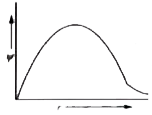
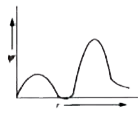
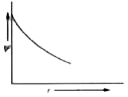
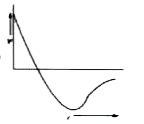
Which of the following diagrams corresponds to the 2s orbital ?

A

B

C

D

Text Solution

Verified by Experts

The correct Answer is:

D
Promotional Banner

Topper's Solved these Questions

  • ATOMIC STRUCTURE

    AAKASH SERIES|Exercise Level - II (Type-I) (Practice sheet-5 (Section -C : Matching/Straight objective type questions))|2 Videos
  • ATOMIC STRUCTURE

    AAKASH SERIES|Exercise Level - II (Type-I) (Lecture Sheet- 6 (Section-A : More than one correct answer type questions))|5 Videos
  • ATOMIC STRUCTURE

    AAKASH SERIES|Exercise Level - II (Type-I) (Practice sheet-5 (Section-A : More than one correct answer type questions))|5 Videos
  • AROMATIC HYDROCARBONS

    AAKASH SERIES|Exercise OBJECTIVE EXERCIES - 3 (RECENT AIPMT/NEET QUESTIONS)|10 Videos
  • CHEMICAL BONDING

    AAKASH SERIES|Exercise OBJECTIVE EXERCISE -3 (RECENT AIPMT/NEET QUESTIONS )|39 Videos

Similar Questions

Explore conceptually related problems

The equation of Schroedinger for the hydrogen atom in the time-independet, non-relativistic form is a partial differential equation involving the position coordinates (x, y and z). The potential energy term for the proton-electron system is spherically symmetric of the form -1//4pi in_(0) xx (e^(2)//r) . THus it is advantages to change over from the cartesian coordinates (x,y and z) to the spherical polar coordinates, ( r, theta and phi ). In this form the equation become separable in the radial part involving r and the angular part involving theta and phi . The probability of locating the electron within a volume element d tau = 4pi r^(2)dr is then given |Psi|^(2)(4pir^(2)dr) , where Psi is a function of r, theta and phi . With proper conditions imposed on Psi , the treatment yields certain functions, Psi , known as atomic orbitals which are solutions of the equations. Each function Psi correspods to quantum number n, l and m, the principal, the azimuthal and the magnetic quantum number respectively, n has values 1, 2, 3,...., l has values 0, 1, 2, ....(n-1) for each value of n and m (n-1) for each value of n and m (m_(l)) has values =1, +(l+1),...1,0,-1,-2...-l i.e., (2l+1) values for each value of l. In addition a further quantum number called pin had to be introduced with values +-1//2 . Any set of four values for n, l , m and s characterizes a spin orbital. Pauli.s exclusion principle states that a given spin orbital can accomodate not more than electron. Further the values l = 0, l=1, l=2, l=3 are designated s,p,d and f orbitals respectively. How many spin orbitals are there corresponding to n = 3?

The equation of Schroedinger for the hydrogen atom in the time-independet, non-relativistic form is a partial differential equation involving the position coordinates (x, y and z). The potential energy term for the proton-electron system is spherically symmetric of the form -1//4pi in_(0) xx (e^(2)//r) . THus it is advantages to change over from the cartesian coordinates (x,y and z) to the spherical polar coordinates, (r, theta and phi ). In this form the equation become separable in the radial part involving r and the angular part involving theta and phi . The probability of locating the electron within a volume element d tau = 4pi r^(2)dr is then given |Psi|^(2)(4pir^(2)dr) , where Psi is a function of r, theta and phi . With proper conditions imposed on Psi , the treatment yields certain functions, Psi , known as atomic orbitals which are solutions of the equations. Each function Psi correspods to quantum number n, l and m, the principal, the azimuthal and the magnetic quantum number respectively, n has values 1, 2, 3,...., l has values 0, 1, 2, ....(n-1) for each value of n and m (n-1) for each value of n and m (m_(l)) has values =1, +(l+1),...1,0,-1,-2...-l i.e., (2l+1) values for each value of l. In addition a further quantum number called pin had to be introduced with values +-1//2 . Any set of four values for n, l , m and s characterizes a spin orbital. Pauli.s exclusion principle states that a given spin orbital can accomodate not more than electron. Further the values l = 0, l=1, l=2, l=3 are designated s,p,d and f orbitals respectively. It is a basic fact that any two electrons are indistinguishable. 3 electrons are to be accomodated in the spin orbitals included under the designated 2p, conforming to the Pauli principle. Calculate the number of ways in which this may be done.

A point is on the x axis what are its y coordinates and z coordinates

Find the centroid of the triangle formed by the line 2 x + 3 y - 6 = 0 with the coordinate axes .

The equation of the lines x + y + z -1 =0 and 4x + y- 2z + 2=0 written in the symmetrical form is

Form the differential equation by eliminating a,b from (x-a)^(2) + (y -b)^(2) = r^(2)
