

Home
Class 11
PHYSICS
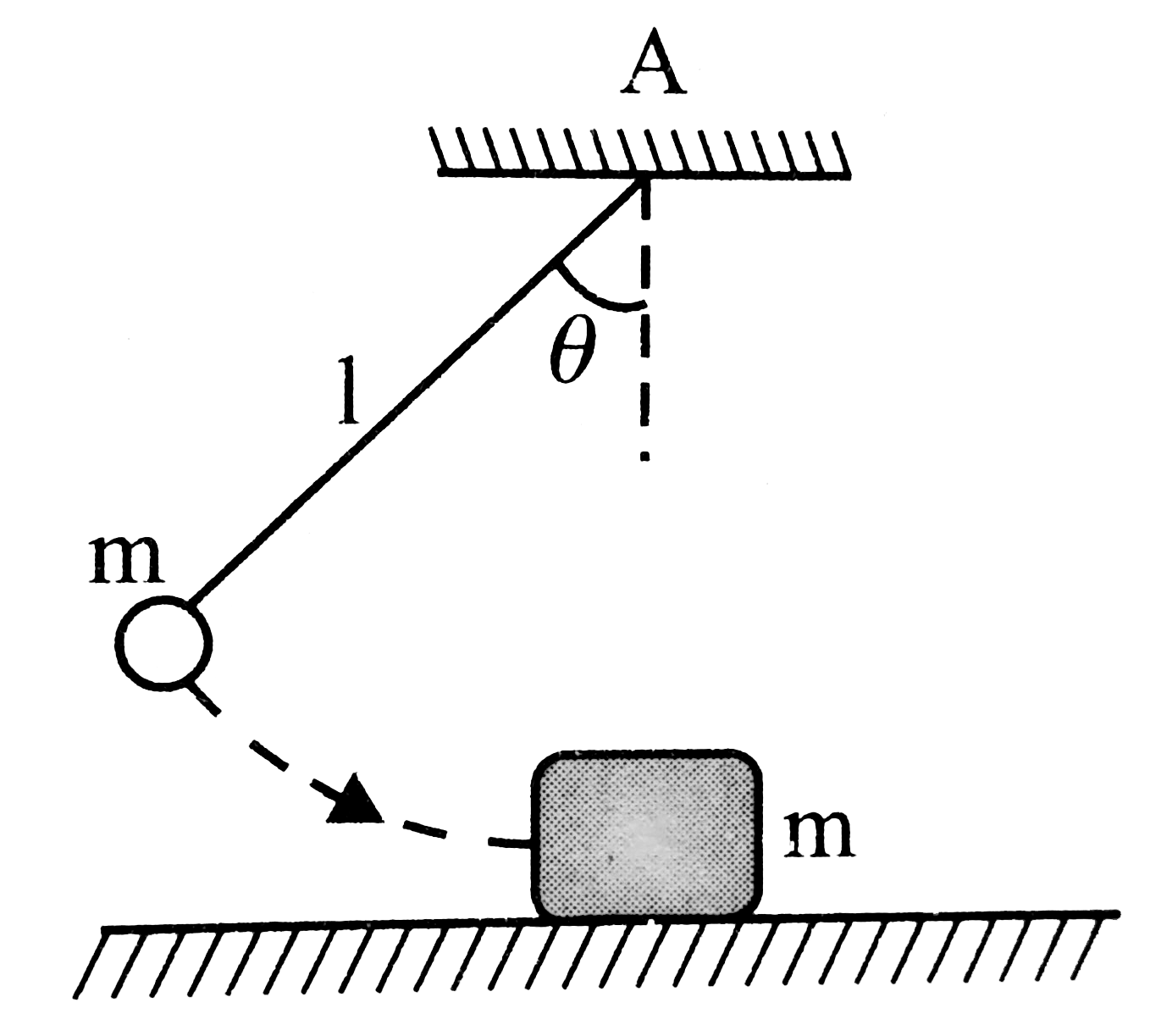
In the arrangement shown in Fig. the bal...

In the arrangement shown in Fig. the ball and the block have the same mass `m=1 kg` each, `theta=60^(@)` and length `l = 2.50m`. Coefficient of friction between the block and the floor is `0.5`. When the ball is released from the position shown in Fig. it collides with the block and the block stops after moving a distance `2.50 m`.

The coefficient of restitution for collision between the ball and the block is

Promotional Banner

Similar Questions

Explore conceptually related problems

In the arrangement shown in Fig. the ball and the block have the same mass m=1 kg each, theta=60^(@) and length l = 2.50m . Coefficient of friction between the block and the floor is 0.5 . When the ball is released from the position shown in Fig. it collides with the block and the block stops after moving a distance 2.50 m . The velocity of block just after collision is

In the arrangement shown in Fig. the ball and the block have the same mass m=1 kg each, theta=60^(@) and length l = 2.50m . Coefficient of friction between the block and the floor is 0.5 . When the ball is released from the position shown in Fig. it collides with the block and the block stops after moving a distance 2.50 m . The velocity of block just after collision is

In Fig. 7.149 , coefficient of friction between the block and the floor is mu . Force F that will move the block on the floor with a uniform speed is :

A block of mass m moving with speed v collides with another block of mass 2m at rest. The lighter block comes to rest after the collision. The coefficient of restitution is

In the figure shown the block A collides head on with another block B at rest. Mass of B is twice the mass of A. The block A stops after collision. The co-efficient of restitution is :

A block of mass m moving at speed upsilon collides with another block of mass 2 m at rest. The lighter block comes to rest after the collision. Find the coefficient of restitution.