Home
Class 11
PHYSICS
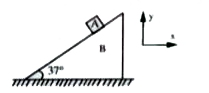
In the figure shown the acceleration of ...

In the figure shown the acceleration of A is, `veca =15hati+15hatj` then the acceleration of B is: (A remains in contact with B)

A

`6 hati`

B

`-15hati`

C

`-10 hati`

D

`-5hati`

Text Solution

Verified by Experts

The correct Answer is:

D
Promotional Banner

Topper's Solved these Questions

  • NEWTONS LAWS OF MOTION

    AAKASH SERIES|Exercise ADDITIONAL PRACTICE EXERCISE (LEVEL - I (MAIN)) (Straight Objective Type Questions)|26 Videos
  • NEWTONS LAWS OF MOTION

    AAKASH SERIES|Exercise ADDITIONAL PRACTICE EXERCISE (LEVEL - II (LECTURE SHEET (ADVANCED)) (Straight Objective Type Questions)|12 Videos
  • NEWTONS LAWS OF MOTION

    AAKASH SERIES|Exercise PRACTICE SHEET (EXERCISE - IV) (LEVEL - I) (Straight Objective Type Questions)|10 Videos
  • MOTION IN A STRAIGHT LINE

    AAKASH SERIES|Exercise Questions for Descriptive Answers|7 Videos
  • OSCILLATION

    AAKASH SERIES|Exercise QUESTIONS FOR DESCRIPTIVE ANSWERS|12 Videos

Similar Questions

Explore conceptually related problems

If veca = 4 hati - 3 hatj then find the value of | veca |

In the arrangement shown in the figure, the acceleration of the pulley is, (Ignore friction)

Find the projection of the vector veca=2hati+3hatj+2k on the vector vecb=hati+2hatj+hatk .

In the figure shown acceleration with which the mass m falls down when released is ( consider the string to be massless g-acceleration due to gravity )

Find the unit vector in the direction of the vector veca=hati+hatj+2hatk .

The instantaneous acceleration of the point of contact during rolling is zero.

A body of mass 5Kg moves under a force of 10 hati+15hatj -20hatk . What is the acceleration produced?
