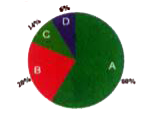
A
B
C
D
Text Solution
Verified by Experts
The correct Answer is:



Topper's Solved these Questions
ENVIRONMENTAL ISSUES
AAKASH SERIES|Exercise Exercise-II (Introduction)|2 VideosENVIRONMENTAL ISSUES
AAKASH SERIES|Exercise Exercise-II (Air pollution)|36 VideosENVIRONMENTAL ISSUES
AAKASH SERIES|Exercise Exercise-I (Soil/land pollution)|11 VideosECOSYSTEM
AAKASH SERIES|Exercise EXERCISE-III (PREVIOUS AIPMT/NEET QUESTIONS)|38 VideosHISTOLOGY AND ANATOMY OF FLOWERING PLANTS
AAKASH SERIES|Exercise EXERCISE - III (PREVIOUS AIPMT/NEET QUESTIONS)|24 Videos
Similar Questions
Explore conceptually related problems
AAKASH SERIES-ENVIRONMENTAL ISSUES-Exercise-I (Radioactive pollution)
- Green house effect is due to
Text Solution
|
- Checking the escaping heat wave into outer space by atmospheric CO(2),...
Text Solution
|
- Red the following pertaining to components the cause global warming ...
Text Solution
|
- Kyoto protocal is
Text Solution
|
- Surface of earth is kept warm by
Text Solution
|
- Which of the following conference obtained commitments from different ...
Text Solution
|
- A chemical weed in troposphere but a protector in stratosphere is
Text Solution
|
- Ultraviolet radiations from sunlight causes a reaction that produces
Text Solution
|
- The UV- rays in atmosphere are checked by
Text Solution
|
- Ozonosphere is mainly depleted by
Text Solution
|
- CFCs are not recommended to be used in refrigerator because they
Text Solution
|
- The following is not an ozone depleting substace
Text Solution
|
- Ultraviolet radiations produce the following photo-oxidant
Text Solution
|
- Ozone hole is the area where
Text Solution
|
- The concentration of ozone in stratosphere is lowest during the period
Text Solution
|
- CFCs split up in stratosphere to release chlorine by the action of
Text Solution
|
- The following is the unit of ozone
Text Solution
|
- In troposphere O(3) promotes
Text Solution
|
- What is bad ozone ?
Text Solution
|
- Montreal protocol was aimed to
Text Solution
|