Home
Class 11
PHYSICS
Two identical ball bearings in contact w...

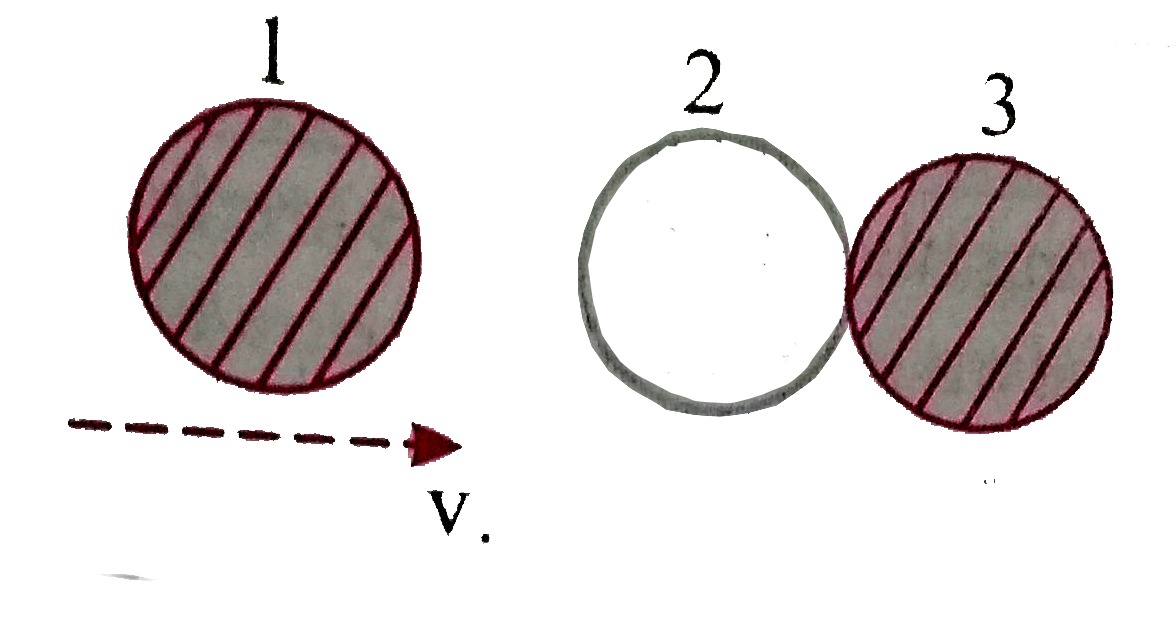
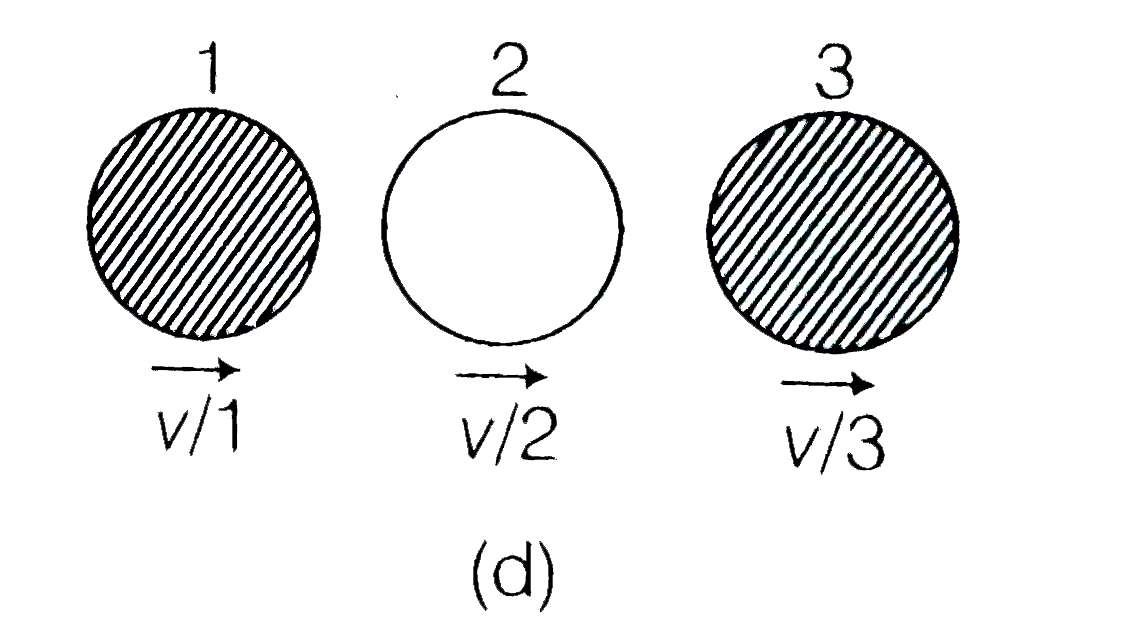
Two identical ball bearings in contact with each other and resting on a frictionless table are hit heat-on by another ball bearing of the same mass moving initially with a speed `V` as shown in figure.

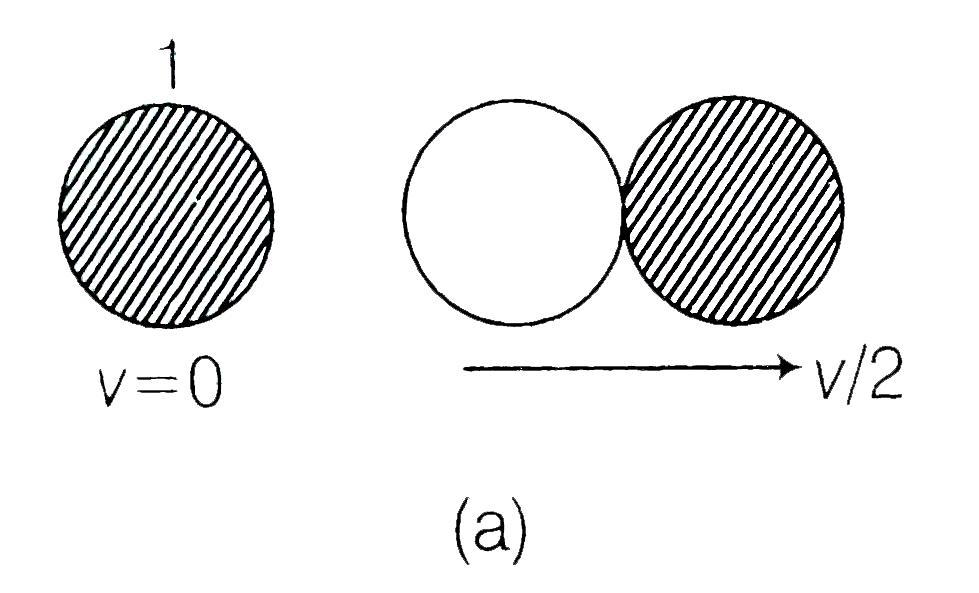
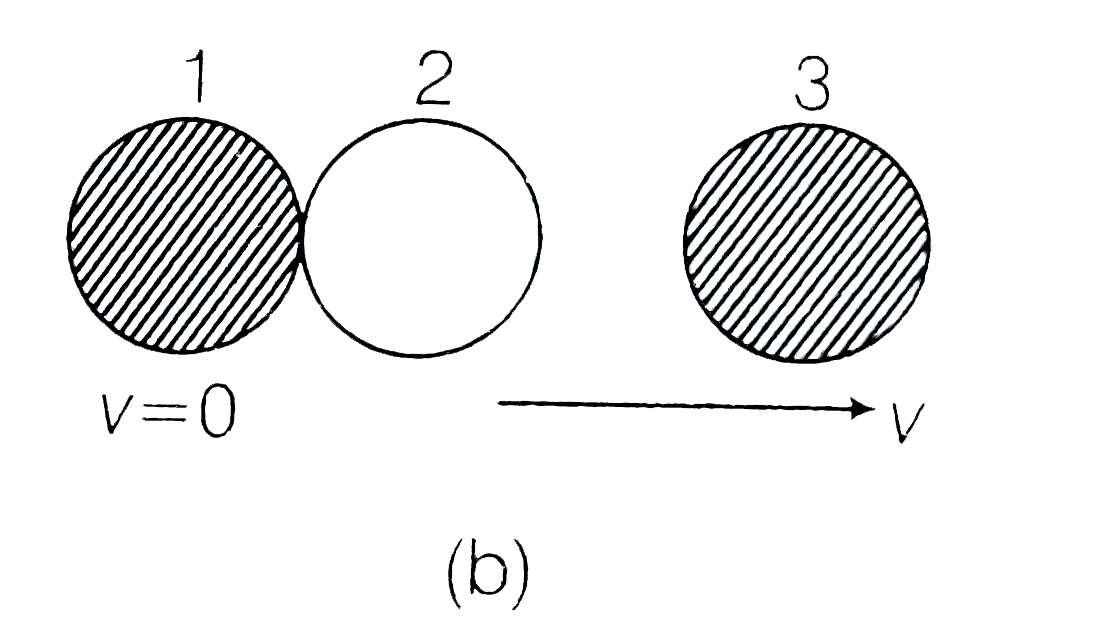
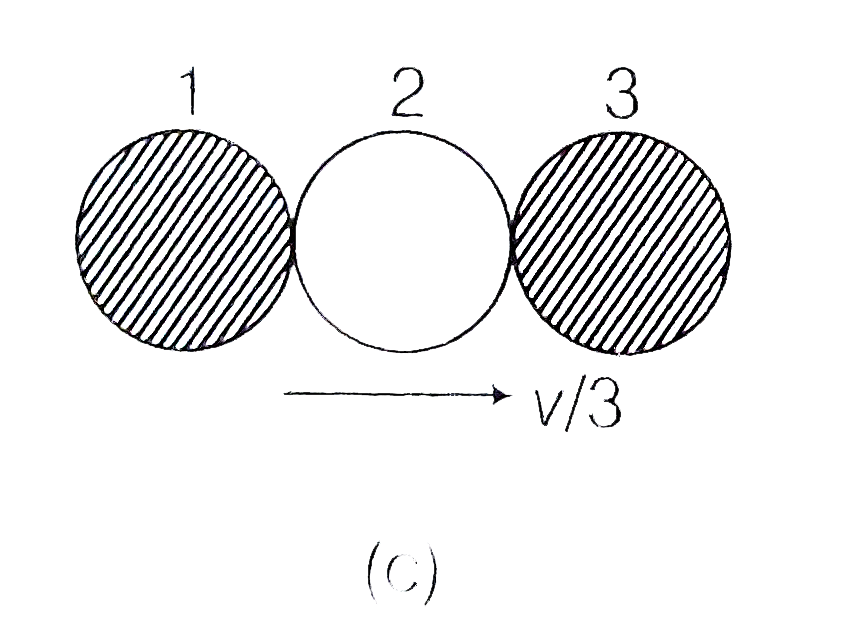
If the collision is elastic, which of the following (figure) is a possible result after collision ?

A

B

C

D

Text Solution

Verified by Experts

(b) When two bodies of equal masses colides elastically their velocities are interchanges. When ball 1 collides with ball-2 then velocity of ball-1. `v_(1)` becomes zero and velocity of ball-2, `v_(2)` becomes v,i.e. similarity
When ball 2 collides will ball 3
`{:(,v_(1)=0,Rightarrow v_(2)=v),(,v_(2)=0,v_(3)=v):}`
Promotional Banner

Similar Questions

Explore conceptually related problems

Two identical ball bearings in contact with each other and resting on a frictionless table are hit head on by another ball bearing of the same mass moving initially with a speed v, figure,. If the collision is elastic, which of the following is a possible result after collisioin?

Two identical vehicles are moving with same velocity v towards an intersection as shown in figure. If the collision is completely inelastic, then

A ball is moving with velocity 2m//s towards a heavy wall moving towards the ball with speed 1m//s as shown in figure. Assuming collision to be elastic, find the velocity of ball immediately after the collision.

A ball is moving with velocity 2m//s towards a heavy wall moving towards the ball with speed 1m//s as shown in figure. Assuming collision to be elastic, find the velocity of ball immediately after the collision.

In the figure shown, the two identical balls of mass M and radius R each, are placed in contact with each other on the frictionless horizontal surface. The third ball of mass M and radius R//2 , is coming down vertically and has a velocity = v_(0) when it simultaneously hits the two balls and itself comes to rest. Then, each of the two bigger balls will move after collision with a speed equal to

STATEMENT - 1 : Two identical balls B and C lie on a horizontal smooth straight groove so that they are touching. A third identical ball A moves at a speed v along the groove. And collides with B as shown in figure. If the collisions are perfectly elastic, then after the collision, balls A and B will come to rest and ball C moves with velocity v to the right. because STATEMENT - 2 : In an elastic collision, linear momentum and kinetic energy are both conserved.

A ball moving on a horizontal frictionless plane hits an identical ball at rest with a velocity of 0.5m//s . If the collision is elastic, calculate the speed imparted to the target ball, if the speed of projectile after the collision is 30cm//s .

A stick of length L and mass M lies on a frictionless horizontal surface on which it is free to move in any way. A ball of mass m moving with speed v collides elastically with the stick as shown in the figure. If after the collision the ball comes to rest, then what would be the mass of the ball?

A ball of mass m moving with a speed 2v_0 collides head-on with an identical ball at rest. If e is the coefficient of restitution, then what will be the ratio of velocity of two balls after collision?

A ball of mass m moving with a speed 2v_0 collides head-on with an identical ball at rest. If e is the coefficient of restitution, then what will be the ratio of velocity of two balls after collision?
