

Home
Class 12
CHEMISTRY
Which of the following reactions will yi...

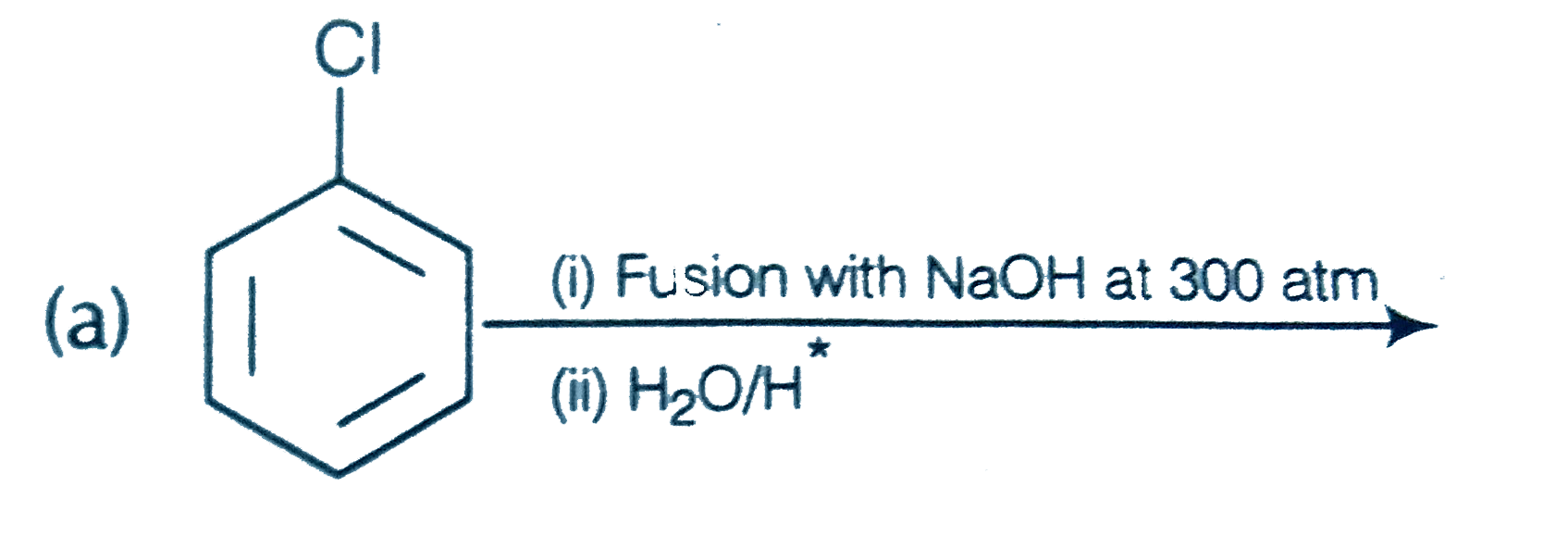
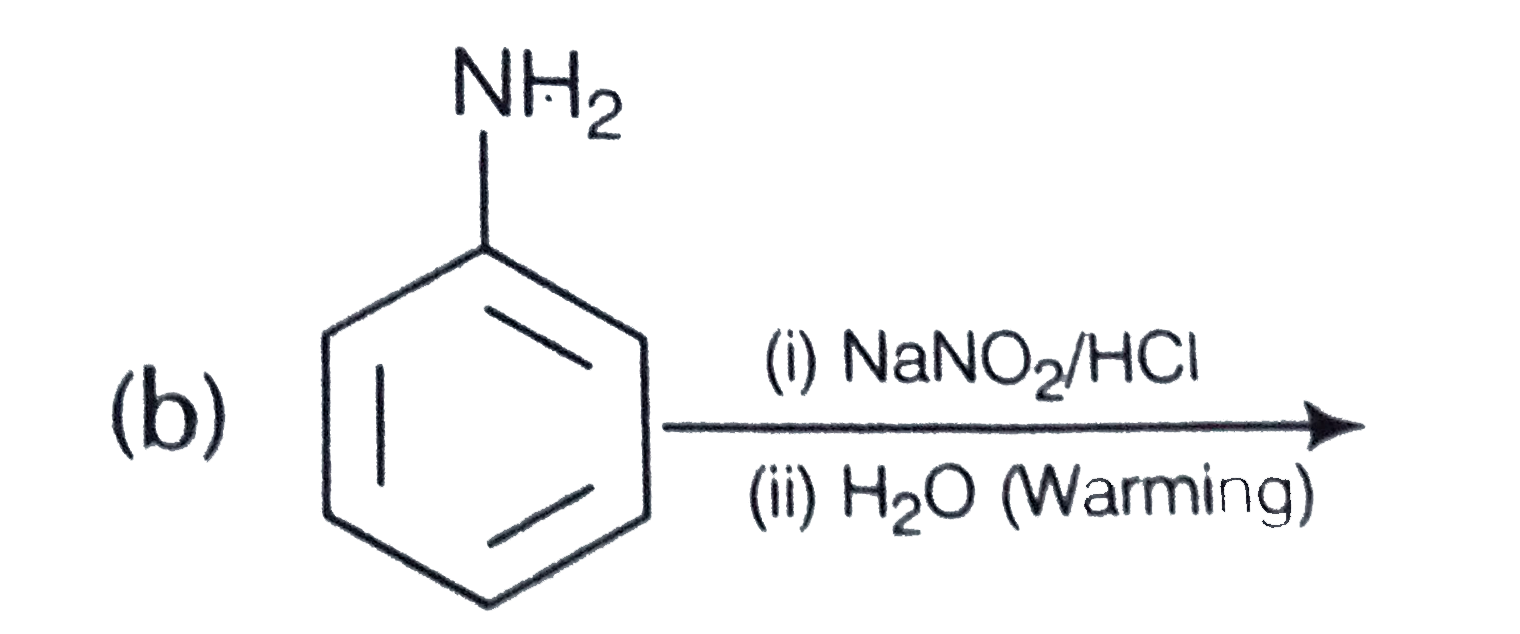
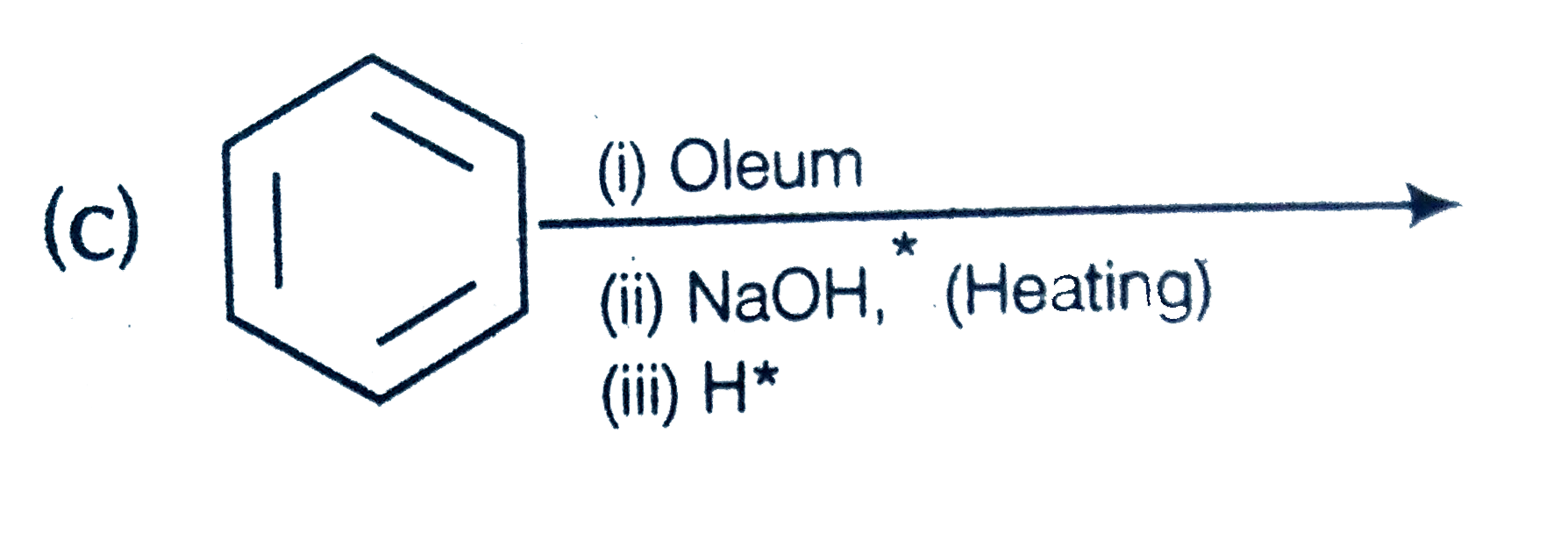
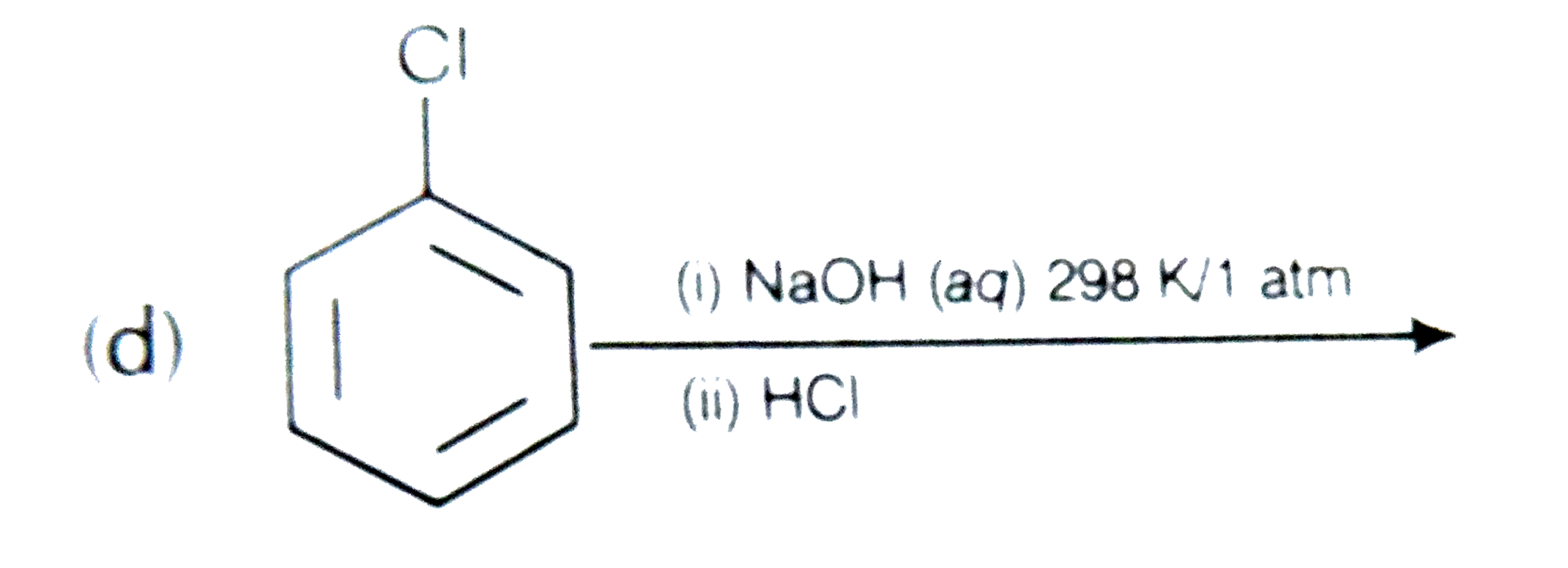
Which of the following reactions will yield phenol ?

A

B

C

D

Text Solution

AI Generated Solution

The correct Answer is:
To determine which of the given reactions will yield phenol, we will analyze each reaction step by step. ### Step 1: Analyze Reaction 1 - Chlorobenzene with NaOH - **Reaction:** Chlorobenzene + NaOH (at 380 atm and 623 K) → Sodium phenoxide - **Process:** Chlorobenzene (C6H5Cl) reacts with sodium hydroxide (NaOH) under high pressure and temperature. The chlorine atom is replaced by a sodium phenoxide group (C6H5O-Na+). - **Next Step:** Sodium phenoxide reacts with water in the presence of an acid (H+). - **Final Product:** The sodium ion (Na+) is replaced by a hydrogen ion (H+), yielding phenol (C6H5OH). - **Conclusion:** This reaction yields phenol. ### Step 2: Analyze Reaction 2 - Aniline with NaNO2 and HCl - **Reaction:** Aniline + NaNO2 + HCl → Benzene diazonium chloride - **Process:** Aniline (C6H5NH2) reacts with sodium nitrite (NaNO2) and hydrochloric acid (HCl) to form benzene diazonium chloride (C6H5N2+Cl-). - **Next Step:** The diazonium salt is treated with warm water. - **Final Product:** This leads to the formation of phenol (C6H5OH). - **Conclusion:** This reaction also yields phenol. ### Step 3: Analyze Reaction 3 - Benzene with Oleum and NaOH - **Reaction:** Benzene + Oleum + NaOH → Phenol - **Process:** Benzene (C6H6) reacts with oleum (H2S2O7) to form benzene sulfonic acid (C6H5SO3H). - **Next Step:** The sulfonic acid is treated with NaOH and acid (H+). - **Final Product:** The sulfonic group (SO3H) is replaced by a hydroxyl group (OH), yielding phenol (C6H5OH). - **Conclusion:** This reaction yields phenol as well. ### Step 4: Analyze Reaction 4 - Chlorobenzene at Room Temperature - **Reaction:** Chlorobenzene + NaOH (at room temperature) - **Process:** Chlorobenzene does not react with NaOH at room temperature due to its low reactivity towards nucleophilic substitution. - **Final Product:** No reaction occurs, and thus phenol is not produced. - **Conclusion:** This reaction does not yield phenol. ### Summary of Results - **Reactions that yield phenol:** - Reaction 1 (Chlorobenzene with NaOH at high pressure and temperature) - Reaction 2 (Aniline with NaNO2 and HCl) - Reaction 3 (Benzene with oleum and NaOH) - **Reaction that does not yield phenol:** - Reaction 4 (Chlorobenzene at room temperature) ### Final Answer The reactions that will yield phenol are the first, second, and third reactions. ---

To determine which of the given reactions will yield phenol, we will analyze each reaction step by step. ### Step 1: Analyze Reaction 1 - Chlorobenzene with NaOH - **Reaction:** Chlorobenzene + NaOH (at 380 atm and 623 K) → Sodium phenoxide - **Process:** Chlorobenzene (C6H5Cl) reacts with sodium hydroxide (NaOH) under high pressure and temperature. The chlorine atom is replaced by a sodium phenoxide group (C6H5O-Na+). - **Next Step:** Sodium phenoxide reacts with water in the presence of an acid (H+). - **Final Product:** The sodium ion (Na+) is replaced by a hydrogen ion (H+), yielding phenol (C6H5OH). - **Conclusion:** This reaction yields phenol. ...
Promotional Banner

Topper's Solved these Questions

  • ALDEHYDE, KETONES AND CARBOXYLIC ACIDS

    NCERT EXEMPLAR ENGLISH|Exercise Long Answer Type Questions|4 Videos

Similar Questions

Explore conceptually related problems

Which of the following reactions will not yield phenol ?

Which of the following reactions will yield 2, 2-dibromopropane ?

Which of the following reactions will not yield alcohol as the major product ?

Which of the following reactions does not yield an amine?

Wurtz reaction of methyl iodide yields an organic compound X. Which one of the following reactions also yields X?

Which of the following alcohols will yield the corresponding alkyl chloride on reaction with concentrated HCl at room temperature?

In which of the following reaction, the yield of the products does not increase by increase in thepressure?

Which of the following reactions give the poor yield of amine products?

Which of the following reactions would give a good yield of hydrocarbon product ?

NCERT EXEMPLAR ENGLISH-ALCOHOLS, PHENOLS AND ETHERS-All Questions
  1. Arrange the following compounds in increasing order of boiling point :...

    Text Solution

    |

  2. Which of the following are used to convert RCHO into RCH(2)OH ?

    Text Solution

    |

  3. Which of the following reactions will yield phenol ?

    Text Solution

    |

  4. Which of the following reagents can be used to oxidise primary alcohol...

    Text Solution

    |

  5. Phenol can be distinguished from ethanol by the following reagents exc...

    Text Solution

    |

  6. Which of the following are benzylic alcohols ?

    Text Solution

    |

  7. What is the structure and IUPAC name of glycerol ?

    Text Solution

    |

  8. Write the IUPAC name of the following compounds. (a) CH(3)-underset(...

    Text Solution

    |

  9. Write the IUPAC name of the compound given below. {:(CH(3)-CH(2)-C" ...

    Text Solution

    |

  10. Name the factors responsible for the solubility of alcohols in water.

    Text Solution

    |

  11. What is denatured alcohol ?

    Text Solution

    |

  12. Suggest a reagent for the following conversion.

    Text Solution

    |

  13. Out of 2-chloroethanol and ethanol which is more acidic and why ?

    Text Solution

    |

  14. Suggest a reagent for conversion of ethanol to ethanal.

    Text Solution

    |

  15. Suggest a reagent for conversion of ethanol to ethanoic acid.

    Text Solution

    |

  16. Out of o-nitrophenol and p-nitrophenol, which is more volatile ? Expla...

    Text Solution

    |

  17. Out of o-nitrophenol and o-cresol which is more acidic ?

    Text Solution

    |

  18. When phenol is treated with bromine water, white precipitate is obtain...

    Text Solution

    |

  19. What is the correct increasing order of acidic strength in the followi...

    Text Solution

    |

  20. Alcohols react with active metals e.g., Na, K etc., to give correspond...

    Text Solution

    |