

Home
Class 10
MATHS
Which of the following is not the graph ...

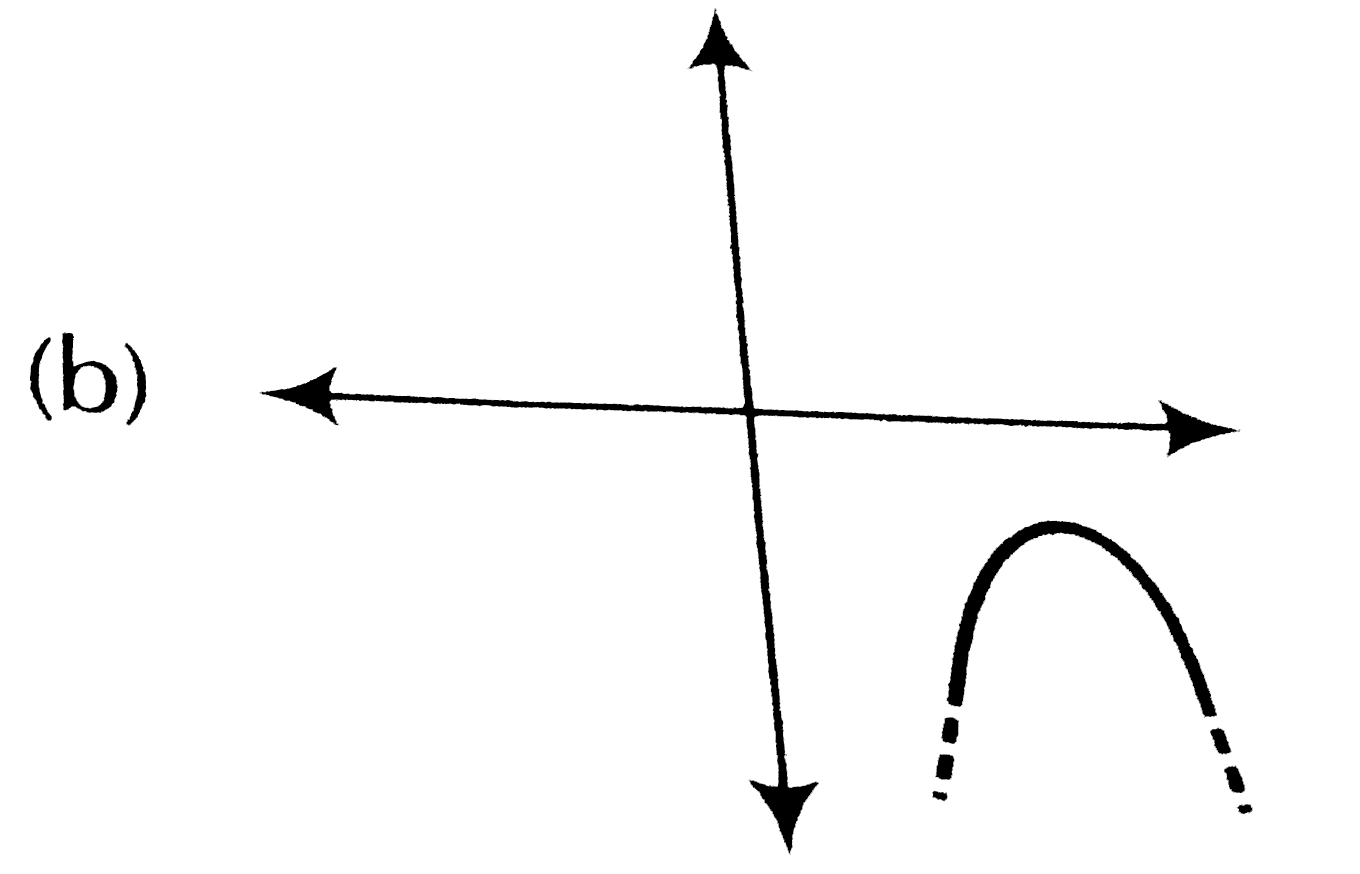
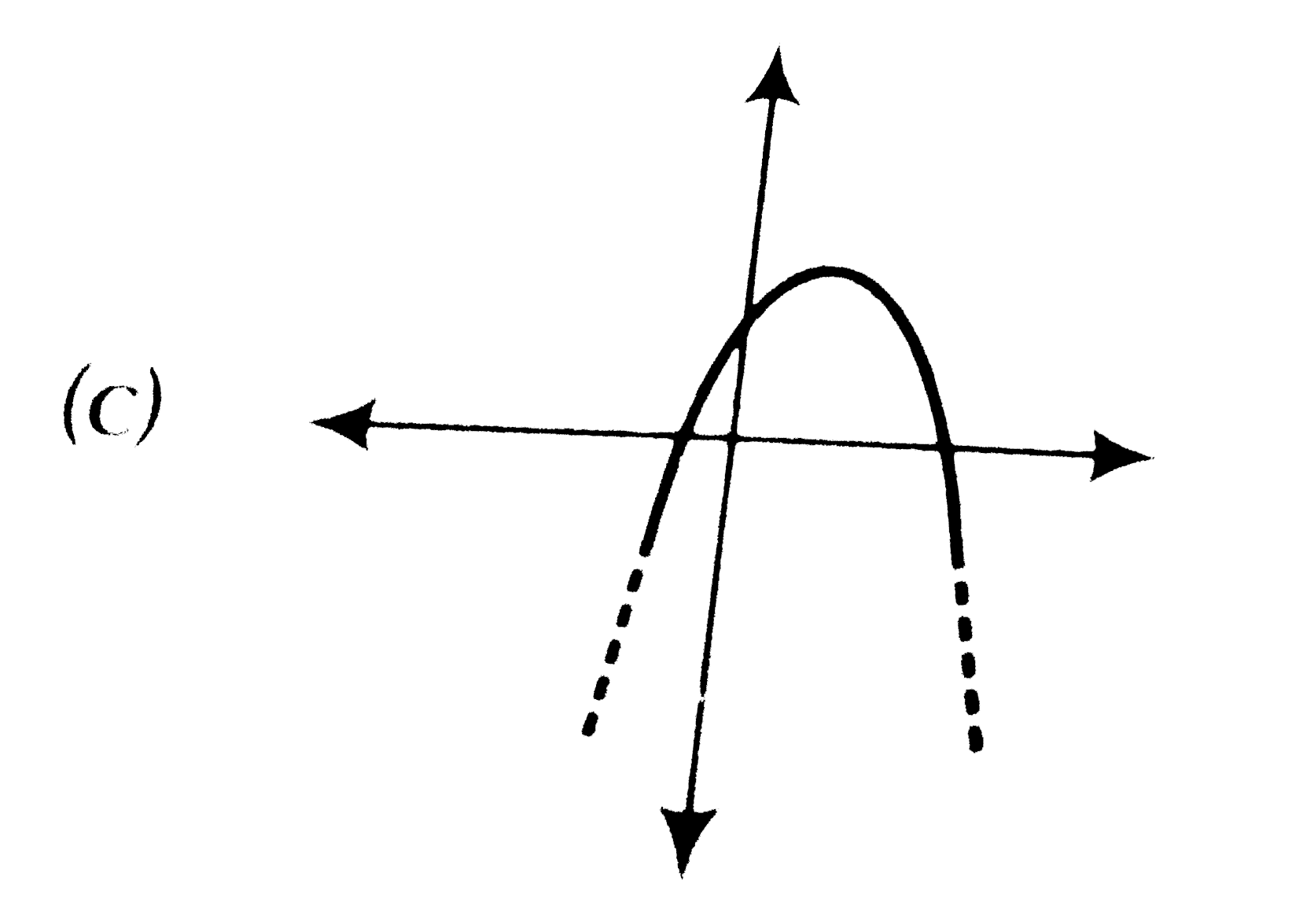
Which of the following is not the graph of a quadratic polynomial?

A

B

C

D

Text Solution

AI Generated Solution

The correct Answer is:

To determine which of the given graphs is not the graph of a quadratic polynomial, we need to understand the characteristics of quadratic polynomials and their graphs. ### Step-by-Step Solution: 1. **Understanding Quadratic Polynomials**: A quadratic polynomial is generally expressed in the form \( ax^2 + bx + c \), where \( a, b, \) and \( c \) are constants and \( a \neq 0 \). The graph of a quadratic polynomial is a parabola. **Hint**: Remember that the standard form of a quadratic polynomial is \( ax^2 + bx + c \). 2. **Roots of Quadratic Polynomials**: A quadratic polynomial can have at most 2 real roots. This means that the graph can intersect the x-axis at either 0, 1, or 2 points. **Hint**: Consider the maximum number of intersections a parabola can have with the x-axis. 3. **Shape of the Graph**: The graph of a quadratic polynomial can open upwards or downwards, depending on the sign of the coefficient \( a \): - If \( a > 0 \), the parabola opens upwards. - If \( a < 0 \), the parabola opens downwards. **Hint**: Check the direction of the parabola to determine the sign of \( a \). 4. **Analyzing the Given Graphs**: - **Graph 1**: This graph touches the x-axis at two points (two equal roots). This is a valid quadratic polynomial. - **Graph 2**: This graph intersects the x-axis at two distinct points (two distinct roots). This is also a valid quadratic polynomial. - **Graph 3**: This graph intersects the x-axis at three points. Since a quadratic polynomial cannot have more than 2 real roots, this graph cannot represent a quadratic polynomial. **Hint**: Count the number of points where each graph intersects the x-axis. 5. **Conclusion**: Based on the analysis, the graph that intersects the x-axis at three points is not the graph of a quadratic polynomial. ### Final Answer: The graph that intersects the x-axis at three points is not the graph of a quadratic polynomial.

To determine which of the given graphs is not the graph of a quadratic polynomial, we need to understand the characteristics of quadratic polynomials and their graphs. ### Step-by-Step Solution: 1. **Understanding Quadratic Polynomials**: A quadratic polynomial is generally expressed in the form \( ax^2 + bx + c \), where \( a, b, \) and \( c \) are constants and \( a \neq 0 \). The graph of a quadratic polynomial is a parabola. **Hint**: Remember that the standard form of a quadratic polynomial is \( ax^2 + bx + c \). ...
Promotional Banner

Topper's Solved these Questions

  • POLYNOMIALS

    NCERT EXEMPLAR ENGLISH|Exercise Very Short Answer Type Questions|2 Videos
  • POLYNOMIALS

    NCERT EXEMPLAR ENGLISH|Exercise Short Answer Type Questions|10 Videos
  • PAIR OF LINEAR EQUATIONS IN TWO VARIABLES

    NCERT EXEMPLAR ENGLISH|Exercise Exercise 3.4 Long Answer Type Questions|13 Videos
  • QUADRIATIC EQUATIONS

    NCERT EXEMPLAR ENGLISH|Exercise LONG ANSWER TYPE|12 Videos

Similar Questions

Explore conceptually related problems

If a,b,c in R, then for which of the following graphs of the quadratic polynomial y = ax ^(2) -2bx+ c (a ne 0), the product (abc) is negative ?

Which of the following is not a quadratic equation?

Which of the following graphs are graphs of a function?

Which of the following graphs could not be the graph of a function?

Which of the following is a straight line graph?

Which of the following is correct graph for the reaction?

If each one of the following graphs is the graph of a polynomial, then identify which one corresponds to a linear polynomial and which one corresponds to a quadratic polynomial? (FIGURE)

Draw the graph of the quadratic polynomial f(x)=3-2x-x^2

For each of the following find a quadratic polynomial whose sum and product respectively of the zeroes are as given. Also, find the zeroes of these polynomials by factorisation. (i) (-8)/(3),(4)/(3) (ii) (-3)/(2sqrt(5)),-(1)/(2)
