Home
Class 12
CHEMISTRY
According to Arrhenius equation rate co...

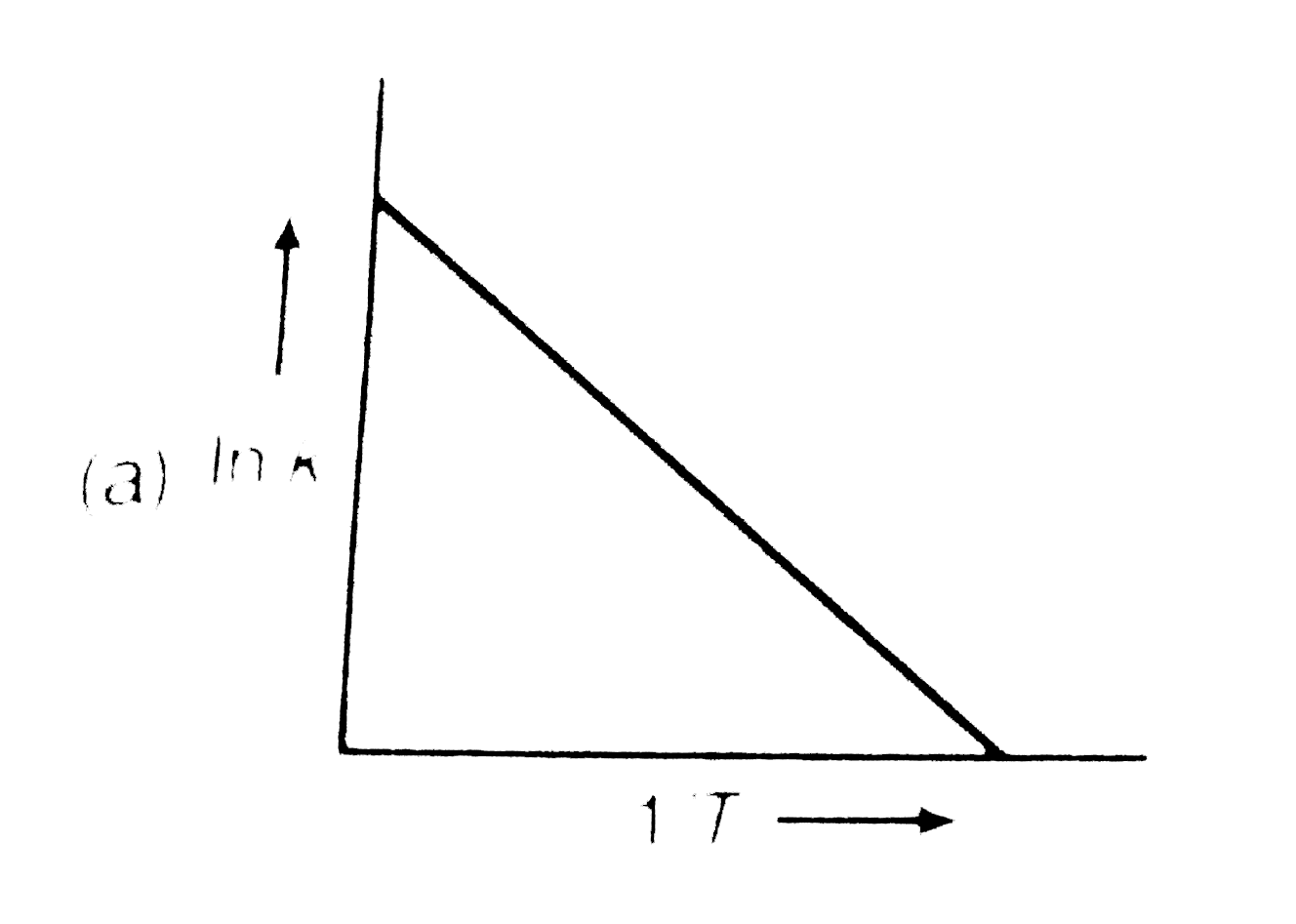
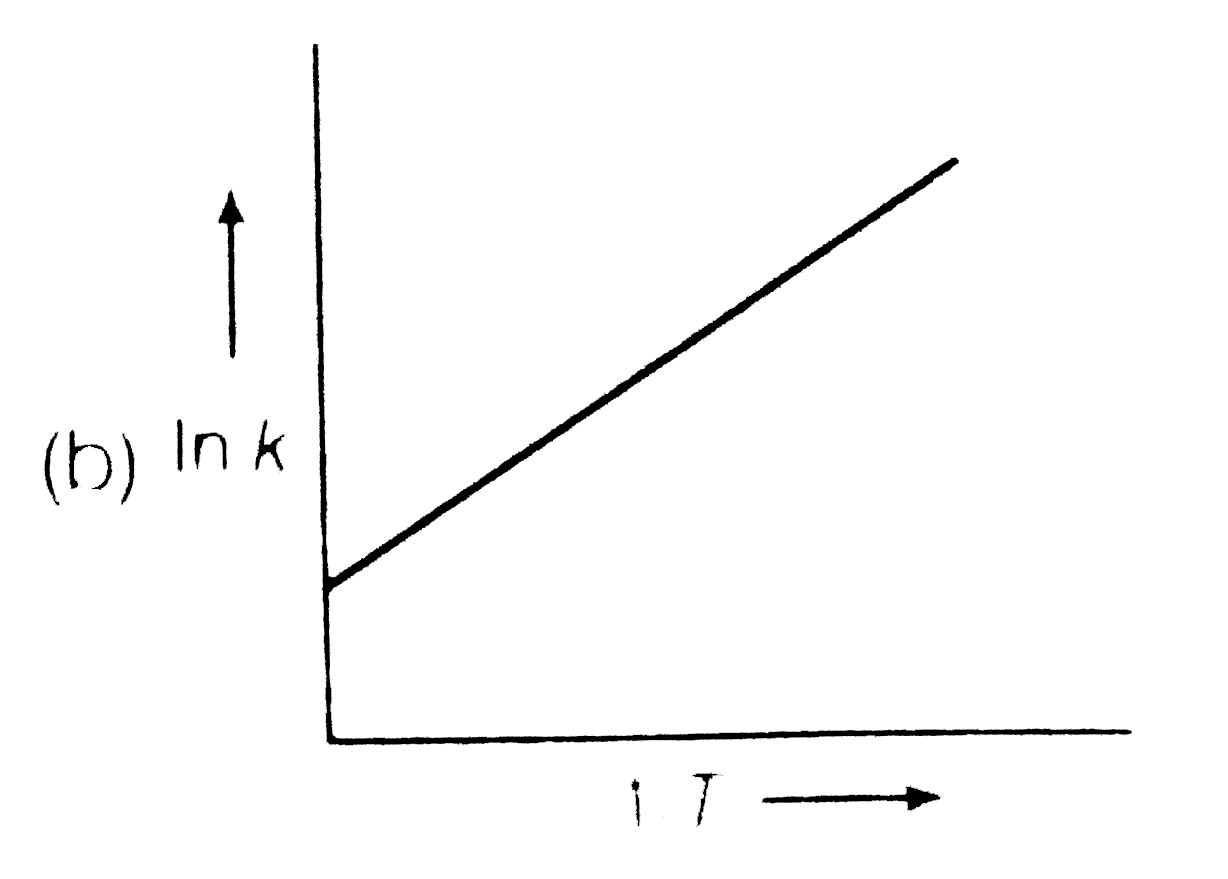
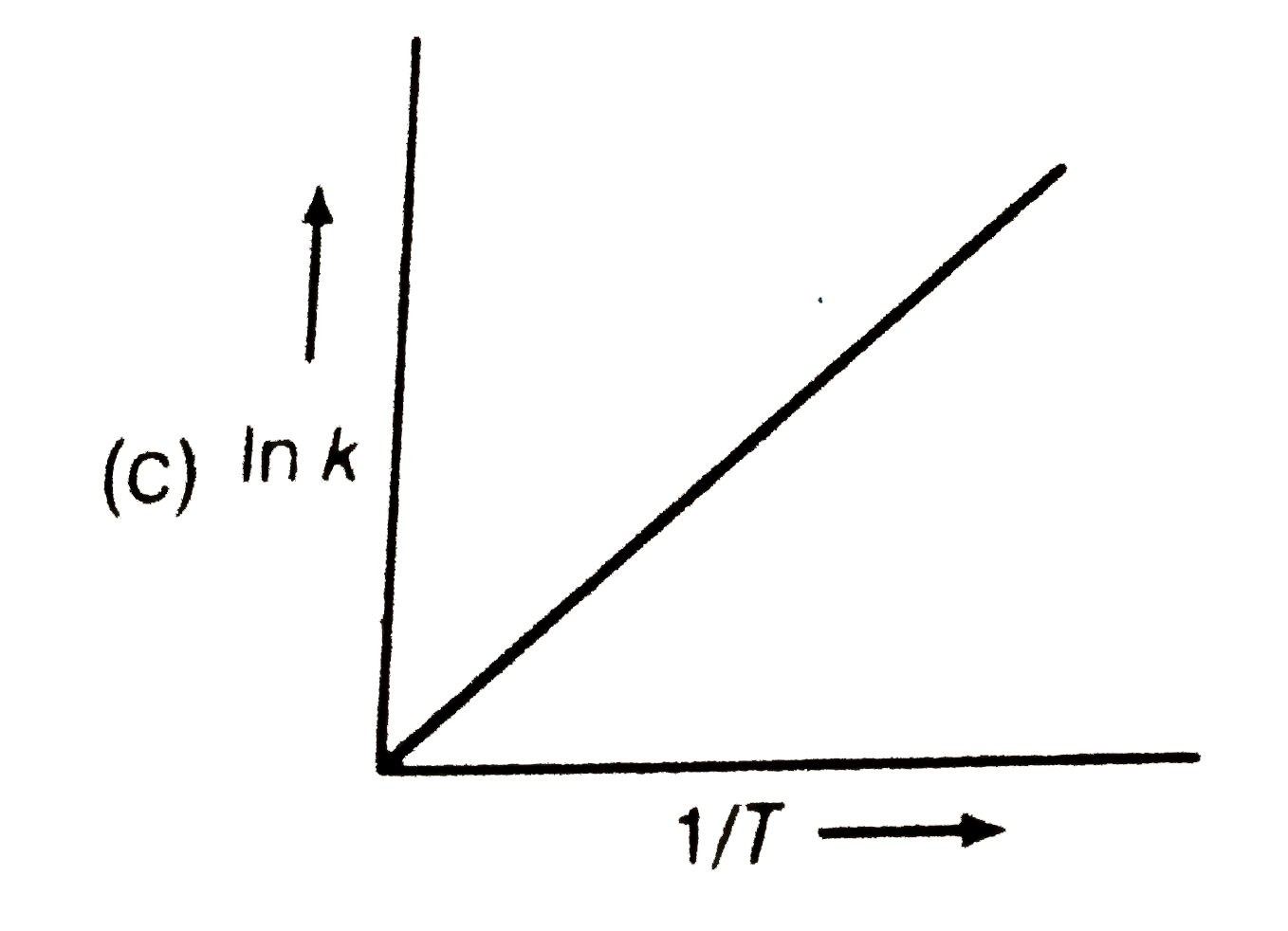
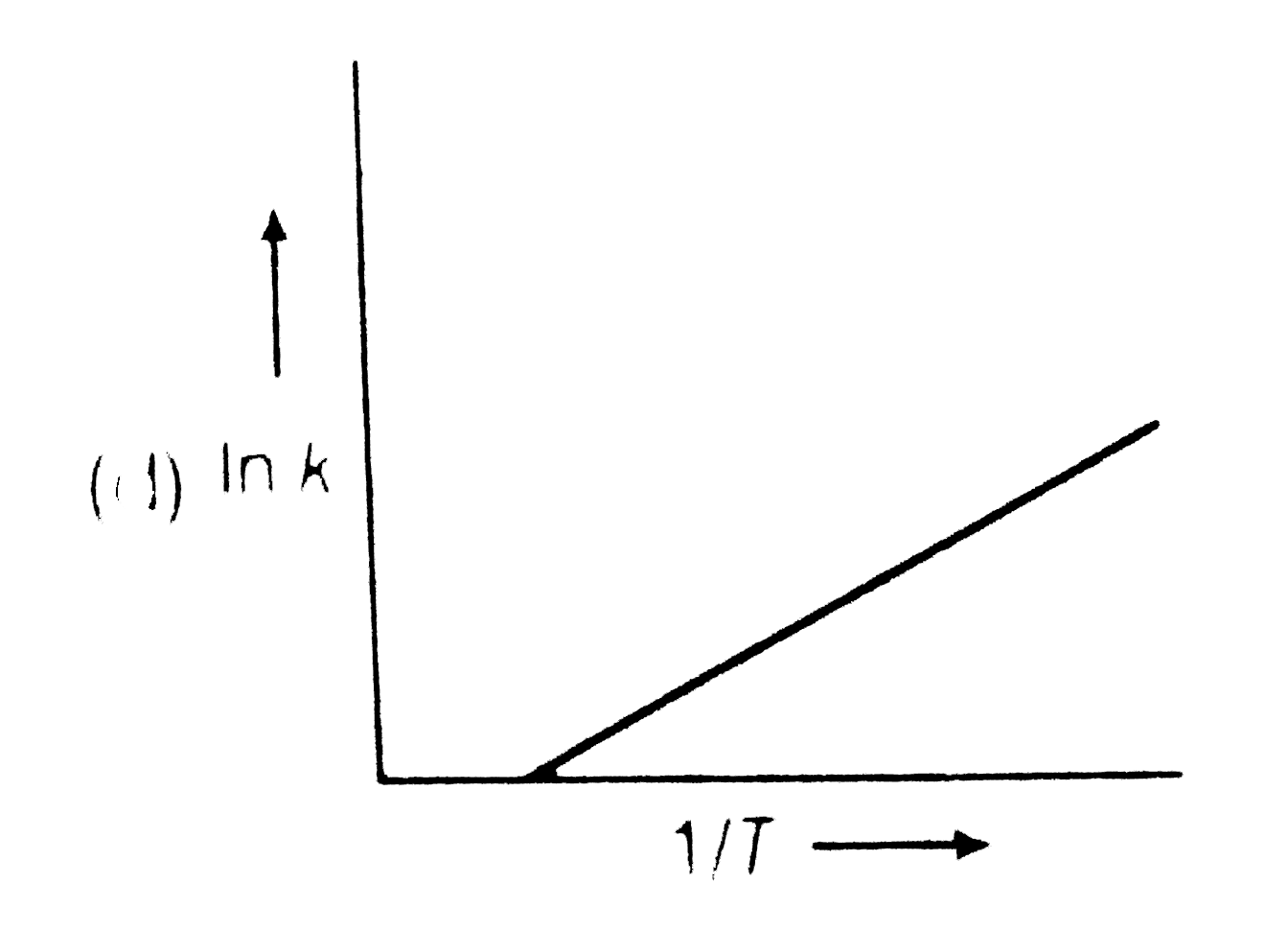
According to Arrhenius equation rate constant K is equal to A `e.^(-E_(a)//RT)` . Which of the following options represents the graph of ln K vs `(1)/(T)`?

A

B

C

D

Text Solution

AI Generated Solution

The correct Answer is:

To solve the question regarding the Arrhenius equation and the graph of ln K versus (1/T), we can follow these steps: ### Step-by-Step Solution: 1. **Write the Arrhenius Equation**: The Arrhenius equation is given by: \[ k = A e^{-\frac{E_a}{RT}} \] where \( k \) is the rate constant, \( A \) is the pre-exponential factor, \( E_a \) is the activation energy, \( R \) is the universal gas constant, and \( T \) is the temperature in Kelvin. 2. **Take the Natural Logarithm**: To analyze the relationship between \( k \) and \( T \), we take the natural logarithm of both sides: \[ \ln k = \ln A - \frac{E_a}{R} \cdot \frac{1}{T} \] 3. **Rearrange the Equation**: Rearranging the equation gives us: \[ \ln k = -\frac{E_a}{R} \cdot \frac{1}{T} + \ln A \] This equation can be compared to the linear equation \( y = mx + c \), where: - \( y = \ln k \) - \( x = \frac{1}{T} \) - \( m = -\frac{E_a}{R} \) (the slope) - \( c = \ln A \) (the y-intercept) 4. **Identify the Characteristics of the Graph**: From the rearranged equation: - The slope \( m \) is negative (\(-\frac{E_a}{R} < 0\)), indicating that the graph will slope downwards. - The y-intercept \( c \) is positive (\(\ln A > 0\)), indicating that the graph will start above the origin on the y-axis. 5. **Sketch the Graph**: Based on the information above, the graph of \( \ln k \) versus \( \frac{1}{T} \) will: - Start from a positive value on the y-axis (due to the positive intercept). - Decrease as \( \frac{1}{T} \) increases (due to the negative slope). 6. **Select the Correct Option**: Now, we compare the characteristics of the graph we derived with the provided options. The correct graph will show a downward slope starting from a positive y-intercept. ### Conclusion: The correct option represents a graph of \( \ln k \) versus \( \frac{1}{T} \) that has a positive intercept and a negative slope. ---

To solve the question regarding the Arrhenius equation and the graph of ln K versus (1/T), we can follow these steps: ### Step-by-Step Solution: 1. **Write the Arrhenius Equation**: The Arrhenius equation is given by: \[ k = A e^{-\frac{E_a}{RT}} ...
Promotional Banner

Topper's Solved these Questions

  • CHEMICAL KINETICS

    NCERT EXEMPLAR ENGLISH|Exercise MULTIPLE CHOICE QUESTIONS|12 Videos
  • CHEMICAL KINETICS

    NCERT EXEMPLAR ENGLISH|Exercise SHORT ANSWER TYPE QUESTION|20 Videos
  • BIOMOLECULES

    NCERT EXEMPLAR ENGLISH|Exercise Long Answer Type Questions|5 Videos
  • CHEMISTRY IN EVERYDAY LIFE

    NCERT EXEMPLAR ENGLISH|Exercise Long Answer Type Qns|4 Videos

Similar Questions

Explore conceptually related problems

According to Arrhenius equation rate constant k is equal to Ae^(-E_(a)//RT) . Which of the following option. Represents the graph of ln k us (1)/(T) ?

According to Arrhenius equation rate constant k is equal to Ae^(-E_(a)//RT) . Which of the following option. Represents the graph of ln k us (1)/(T) ?

According to Arrhenius equation, rate constant k is equal to A e^(- E_a //RT) Which of the following options represents the graph of In k vs 1/T ?

In Arrhenius equation , K=Ae^(-E_a//RT) . The A is

Which one is correct for K = A e^(-E_(a)//RT ?

For the Arrhenius equation, the slope for the plot ln k vs 1/T is

Consider the Arrhenius equation given below and mark the correct option. k=A e^(-(Ea)/(RT)
