Home
Class 12
CHEMISTRY
Explain the following observations : (...

Explain the following observations :
(i) Nitrogen is much less reactive than phosphorus.
(ii) Despite having greater polarity, hydrogen fluoride boils at a lower temperature than water.

Text Solution

Verified by Experts
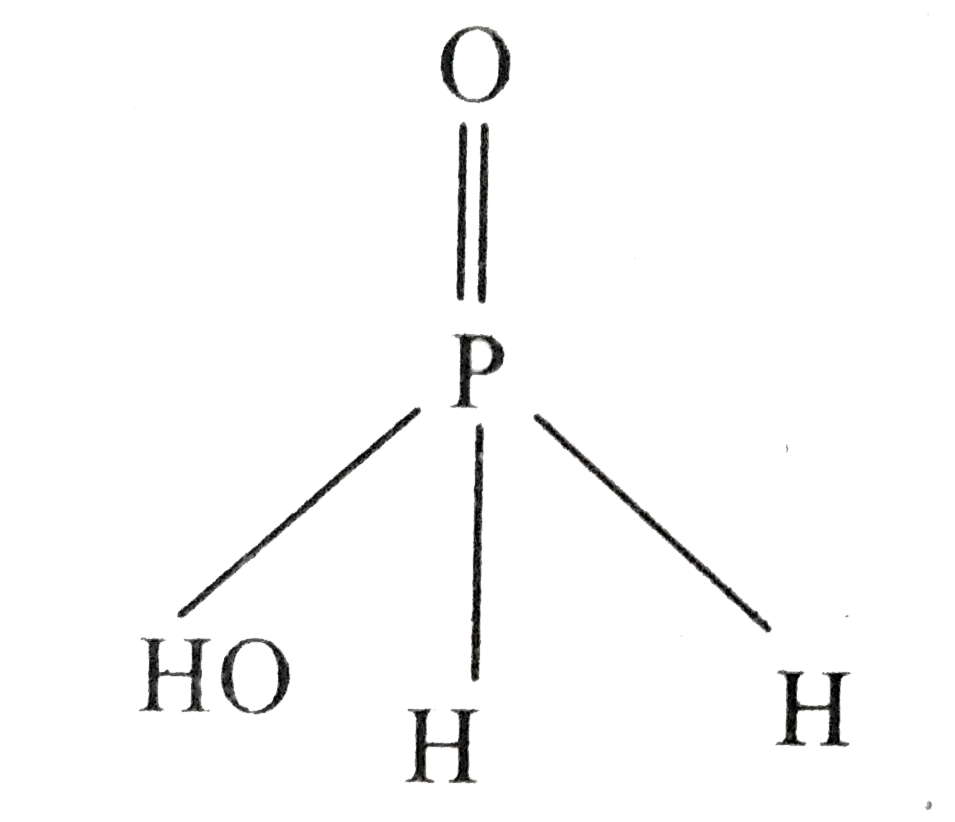
(i) `H_(3)PO_(2)`

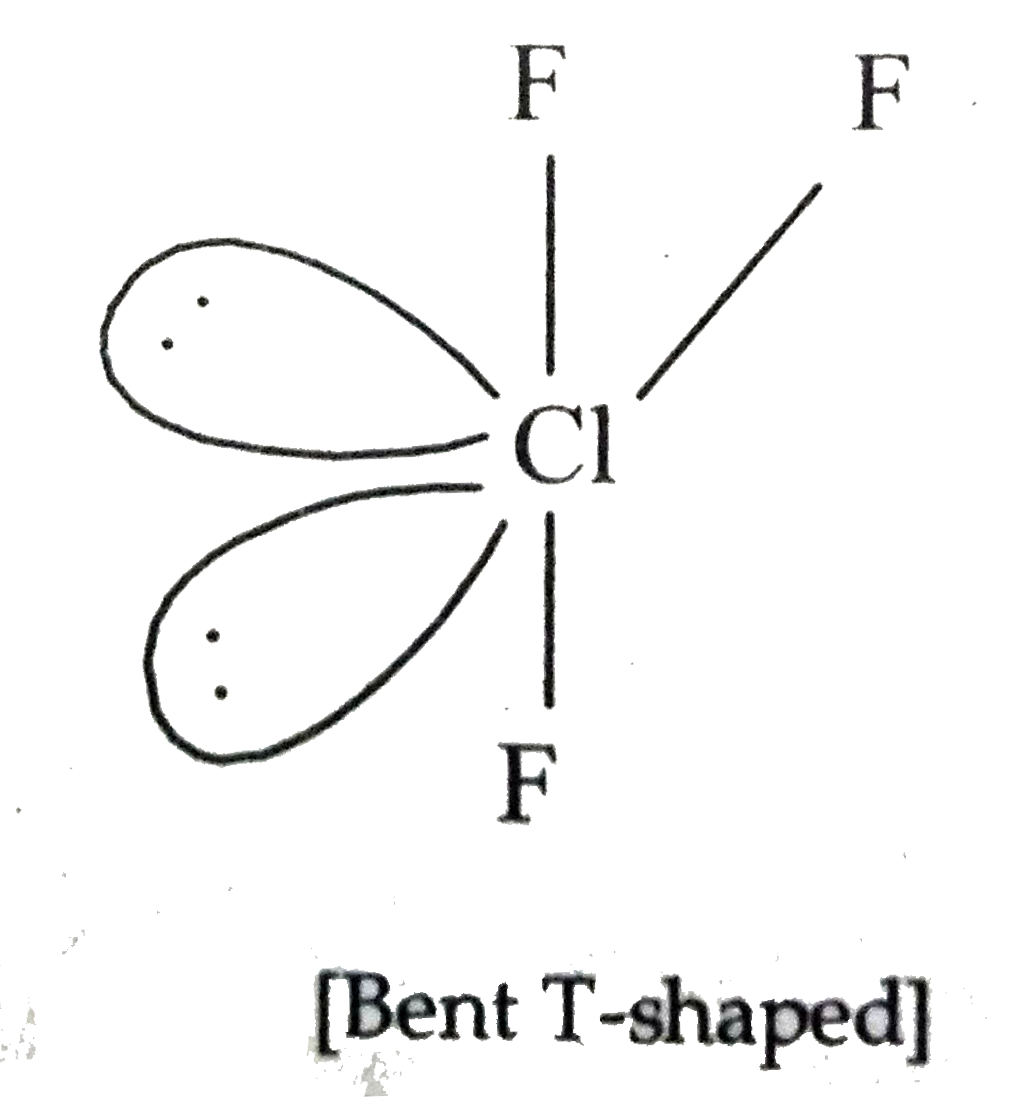
(ii) `CIF_(3)` : Structure of `ClF_(3)`(g)

(b) (ii) Water molecules has twice as many Hydrogen bonding does HF and therefore more intermolecular attraction and higher boiling point than HF.
Promotional Banner

Topper's Solved these Questions

  • XII BOARDS

    XII BOARD PREVIOUS YEAR PAPER ENGLISH|Exercise Outside Delhi : SET-III|11 Videos
  • XII BOARDS

    XII BOARD PREVIOUS YEAR PAPER ENGLISH|Exercise SECTION-A|13 Videos
  • XII BOARDS

    XII BOARD PREVIOUS YEAR PAPER ENGLISH|Exercise [SET-III]|10 Videos
  • SAMPLE PAPER 2019

    XII BOARD PREVIOUS YEAR PAPER ENGLISH|Exercise SECTION: D|1 Videos

Similar Questions

Explore conceptually related problems

Explain the following : Hydrogen fluoride is much less volatile than hydrogen chloride.

Explain the following (i) Nitrogen is much less reactive than phosphorus. (ii) NF_(3) is an exothermic compound but NCl_(3) is an endothermic compound.

Why does water boil at a lower temperature in Nainital than in Delhi.

(a) Complete the following chemical equations . (i) XeF_(4) + SbF_(5) rarr , (ii) Cl_(2) + F_(2) ("excess") rarr (b) explain each of the following : (i) Nitrogen is much less reactive than phosphorus. (ii) The stability of +5 oxidation state decreases down group 15. (iii) The bond angles (O-N-O) are not of the value in NO_(2)^(-) and NO_(2)^(+) .

Explain the following situations : (ii) Sulfur exhibits greater tendency for catenation than selenium.

(a) Draw the structures of the following : (i) XeF_(4) (ii) H_(2)S_(2)O_(7) (iii) SO_(3)^(2-) (b) Explain the following observations : (i) Phosphorous has a greater tendency for catenation than nitrogen. (ii) The negative value of electron gain enthalpy is less for fluorine than that for chlorine. (iii) Hydrogen fluoride has a much higher boiling point than hydrogen chloride.

Sodium chloride solution freezes at lower temperature then water but boils at higher temperature than water. Explain.

(a) Draw the molecular structures of the following compounds : (i) N_(2)O_(5) " " (ii) XeOF_(4) (b) Explain the following observations : (i) Sulphur has a greater tendency for catenation than oxygen. (ii) ICI is more reactive than I_(2) . (iii) Despite lower value of its electron gain enthalpy with negative sign, fluorine (F_(2)) is a stronger oxidizing agent than Cl_(2) .

(a) Draw the structures of the following : (i) PCl_(5) (s) (ii) SO_(3)^(2-) Explain the following observations : (i) Ammonia has a higher boiling point than phosphin. (ii) Helium does not form any chemical compound. (iii) Bi (V) is a stronger oxidising agent than Sb (V).

Assertion (A) N_(2) is less reactive than P_(4) . Reason (R ) Nitrogen has more electron gain enthalpy then phosphorus.