

Home
Class 12
PHYSICS
(a) How is a toroid different from a sol...

(a) How is a toroid different from a solenoid?
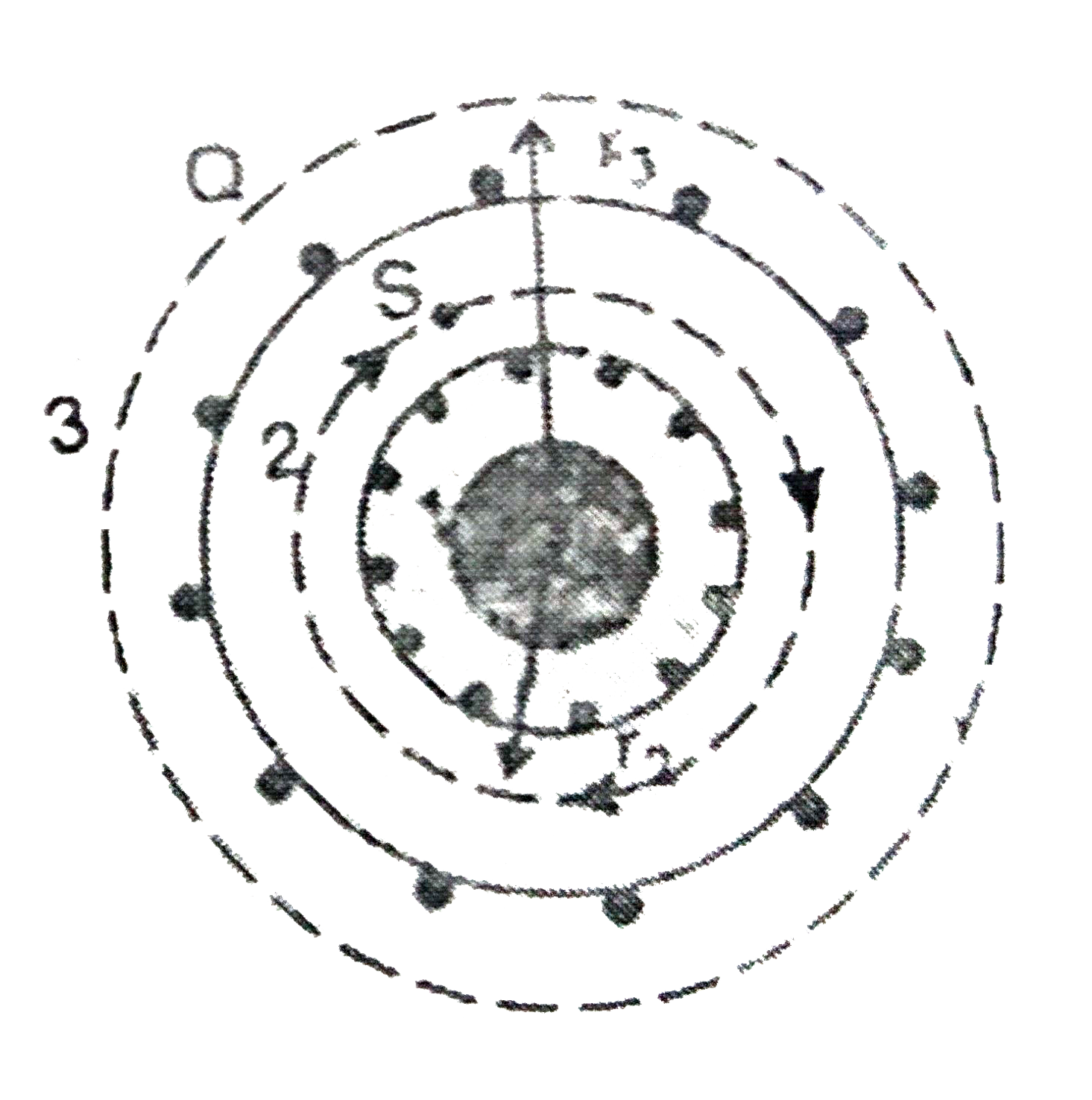
(b) Show that in an ideal toroid, the magnetic field (i) inside the toroid and (ii) outside the toroid at any point in the open space is zero.

Promotional Banner

Similar Questions

Explore conceptually related problems

A toroid has a core (non ferromagnetic material) of inner radius 25cm and outer radius 26cm around which 3500 turns of wire are wound. If the current in the wire is 11A , what is the magnetic field (a) outside the toroid (b) inside the core of the toroid (c) in the empty space surrounded by the toroid?

A toroid having 200 turns carries a current of 1A. The average radius of the toroid is 10 cm. the magnetic field at any point in the open space inside the toroid is

A toroid with mean radius r_(0) , diameter 2a have N turns carrying current l. What is the magnetic field B inside the the toroid?

The magnetic field at a point near the centre but outside a current carrying solenoid is zero. Explain why?

Magnetic field lines can be entirely confined within the core of a toroid, but not within a straight solenoid. Why?

A current i flows along the length of an infinitely long, straight, thin-walled pipe. Then, (a) the magnetic field at all points inside the pipe is the same, but not zero (b) the magnetic field at any point inside the pipe is zero (c) the magnetic field is zero only on the axis of the pipe (d) the magnetic field is different at different points inside the pipe

(a) Using Biot-Savart's law, derive the expression for the magnetic field in the vector form at a point on the axis of a circular current loop. (b) What does a toroid consist of? Find out the expression for the magnetic field inside a toroid for N turns of the coil having the average radius r and carrying a current I. Show the magnetic field in the open space inside and exterior to the toroid is Zero.

For toroid of mean radius 20 cm, turns = 240 and a current of 2A. What is the value of magnetic field within toroid ?

Consider the two idealized systems: (i) a parallel plate capacitor with large plates and small separation and (ii) a long solenoid of length Lgt gt R , radius of cross-section. In (i) vecE is ideally treated as a constant between plates and zero outside. In (ii) magnetic field is constant inside the solenoid and zero outside. These idealised assumptions, however, contradict fundamental law as below:

Consider the two idealized systems: (i) a parallel plate capacitor with large plates and small separation and (ii) a long solenoid of length Lgt gt R , radius of cross-section. In (i) vecE is ideally treated as a constant between plates and zero outside. In (ii) magnetic field is constant inside the solenoid and zero outside. These idealised assumptions, however, contradict fundamental law as below: