

Home
Class 12
BIOLOGY
Why do you see two different types of re...


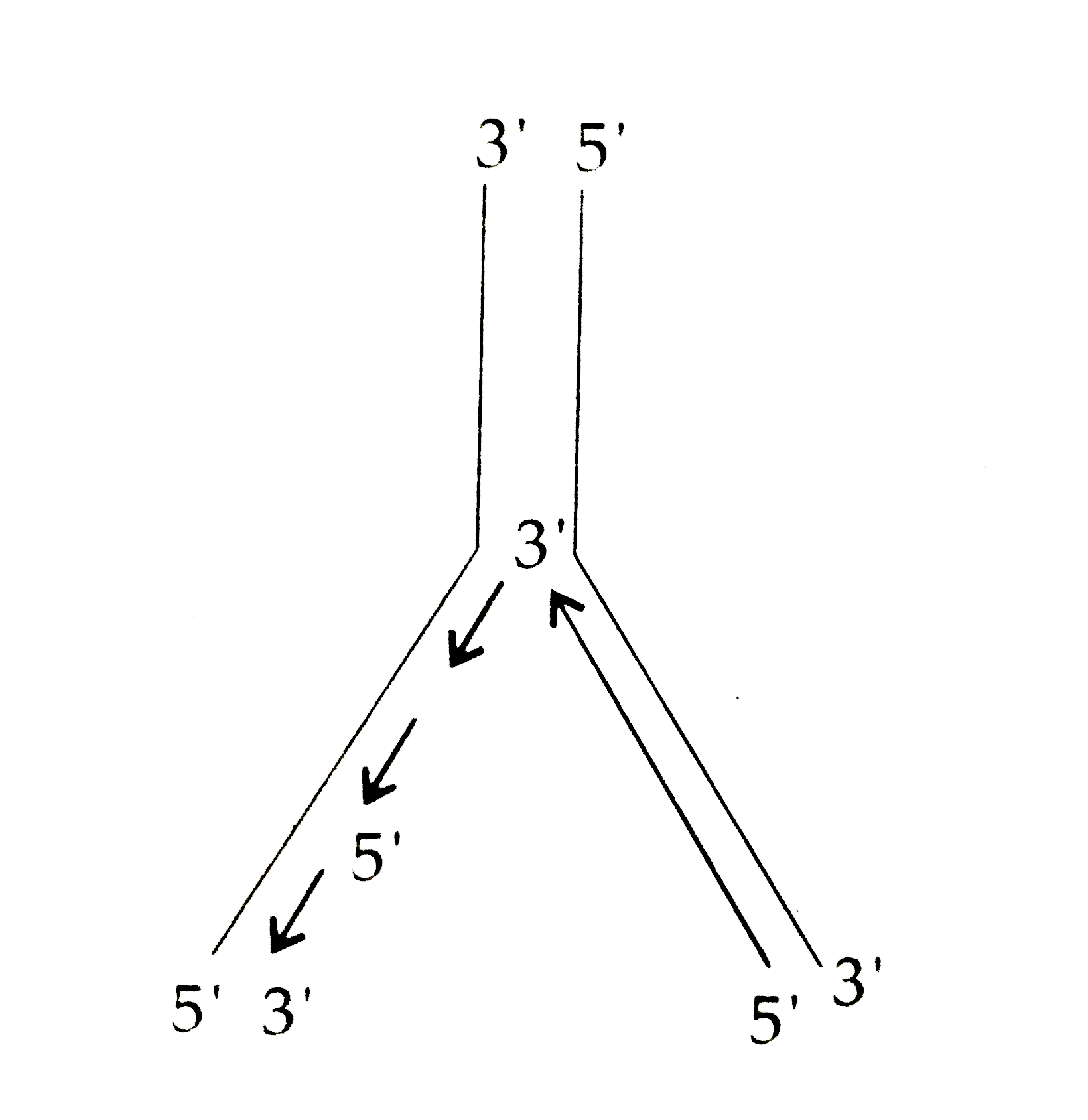
Why do you see two different types of replicating strands in the given DNA replication fork ? Explain. Name these strands.

Promotional Banner

Similar Questions

Explore conceptually related problems

Why do you see two different types of replicating strands in the given DNA replication fork? Explain . Name these starands.

Explain the process of DNA replication.

What do you understand by "origin of replication" ?

AB and CD represent two strands of a DNA molecule. When it undergoes replication, forming a replication fork between A and C: Name the template strand for replication.

During replication of DNA, the number of template strands is

Eukaryotes differ from prokaryotes in the mechanism of DNA replication due to

A 3' ______________ 5' B C 5' _______________ 3'D AB and CD represent two strands of a DNA molecule. When this molecule undergoes replication, forming a replication fork between A and C in the above. (i) Name the template strands for replication. (ii) Using which strand as the template, will there be continuous synthesis of a complementary DNA strand? (iii) Complementary to which strand will Okazaki segments get synthesised and discontinuous synthesis will occur (iv) What are template strands and Okazaki pieces? (v) In which direction is a new strand synthesized?

Method of DNA replication in which two strands of DNA separates and synthesize new strands :-

AB and CD represent two strands of a DNA molecule. When it undergoes replication, forming a replication fork between A and C: What is template strand and Okazaki pieces?

AB and CD represent two strands of a DNA molecule. When it undergoes replication, forming a replication fork between A and C: Complementary to which strand will Okazaki segments get synthesised and discontinuous synthesis will occur?