To determine for which of the given graphs the product \(abc\) is negative for the quadratic expression \(y = ax^2 + bx + c\), we need to analyze the signs of \(a\), \(b\), and \(c\) based on the characteristics of each graph.
### Step-by-Step Solution:
1. **Identify the Sign of \(a\)**:
- The coefficient \(a\) determines the concavity of the parabola:
- If the parabola opens upwards (U-shape), then \(a > 0\).
- If the parabola opens downwards (∩-shape), then \(a < 0\).
- Analyze each option:
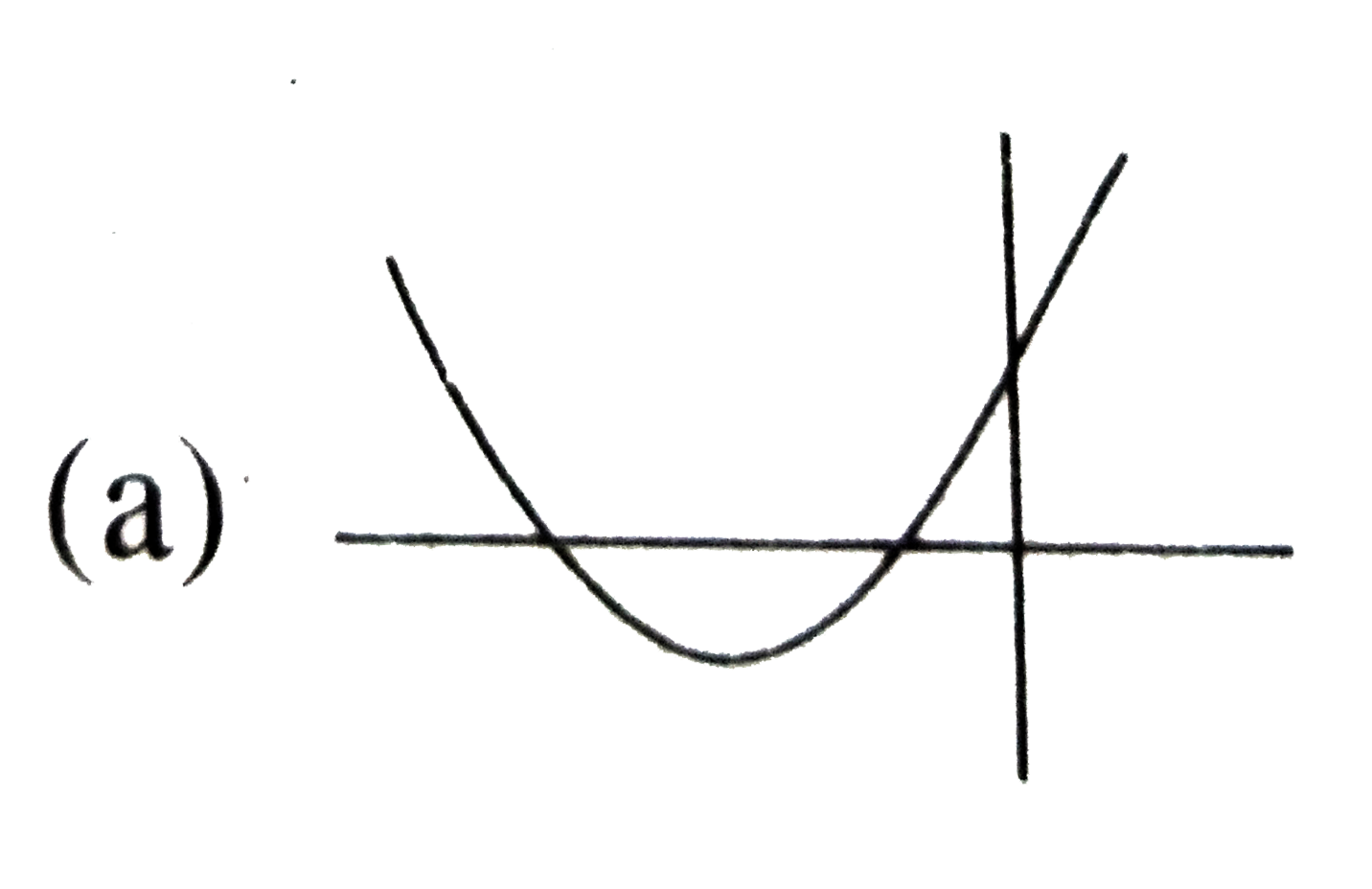
- **Option A**: Opens upwards → \(a > 0\)
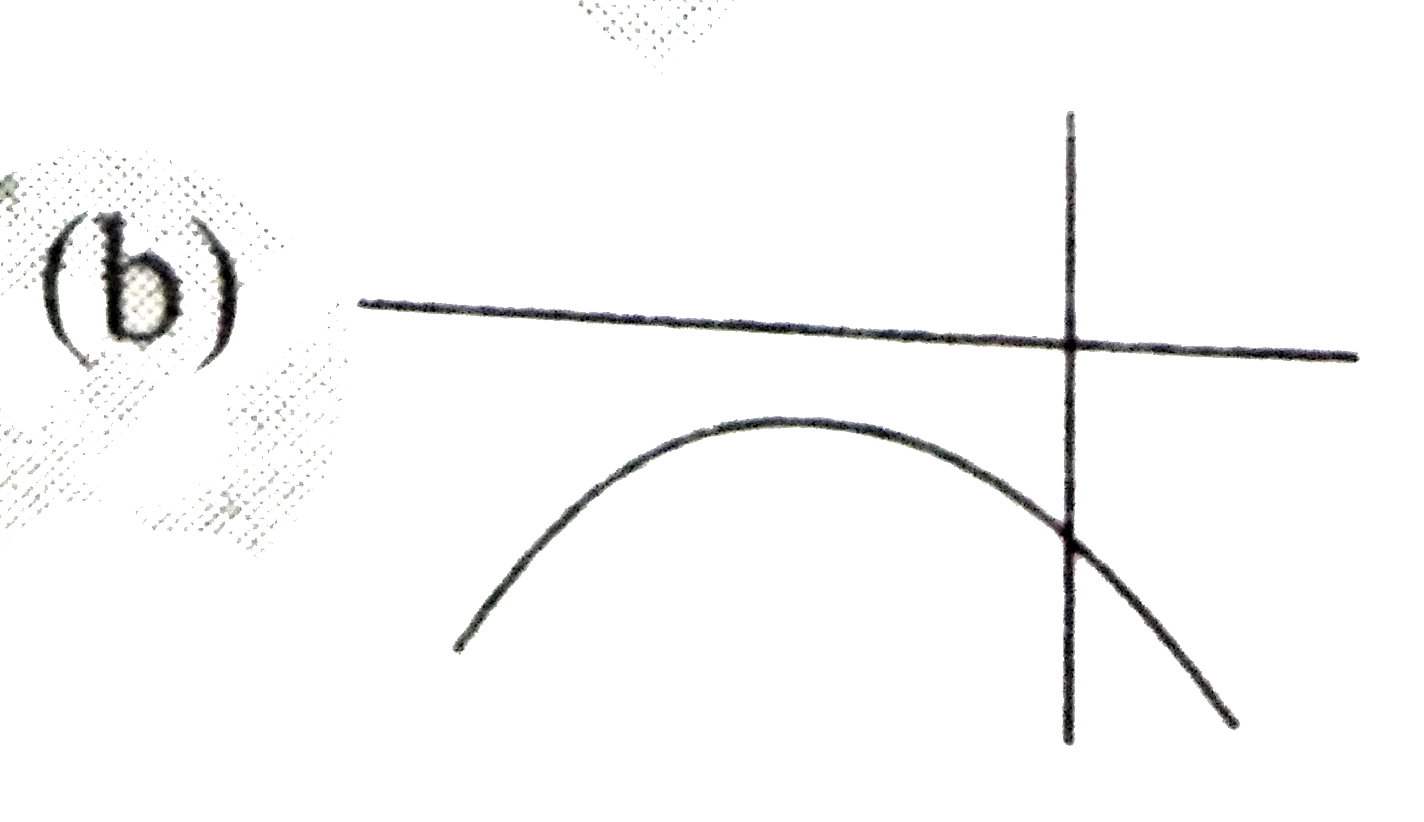
- **Option B**: Opens downwards → \(a < 0\)
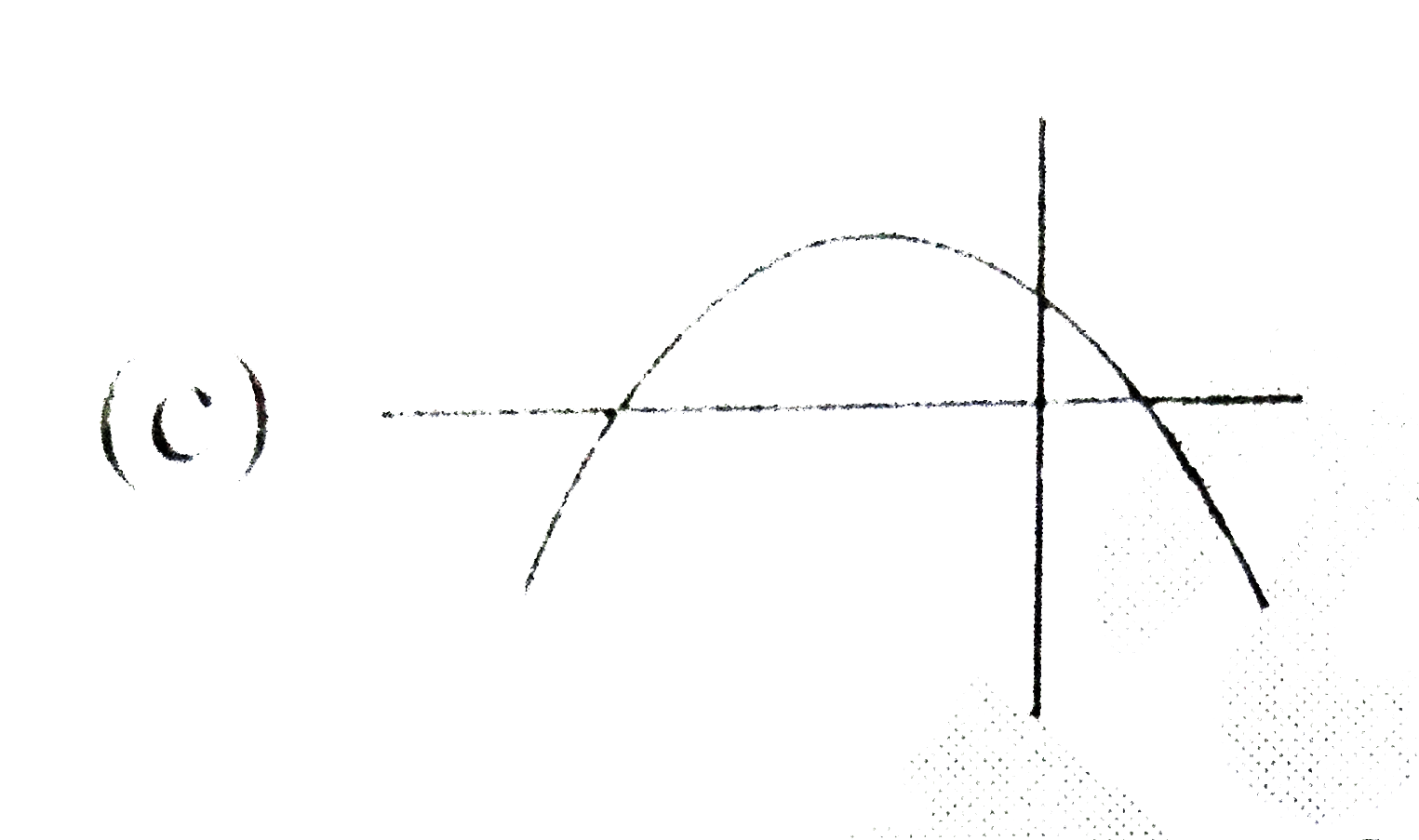
- **Option C**: Opens downwards → \(a < 0\)
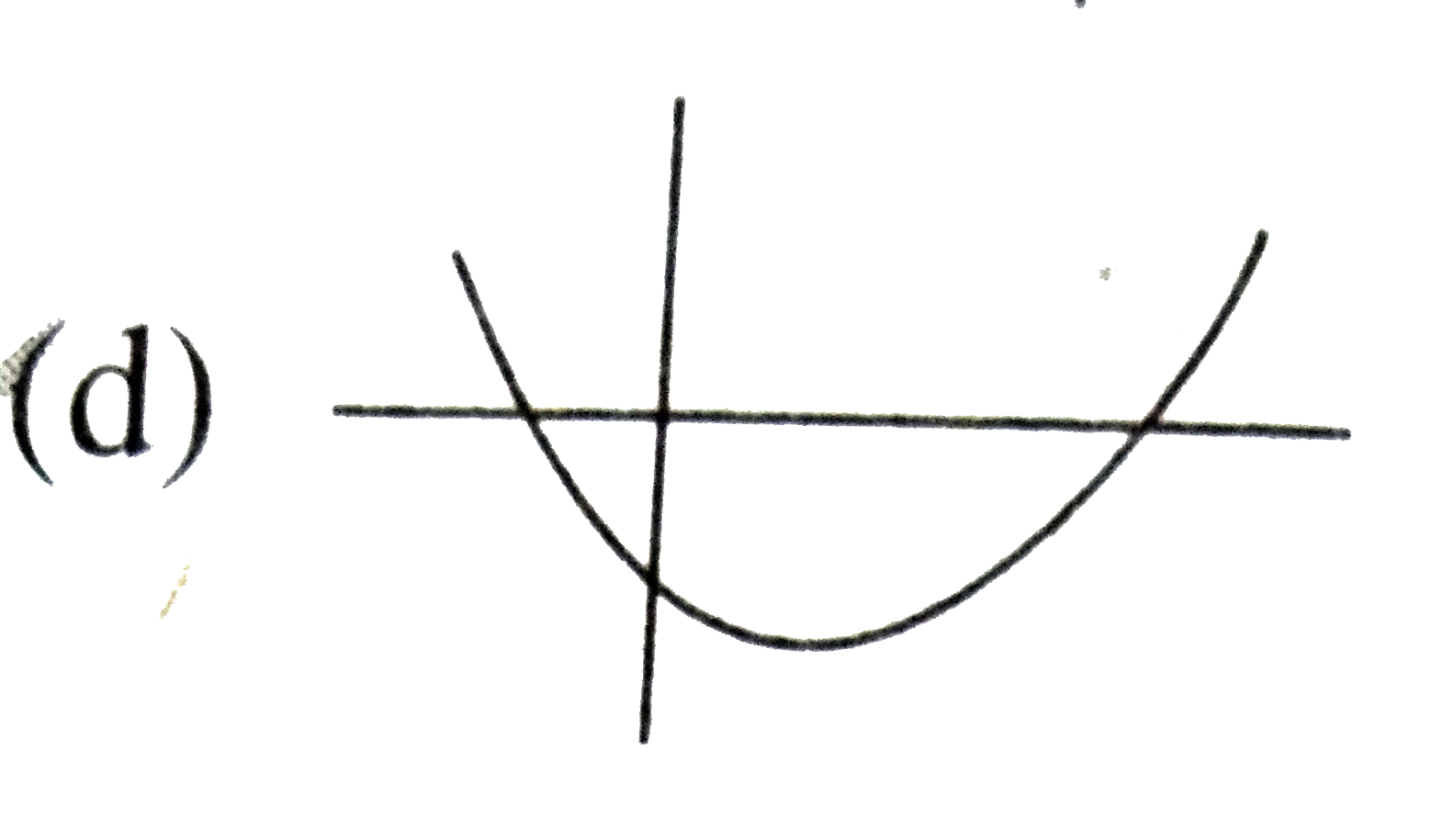
- **Option D**: Opens upwards → \(a > 0\)
2. **Identify the Sign of \(b\)**:
- The sign of \(b\) can be determined by the x-coordinate of the vertex of the parabola, given by \(-\frac{b}{2a}\):
- If the vertex is in the second quadrant (x < 0), then \(-\frac{b}{2a} < 0\) implies \(b > 0\) if \(a > 0\) and \(b < 0\) if \(a < 0\).
- If the vertex is in the fourth quadrant (x > 0), then \(-\frac{b}{2a} > 0\) implies \(b < 0\) if \(a > 0\) and \(b > 0\) if \(a < 0\).
- Analyze each option:
- **Option A**: Vertex in the third quadrant → \(b < 0\)
- **Option B**: Vertex in the fourth quadrant → \(b < 0\)
- **Option C**: Vertex in the second quadrant → \(b > 0\)
- **Option D**: Vertex in the fourth quadrant → \(b < 0\)
3. **Identify the Sign of \(c\)**:
- The value of \(c\) is the y-intercept of the graph:
- If the graph is above the x-axis at the y-intercept, then \(c > 0\).
- If the graph is below the x-axis at the y-intercept, then \(c < 0\).
- Analyze each option:
- **Option A**: y-intercept is above x-axis → \(c > 0\)
- **Option B**: y-intercept is below x-axis → \(c < 0\)
- **Option C**: y-intercept is above x-axis → \(c > 0\)
- **Option D**: y-intercept is below x-axis → \(c < 0\)
4. **Calculate the Product \(abc\)**:
- Now we combine the signs of \(a\), \(b\), and \(c\) for each option:
- **Option A**: \(a > 0\), \(b < 0\), \(c > 0\) → \(abc < 0\) (positive * negative * positive)
- **Option B**: \(a < 0\), \(b < 0\), \(c < 0\) → \(abc < 0\) (negative * negative * negative)
- **Option C**: \(a < 0\), \(b > 0\), \(c > 0\) → \(abc < 0\) (negative * positive * positive)
- **Option D**: \(a > 0\), \(b < 0\), \(c < 0\) → \(abc > 0\) (positive * negative * negative)
5. **Conclusion**:
- The options where the product \(abc\) is negative are:
- Option A: \(abc < 0\)
- Option B: \(abc < 0\)
- Option C: \(abc < 0\)
Thus, the answer is that the product \(abc\) is negative for options A, B, and C.