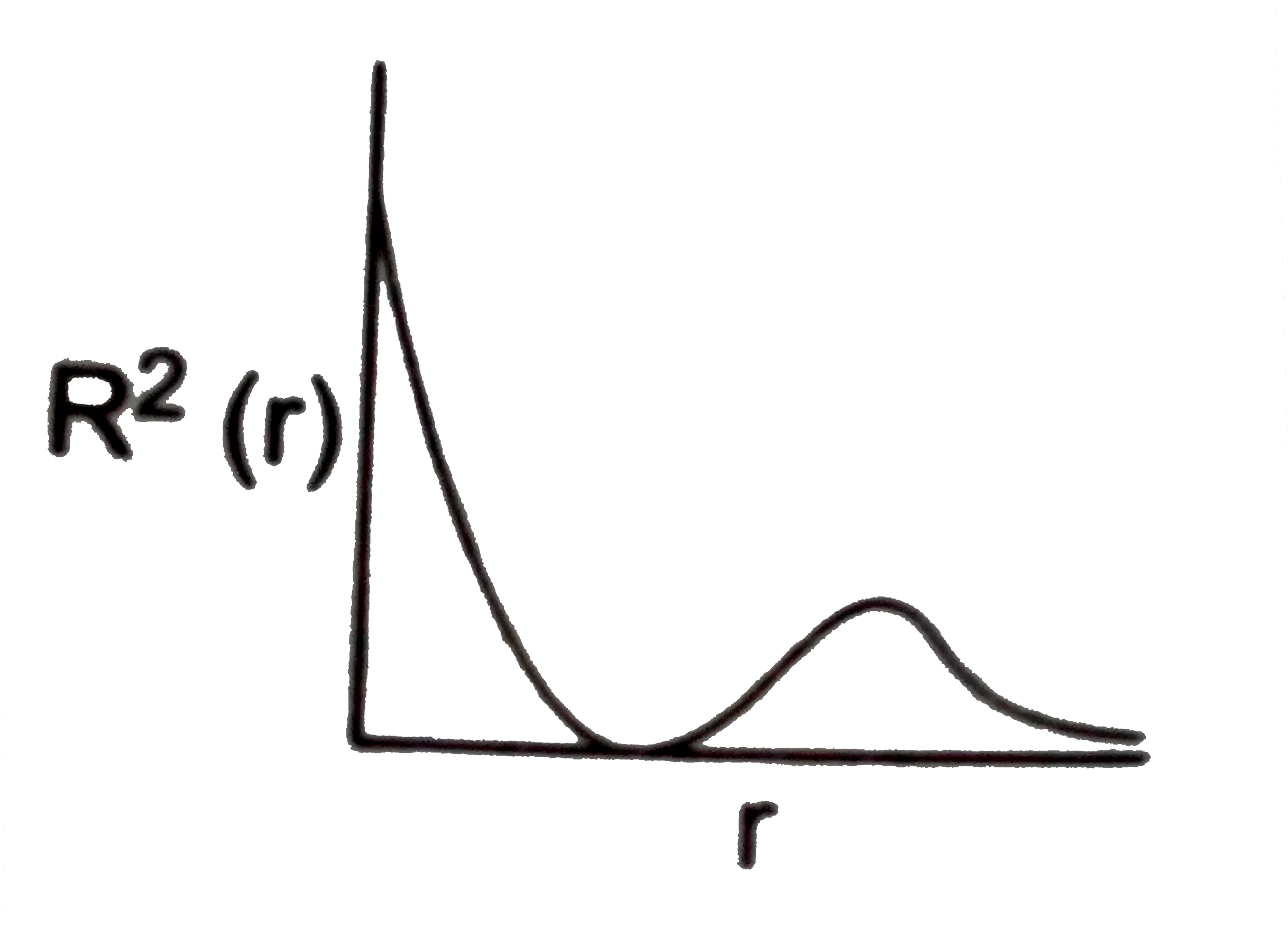
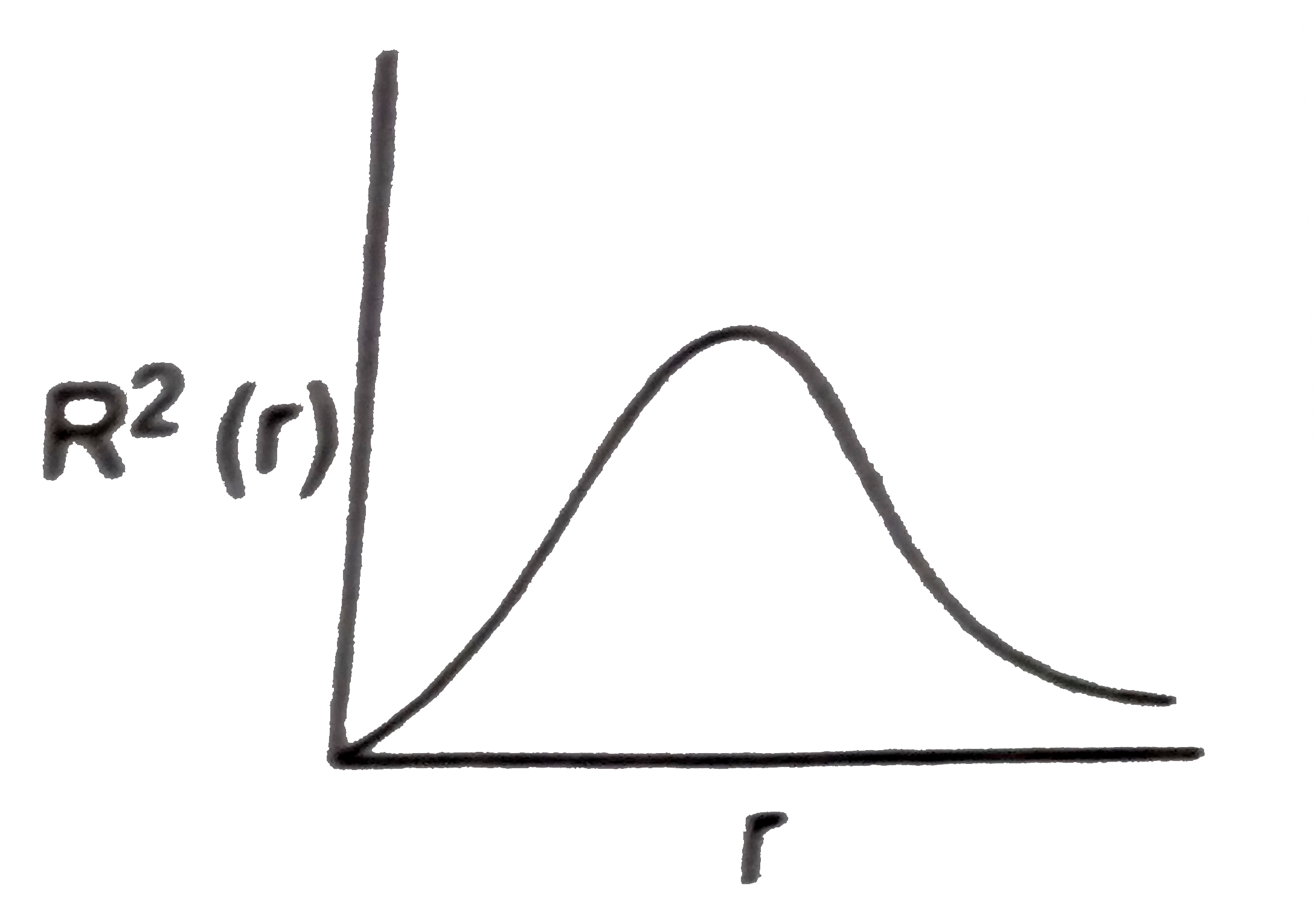
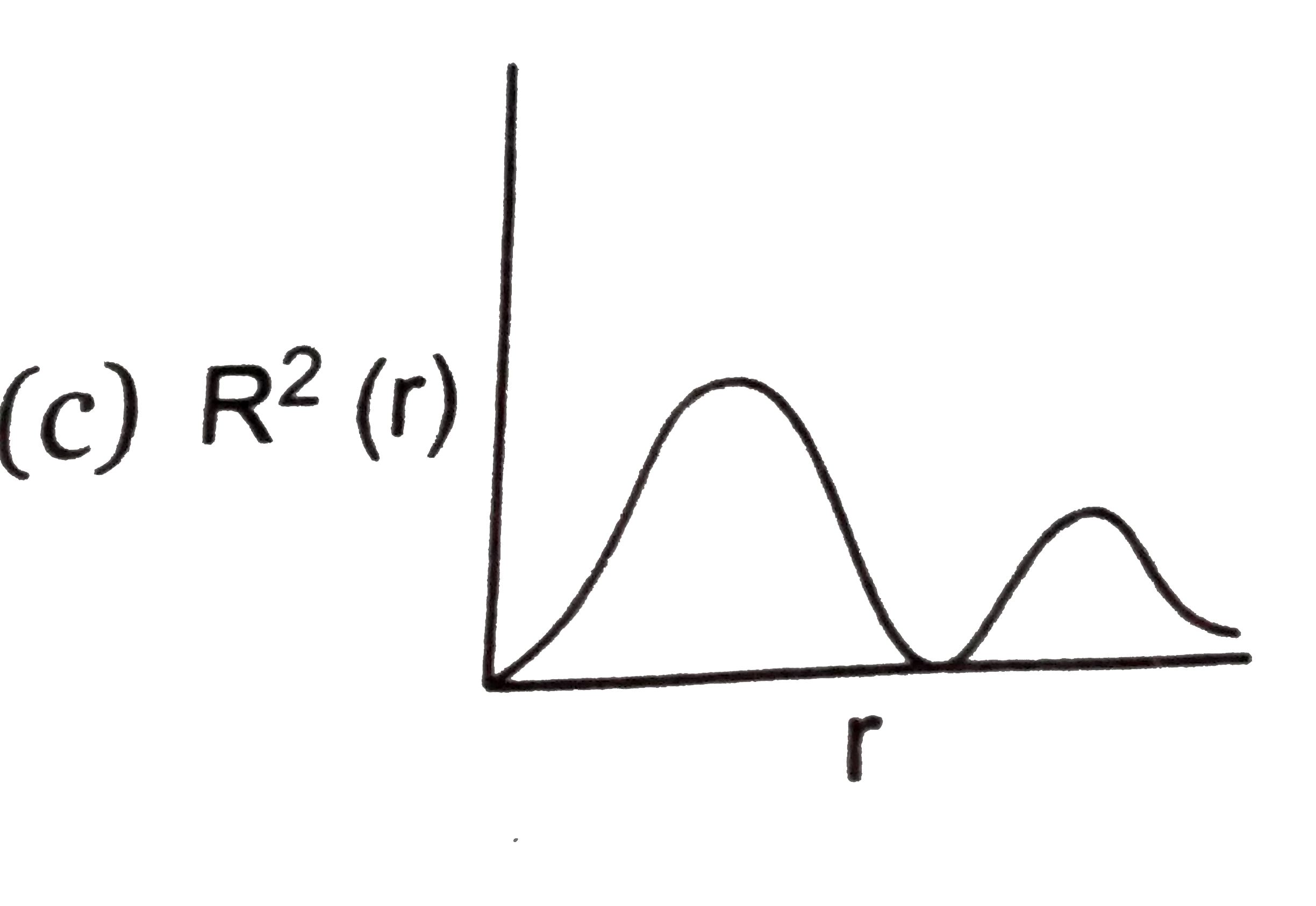
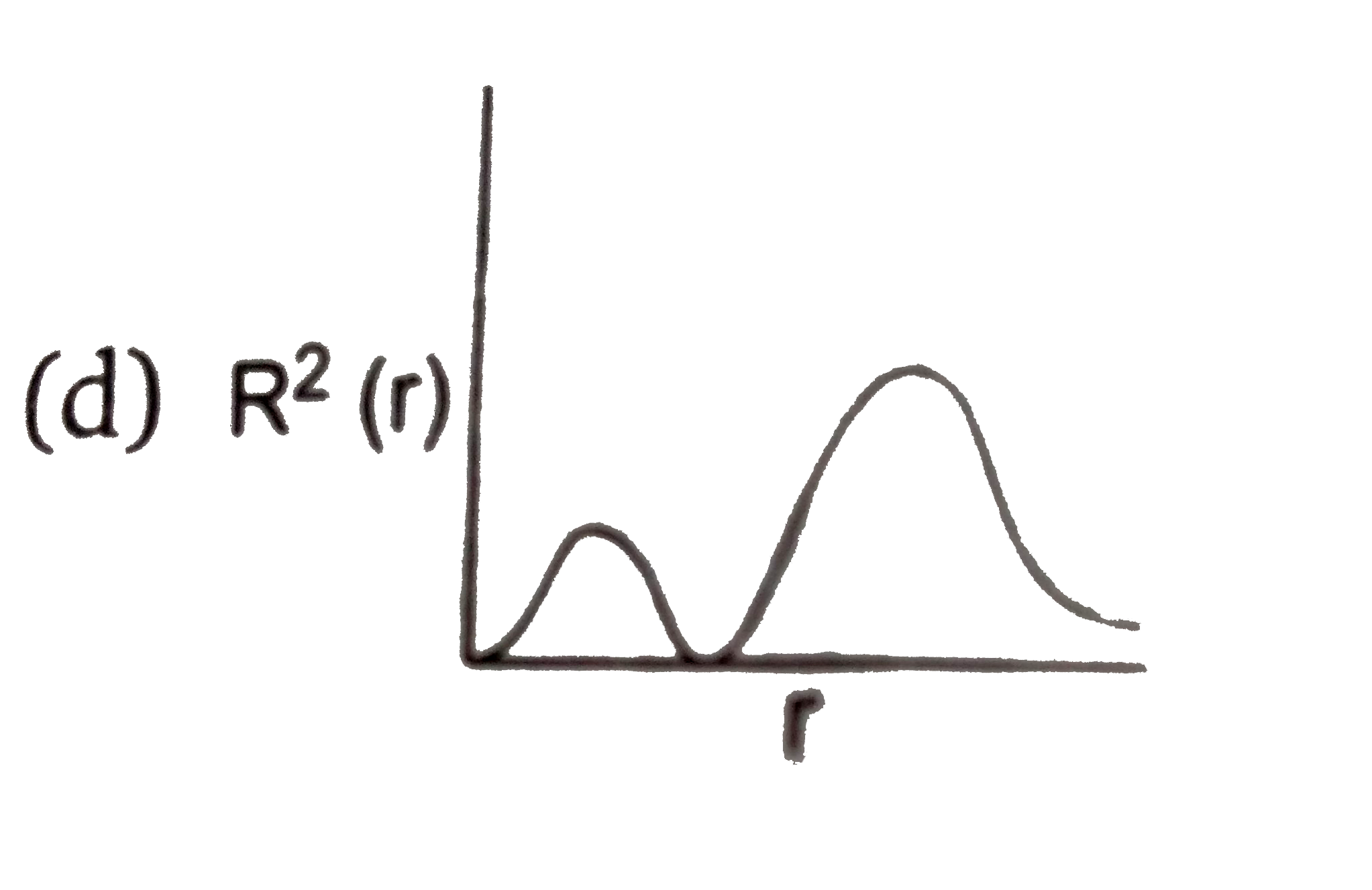
The variation of radial probability density `R^2` (r) as a function of distance r of the electron from the nucleus for 3p orbital:
(A)(a) (b) (b) (c) (d)
NARENDRA AWASTHI ENGLISH|Exercise Match the column|1 Videos
Similar Questions
Explore conceptually related problems
The maximum radial probability in 1s -orbital occures at a distance when : [r_(0)= "Bohr radius"]
Which orbital has only positive value of wave function at all distances from the nucleus : (a)1s (b)2s (c)3p (d)3d
Select the correct plot of radial probability function (4pir^(2)R^(2)) for 2s - orbital.
The nuclear charge ( Ze ) is non uniformlly distribute with in a nucleus of radius r. The charge density rho(r) (charge per unit volume) is dependent only on the radial distance r form the centre of the nucleus s shown in figure. The electric field is only along the radial direction. The electric field at r=R is
The radial probability is the probability of finding electron in a small spherical shell around the nucleus at a particular distance r. Hence radial probability is
P is the probability of finding the Is electron of hydrogen atom in a spherical shell of infitesimal thickness, dr, at a distance r from the nucleus. The volume of this shell is 4pi r^(2)dr . The qualitative sketch of the dependence of P on r is
A time varying uniform magnetic field passes through a circular region of radius R. The magnetic field is directed outwards and it is a function of radial distance 'r' and time 't' according to relation B-B_(0)rt. The induced electric field strength at a radial distance R//2 from the centre will be.
An infinitely long cylinderical wire of radius R is carrying a current with current density j=alphar^(3) (where alpha is constant and r is the distance from the axis of the wire). If the magnetic fixed at r=(R)/(2) is B_(1) and at r=2R is B_(2) then the ratio (B_(2))/(B_(1)) is
PQ is a chord of parabola normal at P.Q. is the vertex and r the focus distance of P . If the line through P , parallel to AQ meets the axis in R , then AR= (A) r (B) 2r (C) 3r (D) r/2
The potential energy function of a particle is given by U(r)=A/(2r^(2))-B/(3r) , where A and B are constant and r is the radial distance from the centre of the force. Choose the correct option (s)