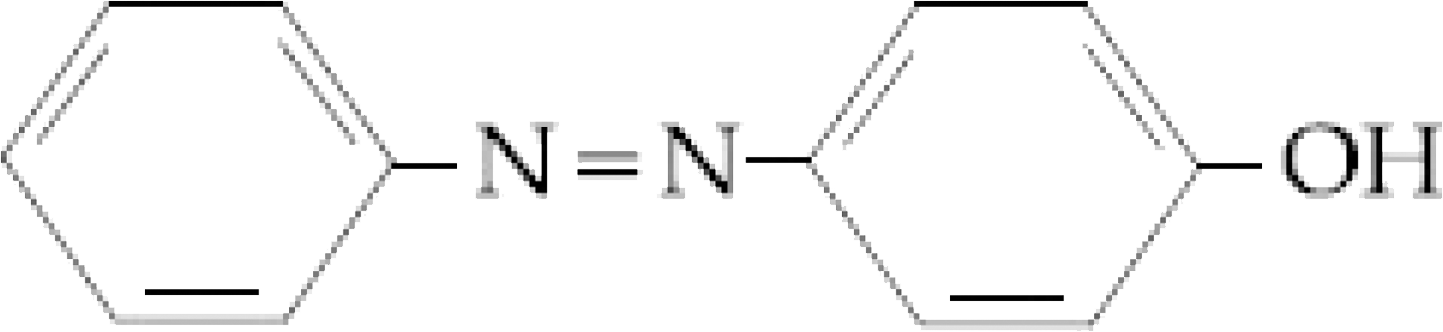
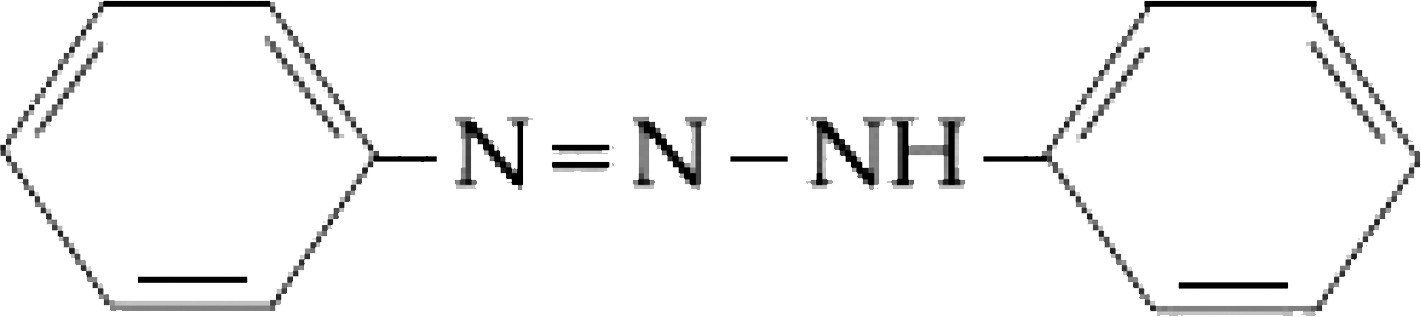
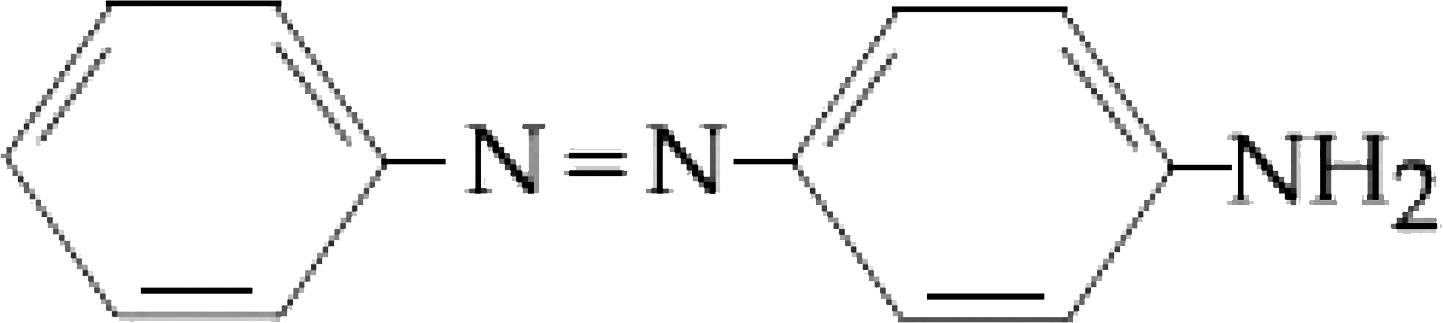
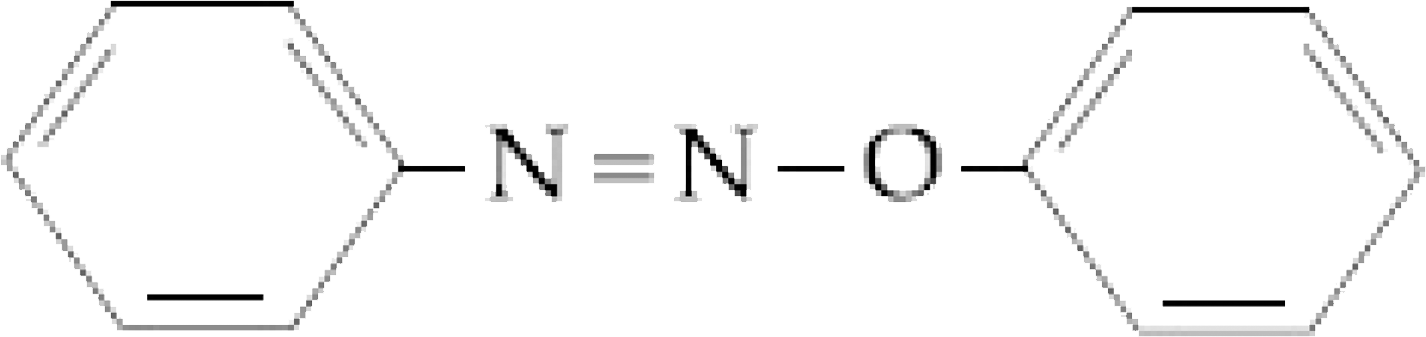
Aniline dissolved in dilute HCL is reacted with sodium nitrate at `0^(@)C` . This solution was added dropwise to a solution containing equimolar mixture of aniline and phenol in dil. HCl. The structure of the major product is :
A
B
C
D
Text Solution
Verified by Experts
The correct Answer is:
A
Topper's Solved these Questions
JEE MAINS
JEE MAINS PREVIOUS YEAR ENGLISH|Exercise QUESTION|1 Videos
JEE MAIN
JEE MAINS PREVIOUS YEAR ENGLISH|Exercise CHEMISTRY|146 Videos
JEE MAINS 2020
JEE MAINS PREVIOUS YEAR ENGLISH|Exercise CHEMSITRY|23 Videos
Similar Questions
Explore conceptually related problems
What is the pH of a solution containing 0.01 M HCl ?
When aniline reacts with NaNO_2 and dil. HCl at 0^@-%^2C , the product formed is
To a solution containing equimolar mixture of sodium acetate and acetic acid, some more amount of sodium acetate solution is adde. The pH of mixture solution.
A white sodium salt dissolves in water to give a solution which is neutral to litmus.When silver nitrate solution is added to the solution, a white precipitate is obtained which does not dissolve in dilute HNO_(3) .The anion is
Alkanline earth metal nitrate (A) on heating decompose, leaving a solid residue (B) which goes into solution with dilute HCI . The solution of (B) gives a white precipitate (C ) is dissolved in dilute HCl and the solution is treated with potassium chromae to get yellow precipitate (D) . The solution (B) with dilute H_(2)SO_(4) also gives a white precipitate (E) insoluble in diute HCl and nitric acid. the precipitate (E) is a part of a white pigment lithopone. The metal nitrate (A) is
Alkanline earth metal nitrate (A) on heating decompose, leaving a solid residue (B) which goes into solution with dilute HCI . The solution of (B) gives a white precipitate (C ) is dissolved in dilute HCl and the solution is treated with potassium chromae to get yellow precipitate (D) . The solution (B) with dilute H_(2)SO_(4) also gives a white precipitate (E) insoluble in diute HCl and nitric acid. the precipitate (E) is a part of a white pigment lithopone. The compound (E) is
Alkanline earth metal nitrate (A) on heating decompose, leaving a solid residue (B) which goes into solution with dilute HCI . The solution of (B) gives a white precipitate (C ) is dissolved in dilute HCl and the solution is treated with potassium chromae to get yellow precipitate (D) . The solution (B) with dilute H_(2)SO_(4) also gives a white precipitate (E) insoluble in diute HCl and nitric acid. the precipitate (E) is a part of a white pigment lithopone. The yellow precipitate (D) is
Alkanline earth metal nitrate (A) on heating decompose, leaving a solid residue (B) which goes into solution with dilute HCI . The solution of (B) gives a white precipitate (C ) is dissolved in dilute HCl and the solution is treated with potassium chromae to get yellow precipitate (D) . The solution (B) with dilute H_(2)SO_(4) also gives a white precipitate (E) insoluble in diute HCl and nitric acid. the precipitate (E) is a part of a white pigment lithopone. The solid residue (B) is
Phenol is heated with a solution of mixture of KBr and KBrO_(3) . The major product obtained in the above reaction is
Alkanline earth metal nitrate (A) on heating decompose, leaving a solid residue (B) which goes into solution with dilute HCI . The solution of (B) gives a white precipitate (C ) is dissolved in dilute HCl and the solution is treated with potassium chromae to get yellow precipitate (D) . The solution (B) with dilute H_(2)SO_(4) also gives a white precipitate (E) insoluble in diute HCl and nitric acid. the precipitate (E) is a part of a white pigment lithopone. The nitrate (A) can be confirmed by flame test. The colour imparted by the salt to the Bunsen flame is
JEE MAINS PREVIOUS YEAR ENGLISH-JEE MAINS-QUESTION