Home
Class 12
CHEMISTRY
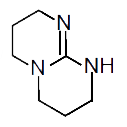
Arrange the following in order of their ...

Arrange the following in order of their `pK_(b)` value
(a) (b) `CH_(3)-NH-CH_(3)` (c) `H_(2)N-CH=NH`

A

` (B) lt (C ) lt (A) `

B

`(A ) lt (B) lt (C ) `

C

` ( B ) lt (A) lt (C ) `

D

` (A ) lt (C) lt (B) `

Text Solution

Verified by Experts

The correct Answer is:

C
Promotional Banner

Topper's Solved these Questions

  • JEE MAIN

    JEE MAINS PREVIOUS YEAR ENGLISH|Exercise CHEMISTRY|146 Videos
  • JEE MAINS

    JEE MAINS PREVIOUS YEAR ENGLISH|Exercise QUESTION|1 Videos

Similar Questions

Explore conceptually related problems

Arrange the following in order of decreasing bond angles (i) CH_(4), NH_(3), H_(2)O, BF_(3), C_(2)H_(2)" "(ii) NH_(3), NH_(2)^(-), NH_(4)^(+)

Arrange the following in increasing order of their basic strength : (i) C_(2)H_(5)NH_(2), C_(6)H_(5)NH_(2), C_(6)H_(5)CH_(2)NH_(2) and (C_(2)H_(5))_(2)NH (ii) C_(2)H_(5)NH_(2), (C_(2)H_(5))_(2)NH, (C_(2)H_(5))_(3)N, C_(6)H_(5)NH_(2) (iii) CH_(3)NH_(2), (CH_(3))_(2)NH, (CH_(3))_(3)N, C_(6)H_(5)NH_(2),C_(6)H_(5)CH_(2)NH_(2)

Arrange the following in order of their Increasing basicity: H_(2)O, OH^(-), CH_(3)OH, CH_(3)O^(-)

Arrange the following in the increasing order of their basic strength : (i) (CH_3)_3 N (ii) CH_3 NH_2 (iii) NH_3

(i) Arrange the following compounds in an increasing order of basic strength : C_(6)H_(5)NH_(2), C_(6)H_(5)N(CN_(3))_(2), (C_(2)H_(5))_(2)NH and CH_(3)NH_(2) (ii) Arrange the following compounds in a decreasing order of pK_(b) values: C_(2)H_(5)NH_(2), C_(6)H_(5)NHCH_(3), (C_(2)H_(5))_(2) NH and C_(6)H_(5)NH_(2)

Arrange the following in decresing order of reactivity towards SN^(1) :- (P) CH_(3)-O-CH_(2)-Cl (Q) CH_(3)-NH-CH_(2)-Cl (R)

Arrange the following in increasing order of their basic strength: CH_3.NH_2,(CH_3)_3N,(CH_3)_2NH

Arrange the following in the order of decreasing basic character : (1) CH_3NH_2 (2) (CH_3)_2NH (3) NH_3

Arrange the following compounds in order of increaing basicity. (a). CH_(3)NH_(2),CH_(3)NH_(3)^(o+),CH_(3)NH^(-) (b) CH_(3)O^(-),CH_(3)NH^(-),CH_(3)CH_(2)^(-) .

JEE MAINS PREVIOUS YEAR ENGLISH-JEE MAIN-CHEMISTRY
  1. E(Cu^(2+)//Cu)^(@)=0.34V E(Cu^(+)//Cu)^(@)=0.522V E(Cu^(2+)//Cu^(+...

    Text Solution

    |

  2. The number of orbitals associated with quantum numbers n =5, ...

    Text Solution

    |

  3. Arrange the following in order of their pK(b) value (a) (b) CH(3)-...

    Text Solution

    |

  4. The electron gain enthalpy ( in kJ//mol ) of fluorine, chlorine,...

    Text Solution

    |

  5. A solution of m - chloroaniline, m- chlorophenol and m - chlorobenz...

    Text Solution

    |

  6. Atomic radius of Ag is similar to

    Text Solution

    |

  7. Which theory can explain bonding Ni ( CO ) 4

    Text Solution

    |

  8. Amongst the following statements, that which was not proposed D...

    Text Solution

    |

  9. Consider the following reactions : (a) ( CH 3) 3 CCH ( O...

    Text Solution

    |

  10. Correct IUPAC name of [ Pt ( N H 3 ) 2 ) Cl ( CH 3 NH 2...

    Text Solution

    |

  11. In zeolites & synthetic resin method which will be more efficient...

    Text Solution

    |

  12. Consider the following reaction : The product 'X' is used...

    Text Solution

    |

  13. The dipole moments of CCl 4, CHCl 3 and CH 4 are i...

    Text Solution

    |

  14. 1-"Methylethylene oxide" underset(HBr)overset("excess")to X, Product '...

    Text Solution

    |

  15. "Hex-3-ynal" overset((1)NaBH(4))to overset((2)PBr(3))to overset((3)"Mg...

    Text Solution

    |

  16. Vapour pressure of pure CS 2 and CH 3 COCH 3 are 512 ...

    Text Solution

    |

  17. Oxidation number of potassium in K 2 O, K2 O 2 and K O ...

    Text Solution

    |

  18. The relative strength of interionic / intermolecular forces in d...

    Text Solution

    |

  19. Match the following :

    Text Solution

    |

  20. Purest form of commercial iron is :

    Text Solution

    |
