Home
Class 12
CHEMISTRY
Which of the following compounds produce...

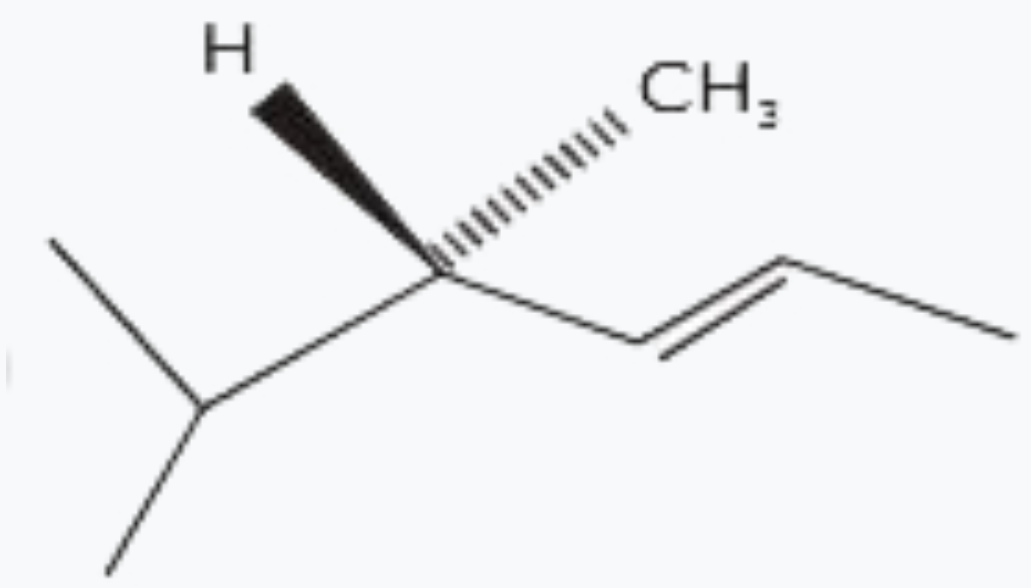
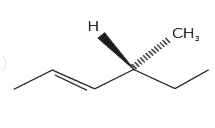
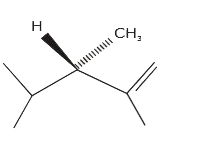
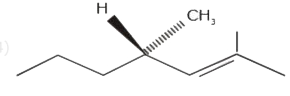
Which of the following compounds produces an optically inactive compound on hydrogenation?

A

B

C

D

Text Solution

AI Generated Solution

The correct Answer is:

To solve the question "Which of the following compounds produces an optically inactive compound on hydrogenation?", we need to analyze the options provided and determine which compound, upon hydrogenation, results in a compound that lacks optical activity. ### Step-by-Step Solution: 1. **Understanding Optical Activity**: - A compound is optically active if it has at least one carbon atom that is chiral (asymmetric), meaning it is attached to four different groups. If a compound has a plane of symmetry or if it has two identical groups attached to a carbon, it is optically inactive. 2. **Analyzing the Compounds**: - We will examine each option given in the question to see if hydrogenation leads to an optically inactive product. 3. **Option 1**: - Consider a compound like propene (CH2=CH-CH3). Upon hydrogenation, it becomes propane (CH3-CH2-CH3), which is not chiral (it has no asymmetric carbon). Thus, it is optically inactive. 4. **Option 2**: - If we take a compound like 1-butene (CH2=CH-CH2-CH3), hydrogenation will yield butane (CH3-CH2-CH2-CH3), which is also not chiral. Thus, it is optically inactive. 5. **Option 3**: - Now consider a compound like 2-butene (CH3-CH=CH-CH3). Upon hydrogenation, it will yield butane (CH3-CH2-CH2-CH3), which is not chiral. However, if we consider cis and trans isomers, they can lead to different products, but in this case, the product remains the same (butane), which is optically inactive. 6. **Option 4**: - If we take a compound like 2-pentene (CH3-CH=CH-CH2-CH3), upon hydrogenation, it will yield pentane (CH3-CH2-CH2-CH2-CH3), which is also not chiral. Thus, it is optically inactive. 7. **Conclusion**: - After analyzing all the options, we find that the hydrogenation of compounds that do not have chiral centers will yield optically inactive products. The compound that produces an optically inactive compound upon hydrogenation is the one that leads to a product with no chiral centers. ### Final Answer: The compound that produces an optically inactive compound on hydrogenation is the one which, after the reaction, does not have any chiral centers.

To solve the question "Which of the following compounds produces an optically inactive compound on hydrogenation?", we need to analyze the options provided and determine which compound, upon hydrogenation, results in a compound that lacks optical activity. ### Step-by-Step Solution: 1. **Understanding Optical Activity**: - A compound is optically active if it has at least one carbon atom that is chiral (asymmetric), meaning it is attached to four different groups. If a compound has a plane of symmetry or if it has two identical groups attached to a carbon, it is optically inactive. 2. **Analyzing the Compounds**: ...
Promotional Banner

Topper's Solved these Questions

  • JEE MAINS 2020

    JEE MAINS PREVIOUS YEAR ENGLISH|Exercise CHEMSITRY|23 Videos
  • JEE MAINS

    JEE MAINS PREVIOUS YEAR ENGLISH|Exercise QUESTION|1 Videos

Similar Questions

Explore conceptually related problems

An optically active compound

An optically active compound

Which of the following compounds are optically active ?

Which of the following compound is achiral ( optically inactive )?

Which of the following compounds is optically active ?

JEE MAINS PREVIOUS YEAR ENGLISH-JEE MAINS 2020-CHEMSITRY
  1. Which of the following compounds produces an optically inactive compou...

    Text Solution

    |

  2. The correct statement with respect to dinitrogen is :

    Text Solution

    |

  3. The major product obtained from the following reaction is :

    Text Solution

    |

  4. A solution of two components containing n1 moles of 1^(st) component a...

    Text Solution

    |

  5. The INCORRECT statement is :

    Text Solution

    |

  6. Consider the Assertion and Reason given below. Assertion (A) : Ethe...

    Text Solution

    |

  7. Arrange the following solutions in the decreasing order of pOH : (A...

    Text Solution

    |

  8. Among the sulphates of alkaline earth metals the solubilities of BeSO4...

    Text Solution

    |

  9. The major products of the following reaction are : CH3 -overset(CH...

    Text Solution

    |

  10. The major product of the following reaction is :

    Text Solution

    |

  11. A sample of toothpaste weighing 500 g, on analysis was found to contai...

    Text Solution

    |

  12. Which of the following compounds shows geometrical isomerism ?

    Text Solution

    |

  13. The set that contains atomic numbers of only transition elements , is ...

    Text Solution

    |

  14. The variation of equilibrium constant with temperature is given below ...

    Text Solution

    |

  15. Kraft temperature is the temperature :

    Text Solution

    |

  16. For the reaction Fe2N(s)+(3)/(2)H2(g)=2Fe(s)+NH3(g)

    Text Solution

    |

  17. The species that has a spin -only magnetic moment of 5.9 BM , is : (...

    Text Solution

    |

  18. Which of the following Lanthanides element do not show stable +4 oxida...

    Text Solution

    |

  19. Consider the following reaction A to P1, B to P2 , C to P3 , D to P4...

    Text Solution

    |

  20. In an estimation of bromine by Carius method , 1.6 g of an organic co...

    Text Solution

    |

  21. Potassium chlorate is prepared by the electrolusis of KCl in basic med...

    Text Solution

    |
