Home
Class 12
PHYSICS
A PN junction diode when forward biased ...

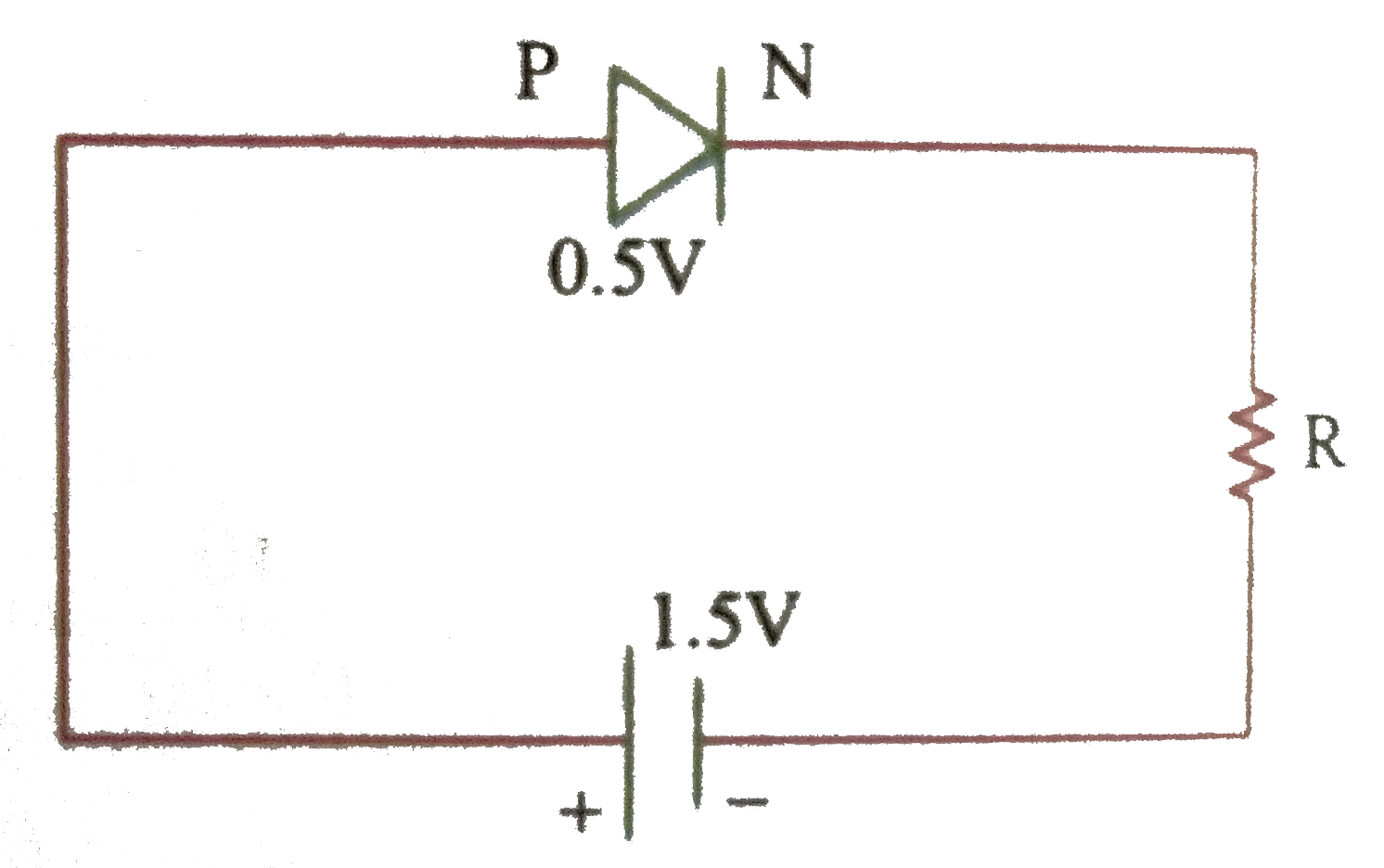
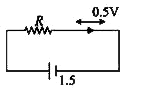
A `PN` junction diode when forward biased has a drop of `0.5 V` which is assumed to be independent of current. The current in excess of `10 mA` through the diode produces large joule heating which damages the diode. If we diode, the resistor used in series with the diode so that the maximum current does not exceed `5 mA` is.
.

Text Solution

Verified by Experts

The correct Answer is:
100


`1R=1`
`R=(1000)/(10)=100Omega`
Promotional Banner

Similar Questions

Explore conceptually related problems

A p-n junction diode when forward biased has a drop of 0.5V which is assumed to be independent of current. The current in excess of 10mA through the diode produces a large Joule heating which damages (burns) the diode. If we want to use a 1.5V battery to forward bias the diode, what should be the vlaue of resistor used in series with the diode so that the maximum current does not exceed 5mA ?

A p-n junction diode when forward baiased has a drop of 0.5 V which is assumed to be independent of current. The current in excess of 10 mA through the diode produces a large joule heating which damages (burns) the diode. If we want to use a 15.V battery to forward bias diode a resistor of resistance axx10^(2)Omega is to be used in serise with the diode so that the maximum current does not exceed 5mA. what is the value of a?

A p-n jucntion when forward biased has a drop of 0.7 V which is assumed to be independent of current. The current in excess of 10 Ma through the diode produces a large joule heating effect which burns the diode. If we want to use 1.6 V battery to forward ibas the diode, the value of resistor used in series with the diode so that the maximum current does not exceed 6 mA should be

A p-n junction when forward biased has a drop of 0.6 V which is assumed to be independent of current. The current in excess of 10 mA through the diode produces a large joule heating effect which burns the diode. If we want to use 1.5 V battery to forward bias the diode, what should be the value of resistor used in series with the diode so that the maximum current does not exceed 6 mA?

A p-n junction diode when forward biased has a drop of 0.4 V which is assumed to be independent of current. A current excess of 10 mA through the diode damages (burns ) the diode. If we want to use a 2 V battery to forward bias the diode, what should be the value of resistor used in series with the diode so that the maximum current does not exceed 5 mA?

A diode made forward biased by a two volt battery however there is a drop of 0.5 V across the diode which is independent of current. Also a current greater then 10 mA produces large joule loss and damages diode. If diode is to be operated at 5 mA, the series resistance to be put is

A two volt battery forward biased and a diode. However, there is a drop of 0.5 V across the diode which is independent of current. Also, a current greater than 10 mA produces large joule loss and damages diode. If diode is to be operated at 5 mA, then the series resistance to be put is

A P-N junction diode can withstand currents up to 10 mA . Under forward bias, The diode has a potential drop of 0.5 V across it which is assumed to be independent of current. The maximum voltage of the battery used to forward bias the diode when a resistance of 200 Omega is connected in series with it is

When a diode is forward biased, it has a voltage drop of 0.5 V. The safe limit of current through the diode is 10 mA. If a battery of emf 1.5 V is used in the circuit, the value of minimum resistance to be connected in series with the diode so that the current does not exceed the safe limit is :

