Text Solution
Verified by Experts



Topper's Solved these Questions
THE LIVING WORLD
KUMAR PRAKASHAN|Exercise QUESTION FROM MODULE (IMPORTANT MCQ FOR NEET)|1 VideosTHE LIVING WORLD
KUMAR PRAKASHAN|Exercise QUESTION FROM MODULE (QUESTIONS PAPER)|9 VideosTHE LIVING WORLD
KUMAR PRAKASHAN|Exercise SECTION - E (SOLUTION OF NCERT EXEMPLAR)(SHORT ANSWER TYPE QUESTIONS : )|10 VideosSTRUCTURAL ORGANISATION IN ANIMALS
KUMAR PRAKASHAN|Exercise QUESTIONS FROM MODULE(QUESTION PAPER )|11 VideosTRANSPORT IN PLANTS
KUMAR PRAKASHAN|Exercise Questions from Module (Question Paper )|9 Videos
Similar Questions
Explore conceptually related problems
KUMAR PRAKASHAN-THE LIVING WORLD-SECTION - E (SOLUTION OF NCERT EXEMPLAR)(LONG ANSWER TYPE QUESTIONS : )
- What is meant by living ? Give any four defining features of life form...
Text Solution
|
- A scientist has come across a plant, which he feels is a new species. ...
Text Solution
|
- Brassica Campestris Linn (a) Give the common name of the plant, (b...
Text Solution
|
- What are taxonomical aids ? Give the importance of herbaria and Museum...
Text Solution
|
- Define a taxon. What is meant by taxonomic hierarchy ? Give a flow dia...
Text Solution
|
- A student of taxonomy was puzzled when told by his professor to look f...
Text Solution
|
- Metabolism is a defining feature of all living organisms without excep...
Text Solution
|
- Do you consider a person in coma, living or dead?
Text Solution
|
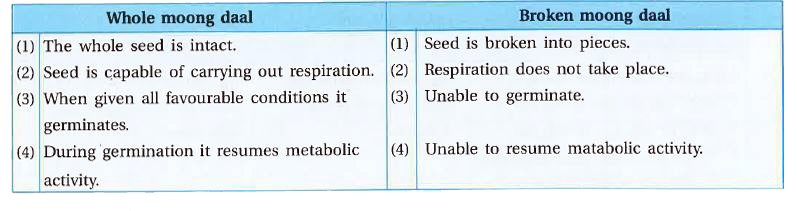
- What is the similarity and dissimilarity between ‘whole moong dal’ and...
Text Solution
|
- Some of the properties of tissues are not the constituents of its cell...
Text Solution
|