Text Solution
Verified by Experts



Topper's Solved these Questions
SURFACE TENSION
AAKASH SERIES|Exercise TEST YOUR SELF|13 VideosSURFACE TENSION
AAKASH SERIES|Exercise SHORT ANSWER TYPE QUESTIONS|4 VideosSIMPLE HARMONIC MOTION
AAKASH SERIES|Exercise ADDITIONAL PRACTICE EXERCISE (LEVEL - II)(PRACTICE SHEET (ADVANCED)) (INTEGER TYPE QUESTIONS)|3 VideosSYSTEM OF PARTICLES AND ROTATIONAL MOTION
AAKASH SERIES|Exercise PRACTICE EXERCISE|99 Videos
Similar Questions
Explore conceptually related problems
AAKASH SERIES-SURFACE TENSION-ADDITIONAL PRACTICE EXERCISE (PRACTICE SHEET (ADVANCED) INTEGER TYPE QUESTIONS )
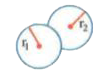
- Two soap bubbles of different radii r(1)andr(2) are in contact. Determ...
Text Solution
|
- If the work done in blowing a soap bubble of volume 'V' is W, then the...
Text Solution
|
- A glass rod of diameter d1 = 1.5mm is inserted symmetrically into a gl...
Text Solution
|
- There is a soap bubble of radius 2.4 xx 10 ^(-4) min air in a cylinder...
Text Solution
|
- A mercury drop shaped as a round tablet of radius R and thickness h is...
Text Solution
|
- If the excess of pressure inside a spherical soap bubble of radius lcm...
Text Solution
|
- A Drop of water of mass m and density rho placed between two ...
Text Solution
|
- A staw 6 cm long floats an water . The water film on one si...
Text Solution
|
- When air bubble comes from bottom to the top of a lake , It...
Text Solution
|