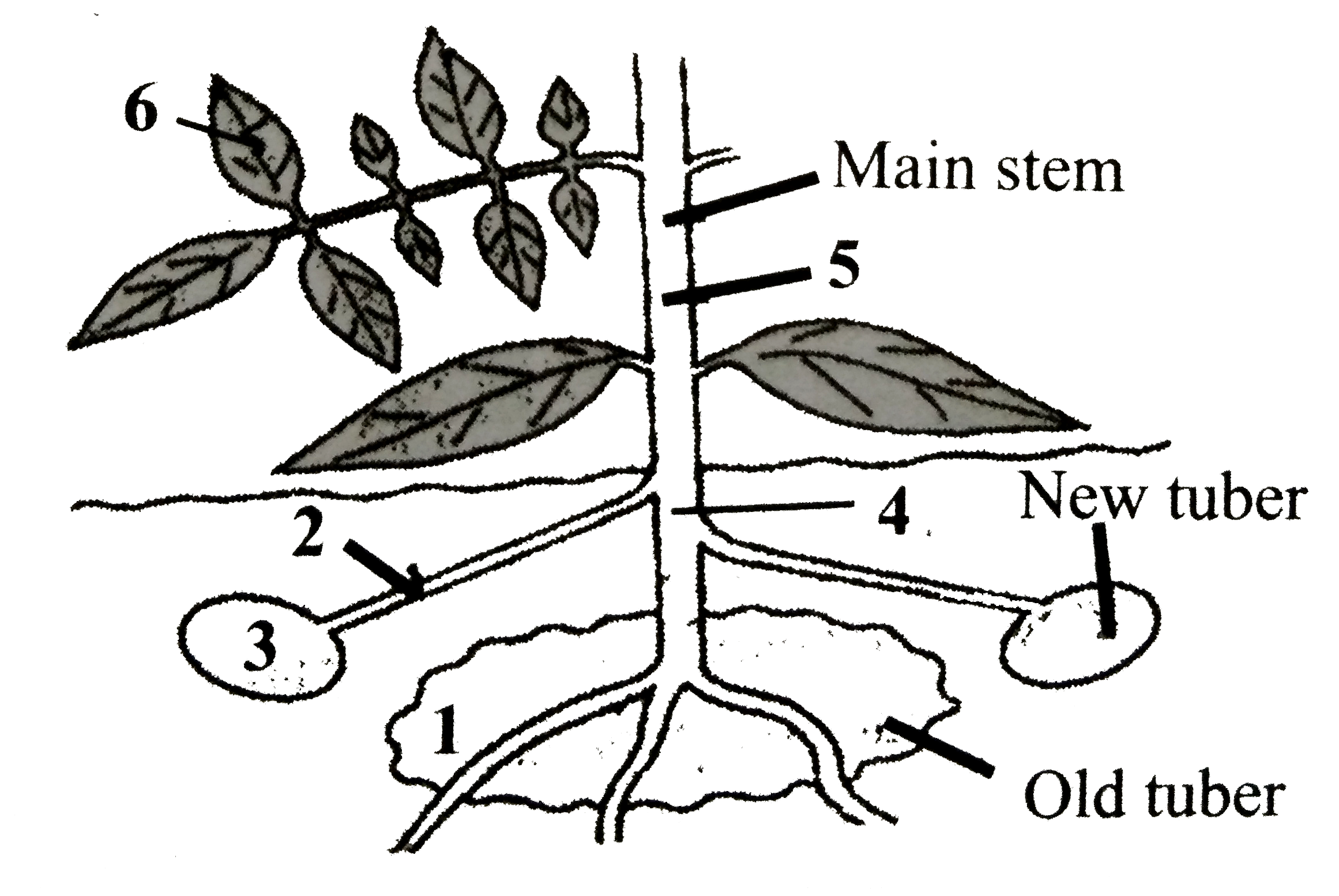
A
B
C
D
Text Solution
Verified by Experts
The correct Answer is:



Topper's Solved these Questions
TRANSPORT IN PLANTS
NCERT FINGERTIPS ENGLISH|Exercise Higher Order Thinking Skills|7 VideosTRANSPORT IN PLANTS
NCERT FINGERTIPS ENGLISH|Exercise Exemplar Problems|12 VideosTRANSPORT IN PLANTS
NCERT FINGERTIPS ENGLISH|Exercise Uptake and Transport of Mineral Nutrients|3 VideosTHE LIVING WORLD
NCERT FINGERTIPS ENGLISH|Exercise The Living World|130 Videos
Similar Questions
Explore conceptually related problems
NCERT FINGERTIPS ENGLISH-TRANSPORT IN PLANTS-Phloem Transport:Flow From Source To Sink
- Statement 1: Xylem transport is unidirectional. Statement 2: Phloem ...
Text Solution
|
- Unidirection flow fo water minerals, some organic nitrogen and hormone...
Text Solution
|
- The manufactured food in a green plant moves from the leaves ot other ...
Text Solution
|
- Multi-directional flow of a variety of organic and inorganic solutes o...
Text Solution
|
- phloem sap is mainly made of
Text Solution
|
- The given diagram shows a potato plant forming new tubers. Which rou...
Text Solution
|
- Mass flow hypothesis was first descrebed by
Text Solution
|
- Refer to the given figure representing mechanism of translocation and ...
Text Solution
|
- Organic substances such as sugars are translocated in the phloem. It c...
Text Solution
|
- A girdled plant (upto bast) may survive for some time but it will even...
Text Solution
|
- Ringing/girdling experiments demonstrate
Text Solution
|