Home
Class 12
BIOLOGY
A scientist was studying an in vitro eu...

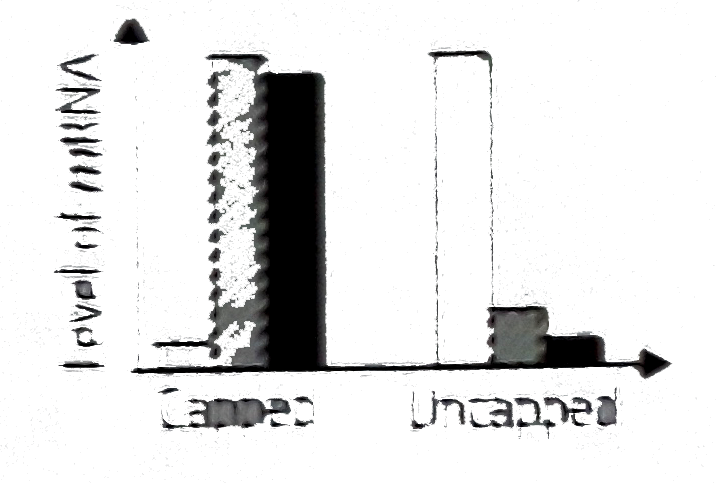
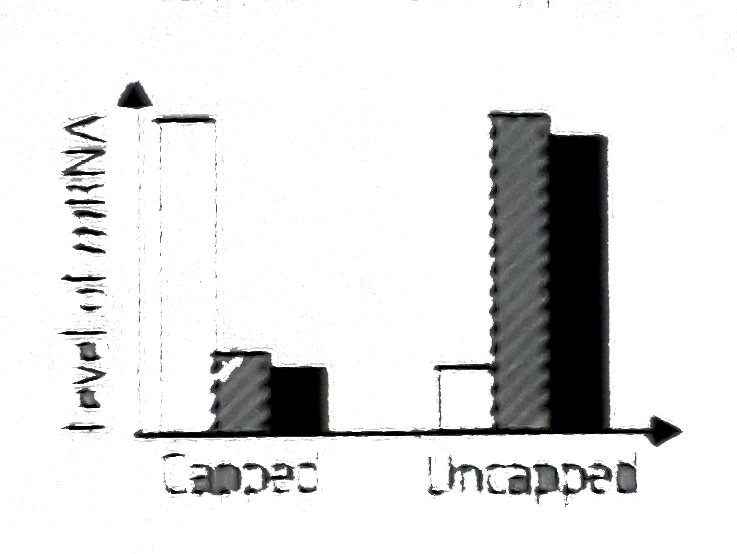
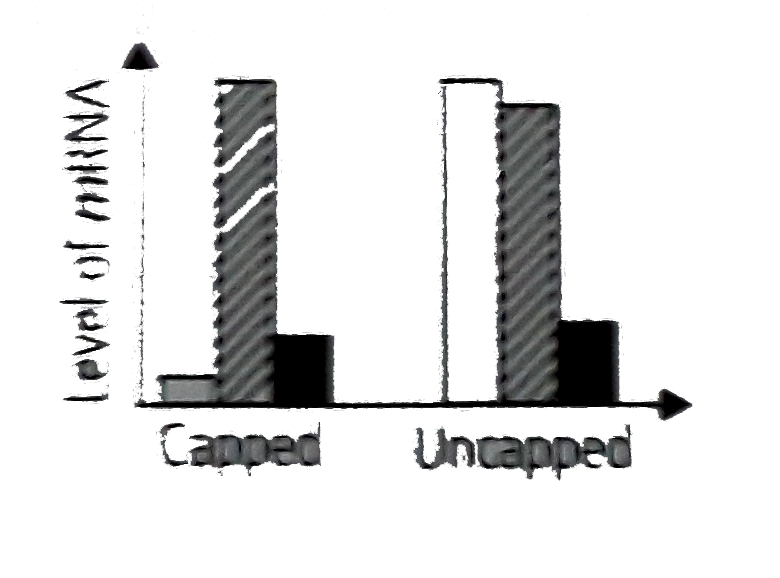
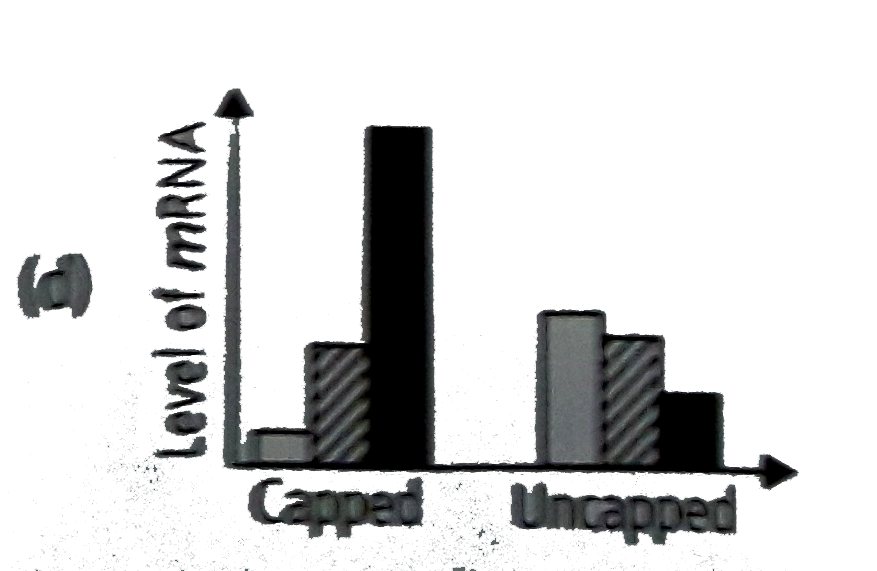
A scientist was studying an in vitro euckaryotic transcription system, which produced both capped and uncapped mRNAs. For an experiment, he incubated these mRNAs with mammalian cell nuclear extract and quantified the different products as shown . Which of the following graphs represents the expected result correctly ?

A

B

C

D

Text Solution

AI Generated Solution

The correct Answer is:

To solve the question regarding the expected results of an in vitro eukaryotic transcription system that produces both capped and uncapped mRNAs, we will analyze the processes involved in mRNA processing and how they relate to the graphs provided. ### Step-by-Step Solution: 1. **Understanding Pre-mRNA**: - Eukaryotic transcripts initially exist as pre-mRNA, which contains both introns and exons. This form is not yet functional and is the starting point for further processing. 2. **Splicing Process**: - The first step in mRNA processing is splicing, where introns are removed, and exons are joined together. This results in spliced mRNA, which is a more stable and functional form of mRNA. 3. **Capping and Polyadenylation**: - After splicing, the next step is capping, where a 7-methylguanylate cap is added to the 5' end of the mRNA. This cap protects the mRNA from degradation and assists in ribosome binding during translation. - Additionally, a polyadenylate (poly-A) tail is added to the 3' end of the mRNA. This tail also contributes to the stability of the mRNA and aids in the export of mRNA from the nucleus to the cytoplasm. 4. **Quantification of mRNA Forms**: - After processing, we can expect to quantify three forms of mRNA: - **Pre-mRNA**: This will be the least abundant since it is the starting material and is rapidly processed. - **Spliced mRNA**: This will be more abundant than pre-mRNA but less than polyadenylated mRNA. - **Polyadenylated mRNA**: This will be the most abundant form, as it represents the final processed and stable mRNA ready for translation. 5. **Analyzing the Graphs**: - When analyzing the graphs, we should look for a representation where: - The quantity of pre-mRNA is the lowest. - The quantity of spliced mRNA is intermediate. - The quantity of polyadenylated mRNA is the highest. - The graph that meets these criteria will represent the expected results correctly. 6. **Conclusion**: - Based on the analysis, the correct graph will show the highest quantity of polyadenylated mRNA, followed by spliced mRNA, and the lowest for pre-mRNA. This corresponds to option D, which accurately reflects the expected results of the experiment.
Promotional Banner

Topper's Solved these Questions

  • MOLECULAR BASIS OF INHERITANCE

    NCERT FINGERTIPS ENGLISH|Exercise NCERT|28 Videos
  • MOLECULAR BASIS OF INHERITANCE

    NCERT FINGERTIPS ENGLISH|Exercise CORNER|15 Videos
  • MOLECULAR BASIS OF INHERITANCE

    NCERT FINGERTIPS ENGLISH|Exercise Molecular Basis Of Inheritance|151 Videos
  • MICROBES IN HUMAN WELFARE

    NCERT FINGERTIPS ENGLISH|Exercise Microbes In Human Welfare|138 Videos
  • ORGANISMS AND POPULATION

    NCERT FINGERTIPS ENGLISH|Exercise Organisms And Population|175 Videos

Similar Questions

Explore conceptually related problems

The existence of negatively charged particle in an atom was shown by J.J. Thomson as a result of the studies of the passage of electricity through gases at extremely low pressure known as discharge tube experiments. When a high voltage of the order of 10,000 volts or more was impressed across the electrodes, some sort of invisible rays moved from the negative electrode to the positive electrode these rays are called as cathode rays. Cathode rays travel in straight path in absence of electrical and magnetic field . Cathode rays consist of material part and charged particles? Cathode rays produce X-rays and light is emitted when they strike on ZnS screen. Cathode rays penetrate through thin sheets of aluminium and other metals . They affect the photogenic plate and passes heating effect when they strike on metal foil. The raito of charge to mass i.e charge/mass is same for all the cathode rays irrespective of the gas used in the tube. The existence of positively charged particle in an atom was shown be E. Goldstein. He repeated the same discharge tube experiments by using a perforated cathode. It was observed that when a high potential difference was applied between the electrodes, not only cathode rays were produced but also a new type of rays were produced simultaneoulsy from anode moving towards cathode and passes through the holes or canal of the cathode. These termed as canal rays or anode rays. These rays travel in straight lines and consists of positively charged particles. These rays have kinetic energy and produces heating effect also. The e/m ratio of these rays is smaller than that of electrons. Unlike cathode rays, their e/m value is dependent upon the nature of the gas taken in the tube. These rays produced flashes of light on ZnS screen and can pass throughs thin metal foils. They can produce physical and chemical changes and are capable to produce ionisation in gases. Which is not true with respect to cathode rays?
