Home
Class 11
PHYSICS
Which one of the following plots represe...

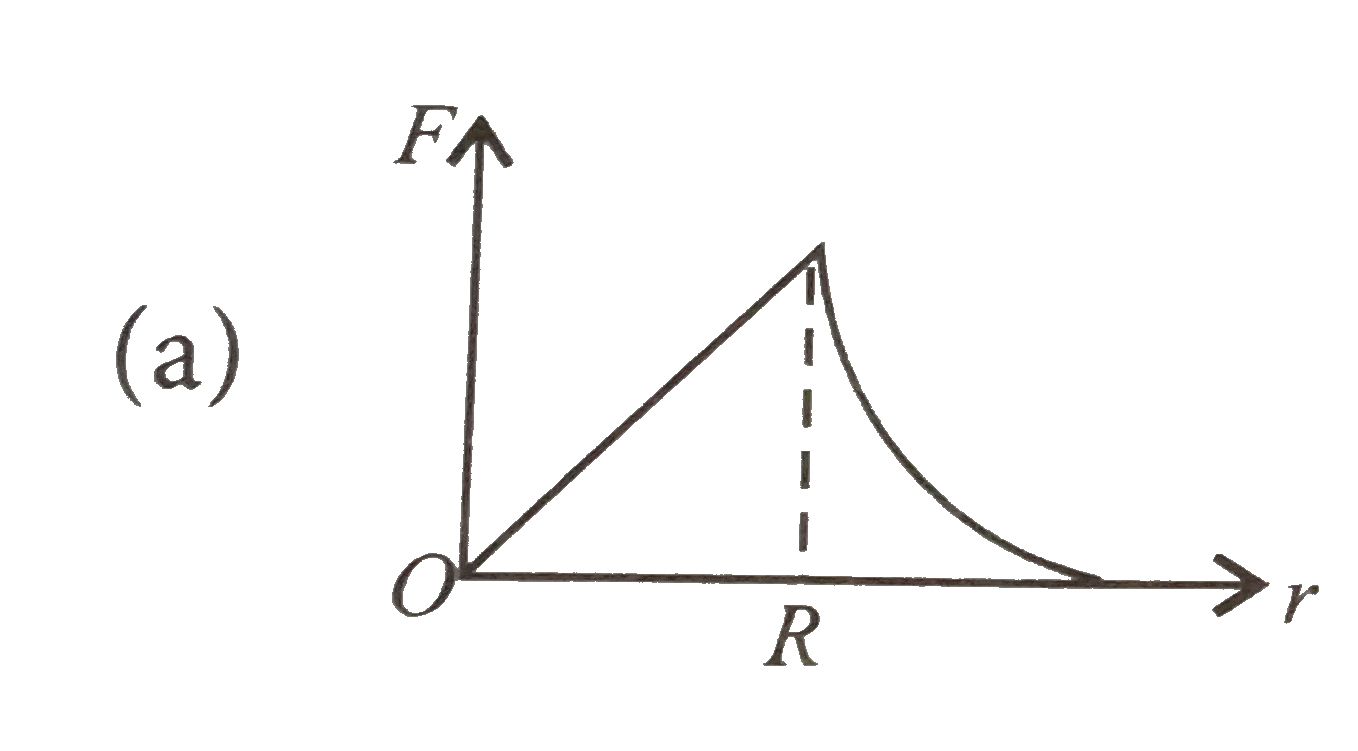
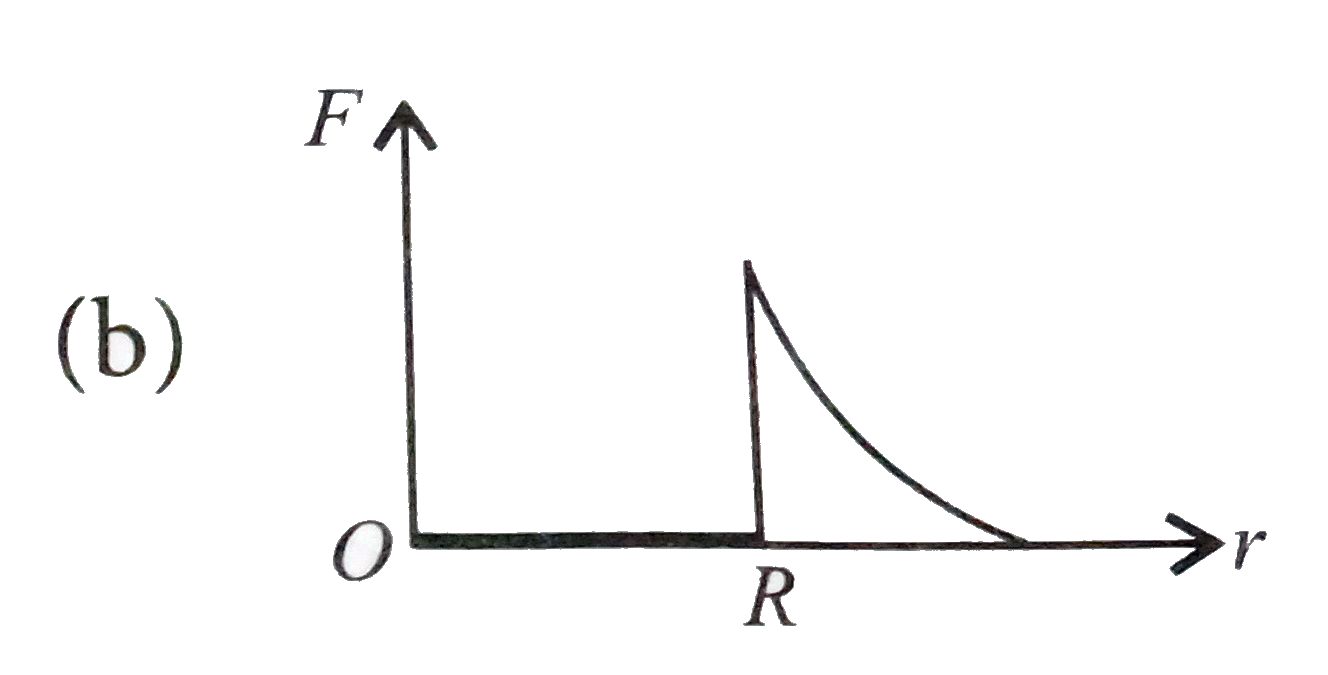
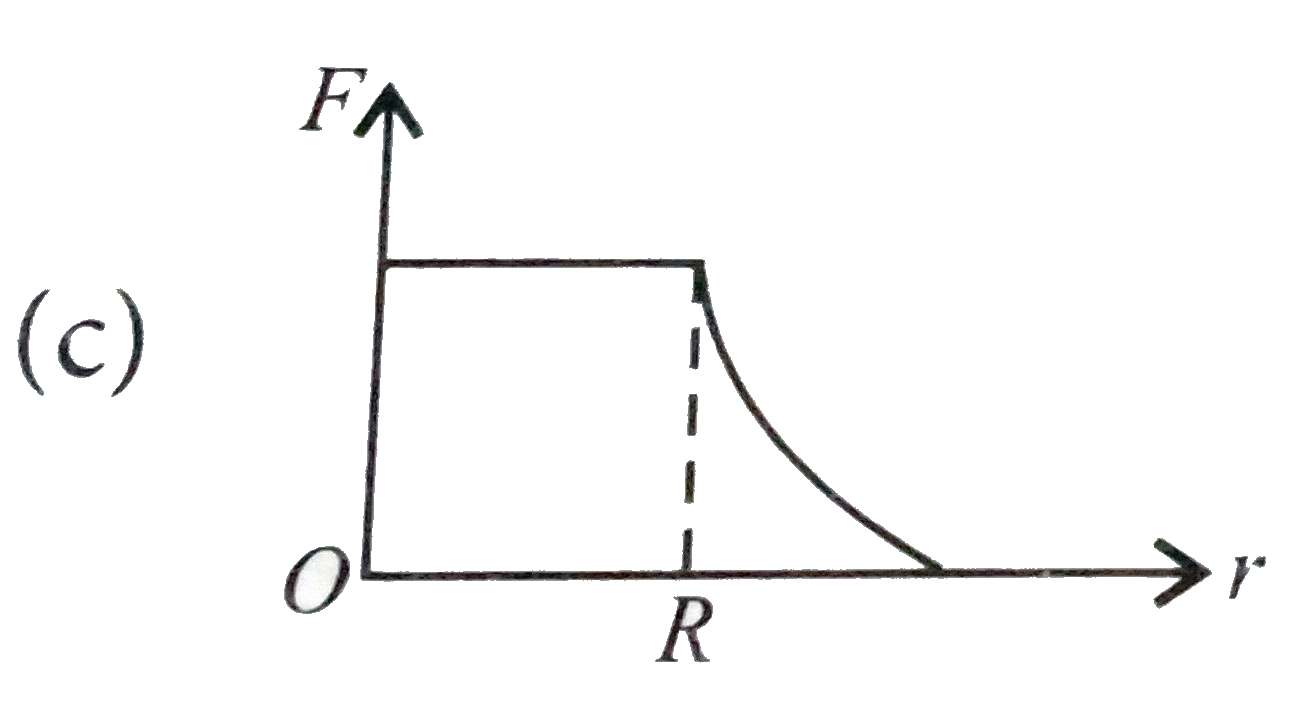
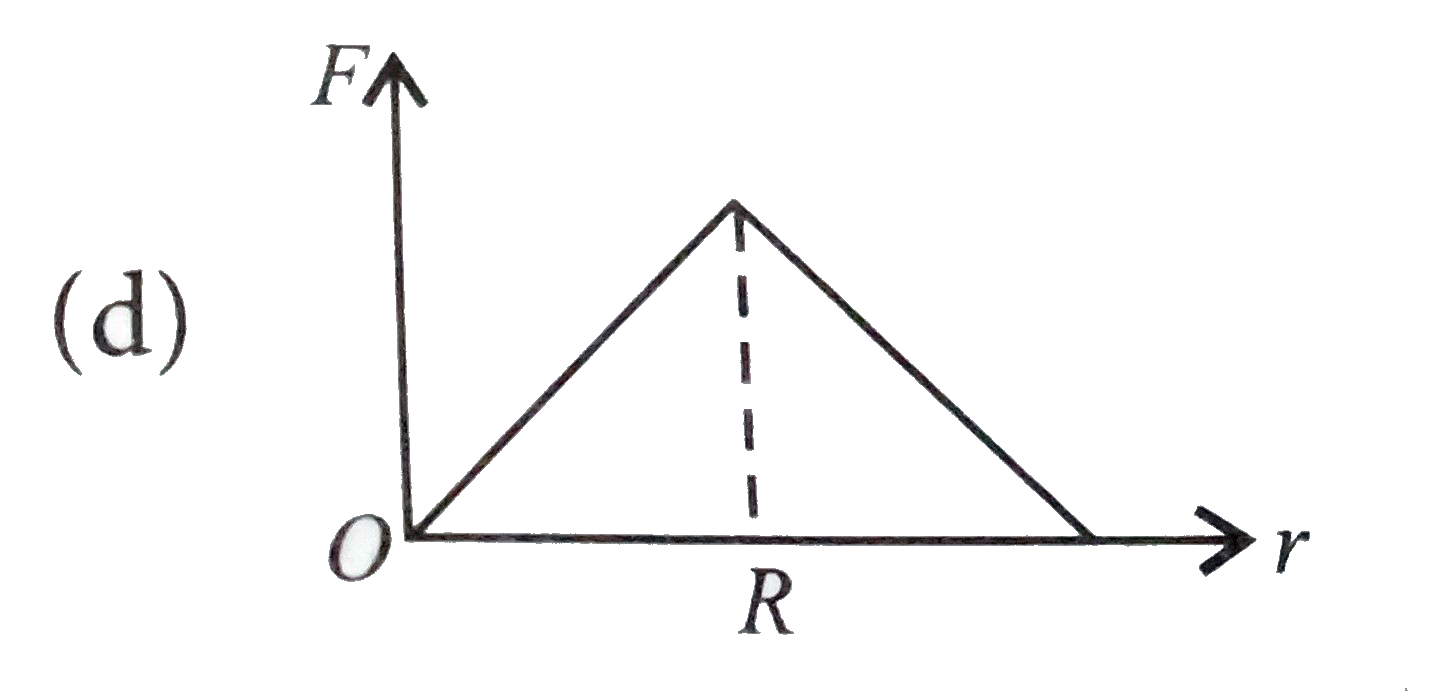
Which one of the following plots represents the variation of the gravitational field on a particle with distance `r` due to a thin spherical shell of raduis `R`? (`r` is measured from the centre of the spherical shell).

A

B

C

D

Text Solution

AI Generated Solution

The correct Answer is:

To determine the variation of the gravitational field \( E \) on a particle with distance \( r \) due to a thin spherical shell of radius \( R \), we can analyze the gravitational field both inside and outside the shell. ### Step-by-Step Solution: 1. **Understanding the Setup**: - We have a thin spherical shell with radius \( R \). - We need to find the gravitational field at a distance \( r \) from the center of the shell. 2. **Inside the Shell** (\( r < R \)): - According to the shell theorem, the gravitational field inside a thin spherical shell is zero. - Therefore, for any point inside the shell (i.e., \( r < R \)), the gravitational field \( E \) is: \[ E = 0 \] 3. **Outside the Shell** (\( r \geq R \)): - For points outside the shell, the gravitational field behaves as if all the mass of the shell were concentrated at its center. - The gravitational field \( E \) at a distance \( r \) from the center is given by: \[ E = \frac{G M}{r^2} \] - Here, \( M \) is the total mass of the shell, and \( G \) is the gravitational constant. 4. **Graphing the Gravitational Field**: - For \( r < R \): The gravitational field \( E = 0 \). - For \( r = R \): The gravitational field starts to decrease as \( \frac{1}{r^2} \). - For \( r > R \): The gravitational field decreases inversely with the square of the distance. 5. **Conclusion**: - The graph of the gravitational field \( E \) versus distance \( r \) will be zero for \( r < R \) and will decrease as \( \frac{1}{r^2} \) for \( r \geq R \). - Thus, the correct plot representing this variation is option **B**.

To determine the variation of the gravitational field \( E \) on a particle with distance \( r \) due to a thin spherical shell of radius \( R \), we can analyze the gravitational field both inside and outside the shell. ### Step-by-Step Solution: 1. **Understanding the Setup**: - We have a thin spherical shell with radius \( R \). - We need to find the gravitational field at a distance \( r \) from the center of the shell. ...
Promotional Banner

Topper's Solved these Questions

  • GRAVITATION

    NCERT FINGERTIPS ENGLISH|Exercise HOTS|10 Videos
  • GRAVITATION

    NCERT FINGERTIPS ENGLISH|Exercise NCERT Exemplear Problems.|8 Videos
  • GRAVITATION

    NCERT FINGERTIPS ENGLISH|Exercise Weightlessness|2 Videos
  • KINETIC THEORY

    NCERT FINGERTIPS ENGLISH|Exercise Assertion And Reason|10 Videos

Similar Questions

Explore conceptually related problems

Which one of the following graphs represents the variation of electric field with distance r from the centre of a charged spherical conductor of radius R?

Following curve shows the variation of intesity of gravitational field (vec(I)) with distance from the centre of solid sphere(r) :

Find the gravitational potential due to a spherical shell of mass M and radius R at r lt R and r gt R , where r is the distance from the centre of the shell.

The electric field at a distance 3R//2 from the centre of a charge conducting spherical shell of radius R is E . The electric field at a distance R//2 from the centre of the sphere is

The electric field at a distance 3R//2 from the centre of a charge conducting spherical shell of radius R is E . The electric field at a distance R//2 from the centre of the sphere is

A particle of mass M is at a distance a from surface of a thin spherical shell of equal mass and having radius a .

A particle of mass M is at a distance a from surface of a thin spherical shell of equal mass and having radius a .

The electrostatic potential of a uniformly charged thin spherical shell of charge Q and radius R at a distance r from the centre

Intensity of gravitational field inside the hollow spherical shell is

A body of mass m is placed at the centre of the spherical shell of radius R and mass M. The gravitation potential on the surface of the shell is
