Home
Class 11
PHYSICS
A block of ice at -10^@C is slowly heate...

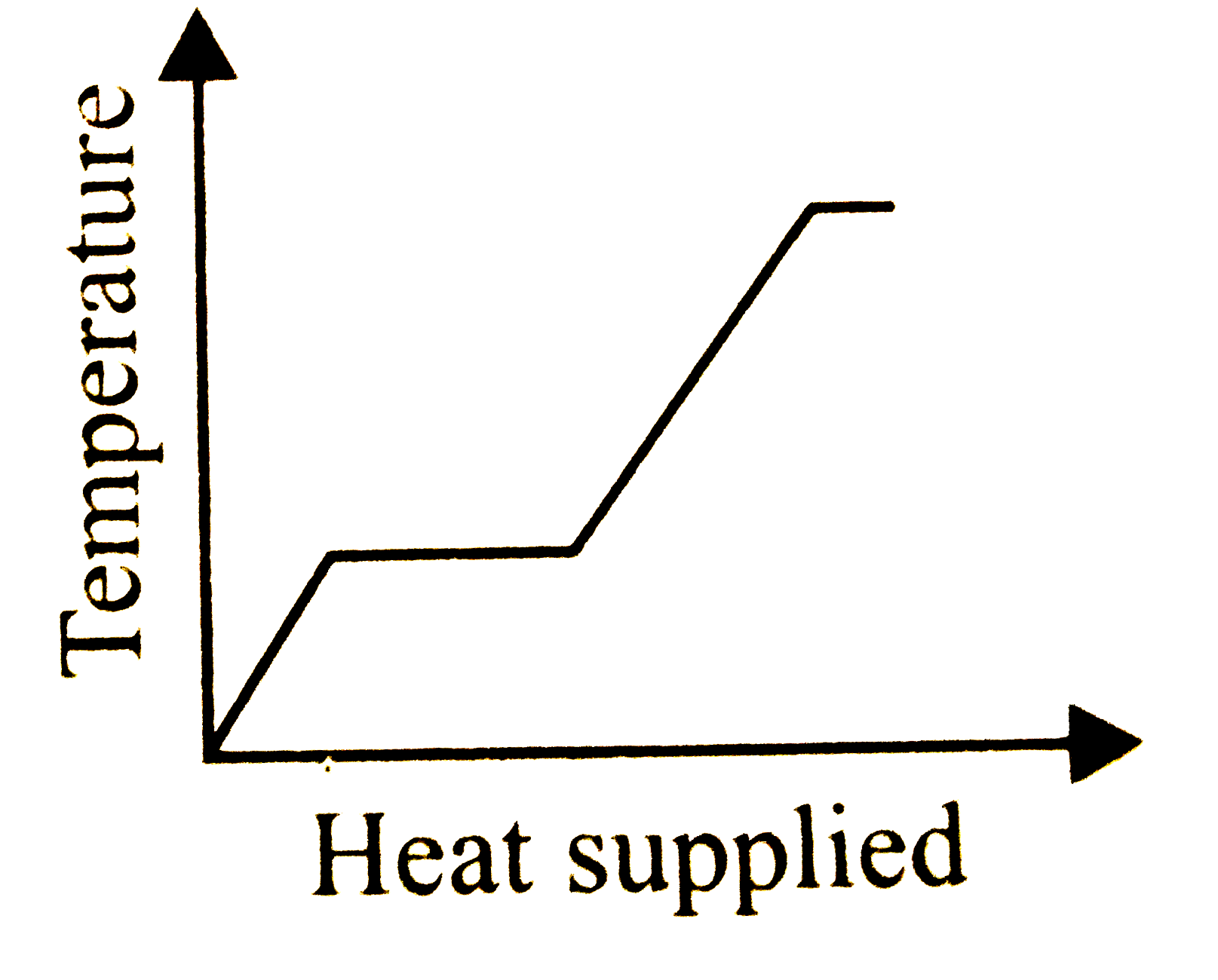
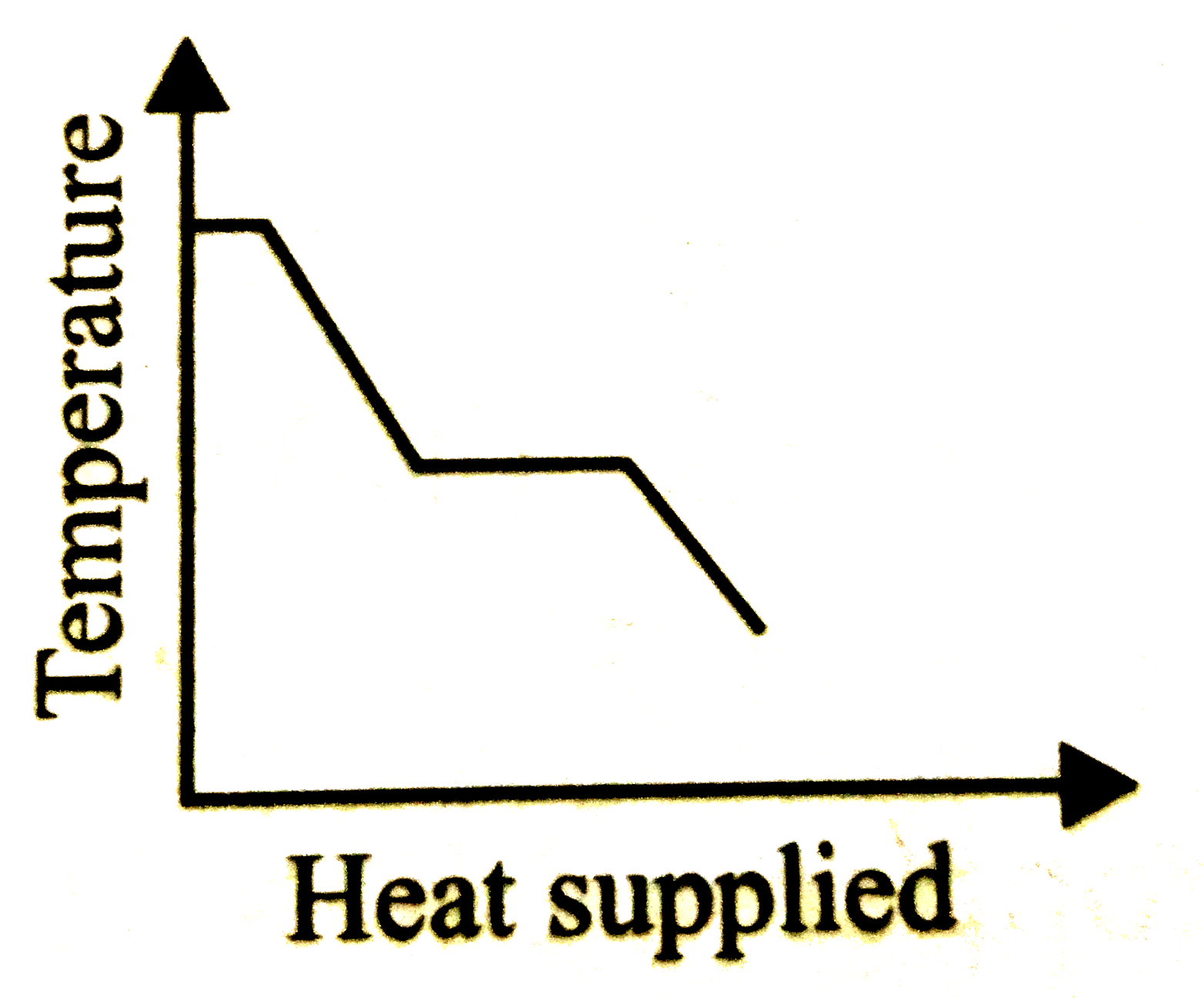
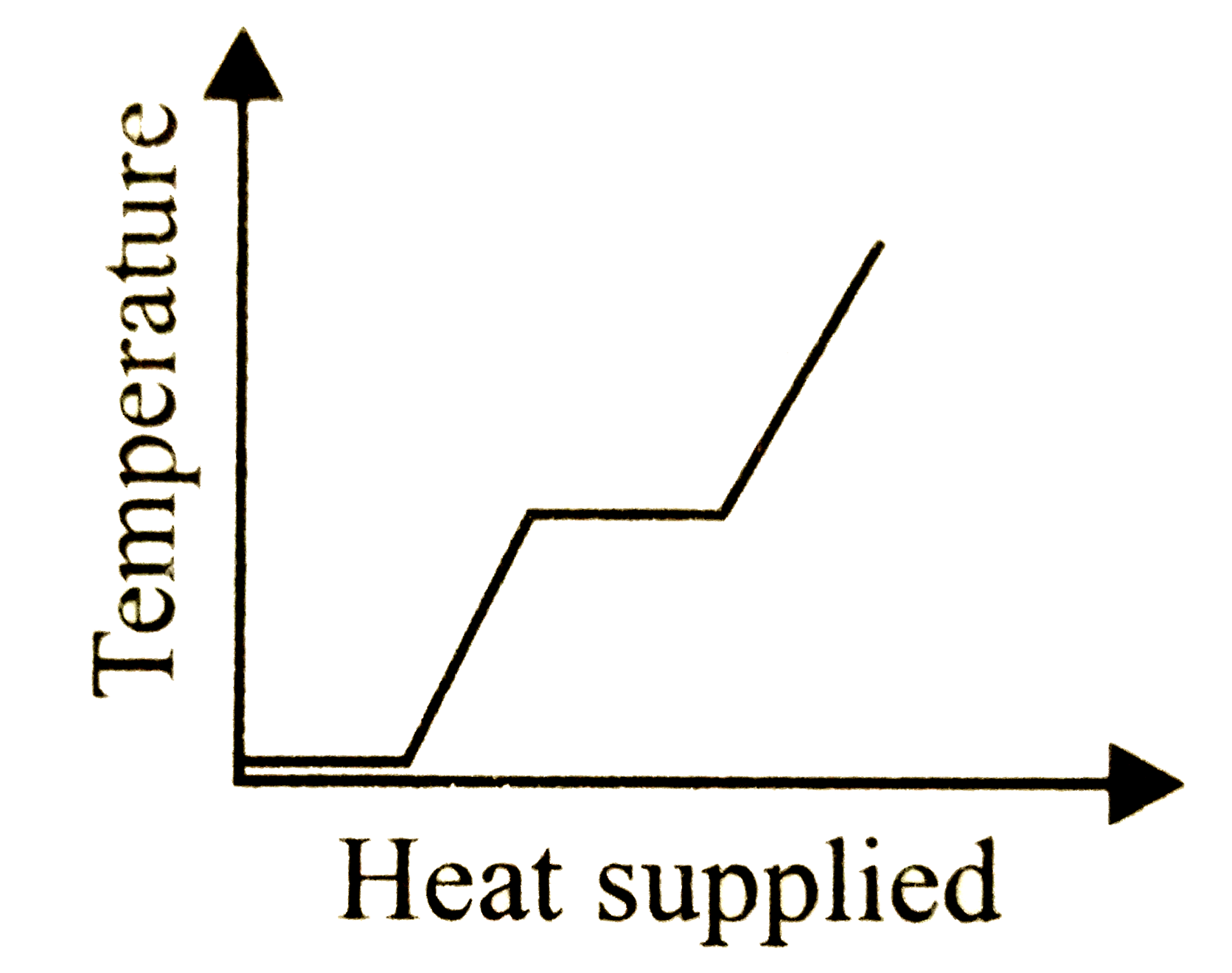
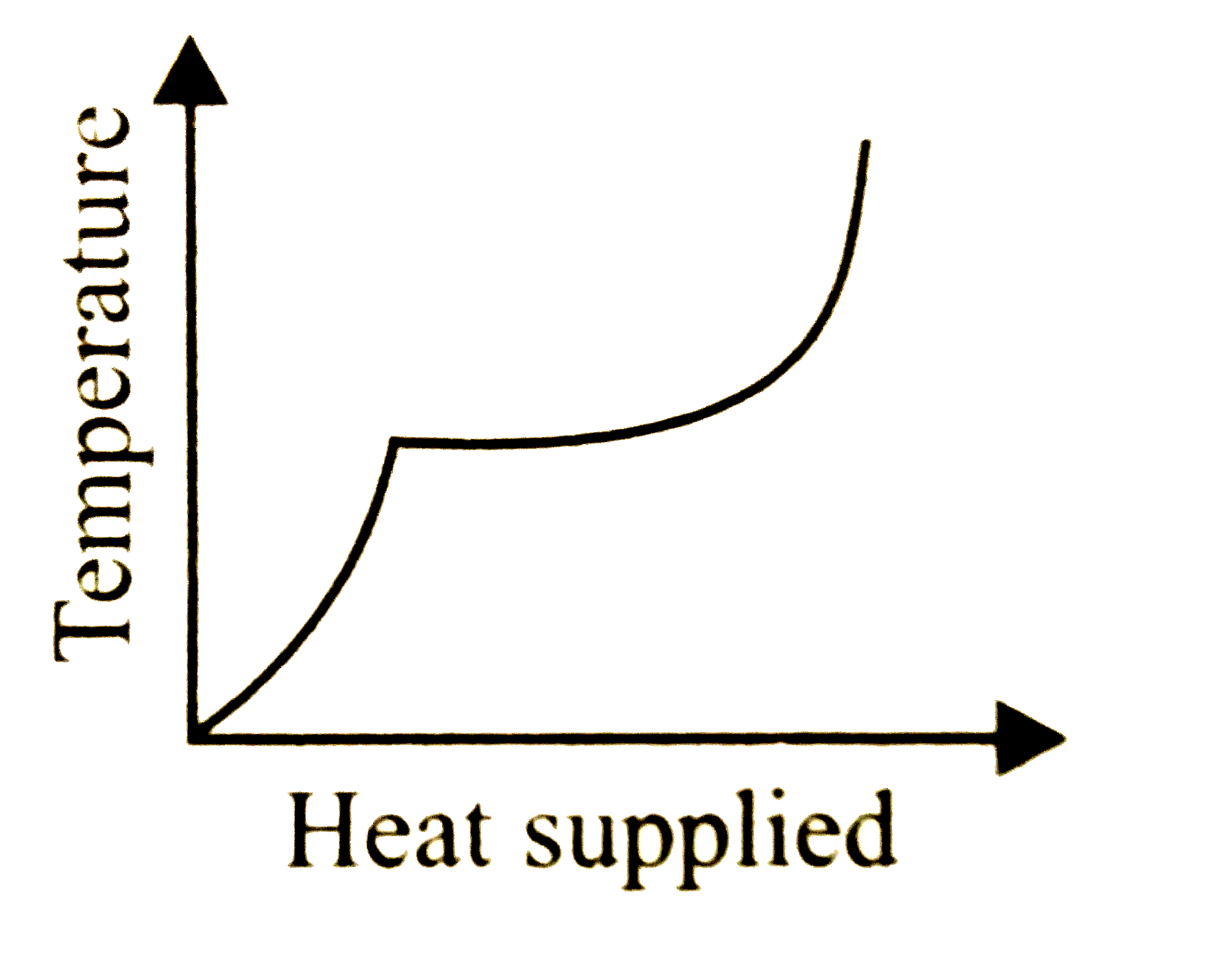
A block of ice at `-10^@C` is slowly heated and converted to steam at `100^@C.` Which of the following curves represents the phenomenon qualitatively?

A

B

C

D

Text Solution

AI Generated Solution

The correct Answer is:

To solve the problem of heating a block of ice at -10°C to steam at 100°C, we will analyze the process step by step and represent it qualitatively on a graph. ### Step 1: Heating the Ice from -10°C to 0°C - **Initial State**: The block of ice is at -10°C. - **Process**: As we apply heat, the temperature of the ice increases until it reaches 0°C. - **Graph Representation**: This part of the graph will show a linear increase in temperature with respect to heat added. ### Step 2: Melting the Ice at 0°C - **State Change**: At 0°C, the ice begins to melt into water. - **Process**: During this phase, the temperature remains constant at 0°C while the ice absorbs latent heat. - **Graph Representation**: This will be a horizontal line on the graph, indicating that temperature does not change while heat is being absorbed. ### Step 3: Heating the Water from 0°C to 100°C - **Process**: After all the ice has melted, the temperature of the water increases from 0°C to 100°C. - **Graph Representation**: This part of the graph will again show a linear increase in temperature with respect to heat added. ### Step 4: Converting Water to Steam at 100°C - **State Change**: At 100°C, the water begins to convert into steam. - **Process**: During this phase, the temperature remains constant at 100°C while the water absorbs latent heat. - **Graph Representation**: This will again be a horizontal line on the graph, indicating that temperature does not change while heat is being absorbed. ### Step 5: Final State - **Final State**: After all the water has turned into steam, the process can continue if more heat is added, but for this question, we stop here. - **Graph Representation**: The graph ends after the horizontal line at 100°C. ### Summary of the Graph - The graph will consist of: 1. A sloped line from -10°C to 0°C (heating the ice). 2. A horizontal line at 0°C (melting the ice). 3. A sloped line from 0°C to 100°C (heating the water). 4. A horizontal line at 100°C (boiling the water to steam). ### Conclusion Based on the above analysis, the correct qualitative representation of the phenomenon is option **A**. ---

To solve the problem of heating a block of ice at -10°C to steam at 100°C, we will analyze the process step by step and represent it qualitatively on a graph. ### Step 1: Heating the Ice from -10°C to 0°C - **Initial State**: The block of ice is at -10°C. - **Process**: As we apply heat, the temperature of the ice increases until it reaches 0°C. - **Graph Representation**: This part of the graph will show a linear increase in temperature with respect to heat added. ### Step 2: Melting the Ice at 0°C ...
Promotional Banner

Topper's Solved these Questions

  • THERMAL PROPERTIES OF MATTER

    NCERT FINGERTIPS ENGLISH|Exercise Heat Transper|29 Videos
  • THERMAL PROPERTIES OF MATTER

    NCERT FINGERTIPS ENGLISH|Exercise Higher Order|8 Videos
  • THERMAL PROPERTIES OF MATTER

    NCERT FINGERTIPS ENGLISH|Exercise Calorimetery|4 Videos
  • SYSTEM OF PARTICLES AND ROTATIONAL MOTIONS

    NCERT FINGERTIPS ENGLISH|Exercise NCERT Exemplar|8 Videos
  • THERMODYNAMICS

    NCERT FINGERTIPS ENGLISH|Exercise Assertion And Reason|15 Videos

Similar Questions

Explore conceptually related problems

A block of ice at -12^(@)C is slowly heated and converted into steam at 100^(@)C . Which of the following curves best represents the event ?

If 1kg ice at 0°C is mixed with 200g steam at 100°C , then which of the following option is correct?

5g ice at 0^(@)C is mixed with 5g of steam at 100^(@)C . What is the final temperature?

1 g of water at 100^(@)C is completely converted into steam at 100^(@)C . 1g of steam occupies a volume of 1650cc. (Neglect the volume of 1g of water at 100^(@)C ). At the pressure of 10^5N//m^2 , latent heat of steam is 540 cal/g (1 Calorie=4.2 joules). The increase in the internal energy in joules is

A certain mass of ice at 0^@C is converted to steam at 100^@C by constant heating, Draw temperature-time graph showing the change in phases.

100 g ice at 0^(@)C is mixed with 10 g steam at 100^(@)C . Find the final temperature.

A slab of ice at 0^@ C is constantly heated till the steam is formed at 100^@ C. Draw a graph showing the change in temperature with time. Label the various parts of the graph properly.

One kilowatt electric heater is to be used with 220V d.c. supply. (i) What is the current in the heater? (ii) What is lts resistance? (iii) what is the power dissipated in the heater? (iv) How much heat in calories is produced per second? (v) How many grams of water at 100^(@)C will be converted per minute into steam at 100^(@)C , with the heater? Assume that the heat losses due to radiation are negligible. Latent heat of steam=540cal per gram.
