Home
Class 12
PHYSICS
The graph of the total number of alpha-p...

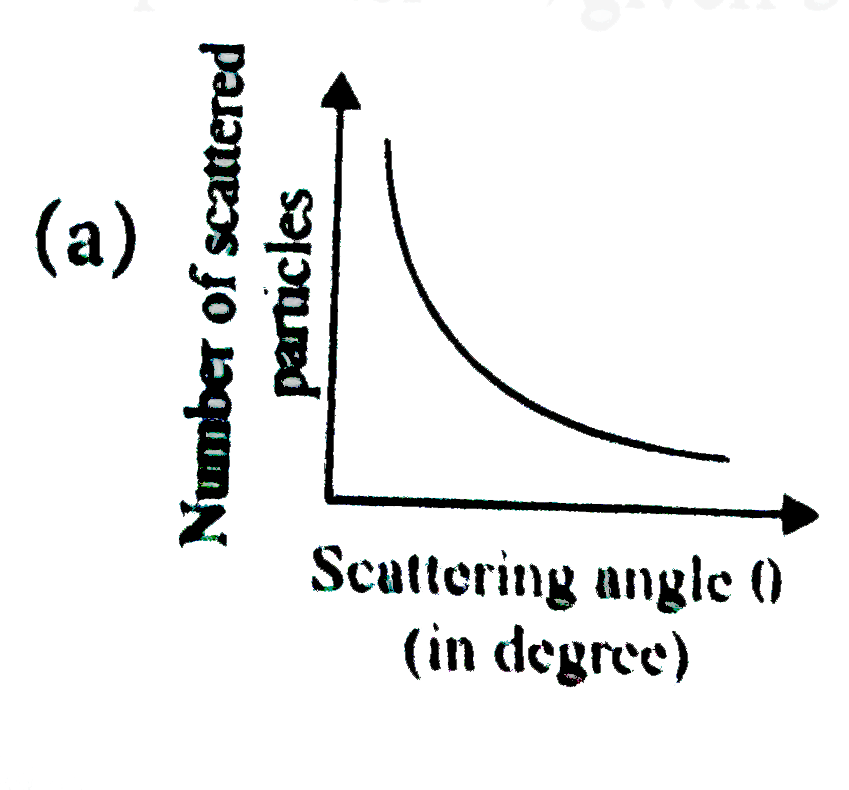
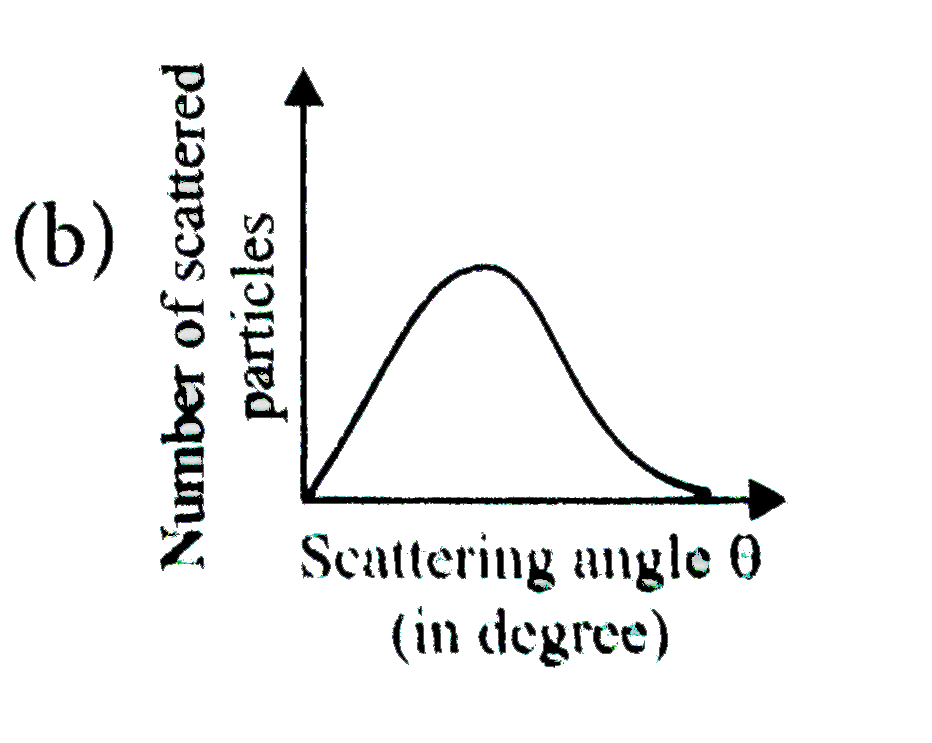
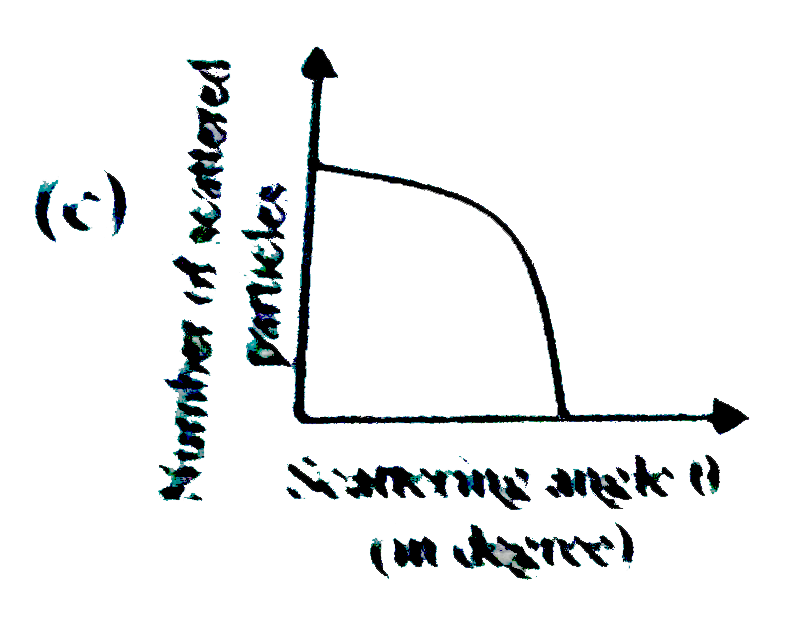
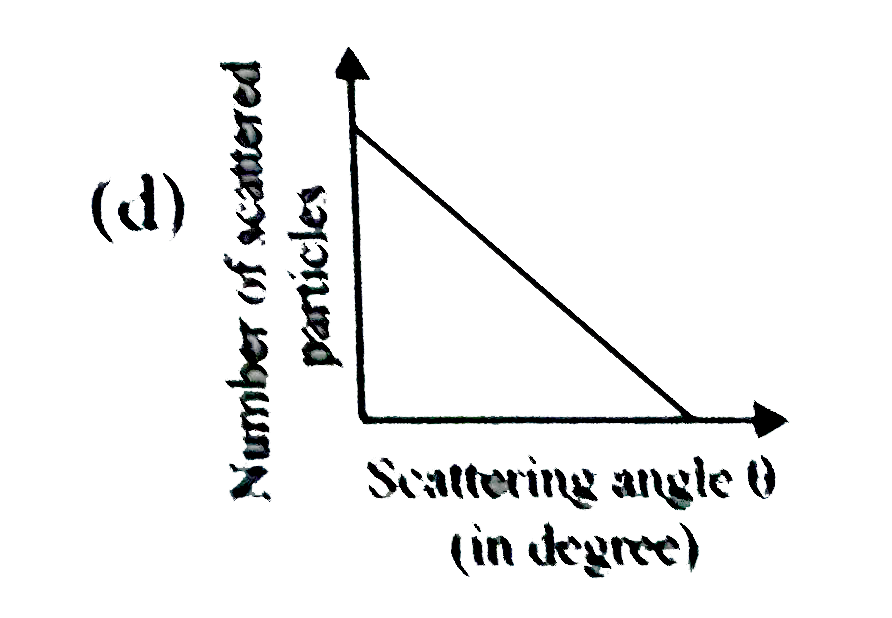
The graph of the total number of `alpha`-particles scattered at different angles in a given interval of time for `alpha`- particles scattering in the geiger- marsden experiment is given by

A

B

C

D

Text Solution

AI Generated Solution

The correct Answer is:

To solve the question regarding the graph of the total number of alpha particles scattered at different angles in the Geiger-Marsden experiment, we can follow these steps: ### Step 1: Understand the Geiger-Marsden Experiment The Geiger-Marsden experiment, also known as the Rutherford gold foil experiment, was designed to probe the structure of the atom. In this experiment, alpha particles were directed at a thin foil of gold, and the scattering of these particles was observed. ### Step 2: Identify the Variables In the context of the question: - The x-axis represents the scattering angle (θ). - The y-axis represents the total number of alpha particles scattered. ### Step 3: Analyze the Scattering Pattern From the experiment, we know that: - At small angles (close to 0°), a large number of alpha particles are scattered. - As the angle increases, the number of scattered alpha particles decreases initially. - At larger angles, there is a small increase in the number of particles scattered due to a few particles scattering at larger angles. ### Step 4: Graph Characteristics Based on the above analysis, the graph will show: - A decrease in the number of scattered particles for small angles. - A minimum point followed by an increase in the number of scattered particles at larger angles. ### Step 5: Choose the Correct Graph Among the given options, we need to find a graph that reflects this behavior: - The correct graph will start high at small angles, decrease to a minimum, and then increase again. ### Conclusion The graph that best represents the scattering of alpha particles in the Geiger-Marsden experiment is the one that shows a decrease followed by an increase in the number of scattered particles as the scattering angle increases. Therefore, the correct option is **Option A**. ---

To solve the question regarding the graph of the total number of alpha particles scattered at different angles in the Geiger-Marsden experiment, we can follow these steps: ### Step 1: Understand the Geiger-Marsden Experiment The Geiger-Marsden experiment, also known as the Rutherford gold foil experiment, was designed to probe the structure of the atom. In this experiment, alpha particles were directed at a thin foil of gold, and the scattering of these particles was observed. ### Step 2: Identify the Variables In the context of the question: - The x-axis represents the scattering angle (θ). ...
Promotional Banner

Topper's Solved these Questions

  • ATOMS

    NCERT FINGERTIPS ENGLISH|Exercise Higher order thinking skills|8 Videos
  • ATOMS

    NCERT FINGERTIPS ENGLISH|Exercise NCERT Examplar problems|7 Videos
  • ALTERNATING CURRENT

    NCERT FINGERTIPS ENGLISH|Exercise Assertion And Reason|15 Videos
  • COMMUNITCATION SYSTEMS

    NCERT FINGERTIPS ENGLISH|Exercise Assertion And Reason|30 Videos

Similar Questions

Explore conceptually related problems

Rutherford's alpha-particle scattering experiment discovered

Source of alpha -particles used in scattering experiment was

The path of the scattered alpha – particles is

Energy of the beam of alpha -particles used by Geiger and Marsden in scattering experiment is

Thickness of the foil of gold used in alpha -particle scattering experiment is

Rutherford's alpha( alpha ) particles scattering experiment resulted into discovery of

The magintude of displacemnt is equal to the distance coverd in a given interval of time if the particle .

From the alpha - particle scattering experiment Rutherford concluded that

The number of alpha -particless scattered per unit area N (theta) at scattering angle theta varies inversely as

The area under velocity-time graph for a particle in a given interval of time represnets

NCERT FINGERTIPS ENGLISH-ATOMS -Assertion And Reason
  1. The graph of the total number of alpha-particles scattered at differen...

    Text Solution

    |

  2. (A) atoms of each element are stable and emit characteristic spectrum....

    Text Solution

    |

  3. (A) atom as a whole is electrically neutral. (R)atom contains equal ...

    Text Solution

    |

  4. (A) according to classical electromagnetic theory an accelerated parti...

    Text Solution

    |

  5. (A) in alpha particle scattering number of alpha paritcle undergoing h...

    Text Solution

    |

  6. (A) most of the mass of the atom is concentrated in its nucleus. (R)...

    Text Solution

    |

  7. (A) the trajetory traced by an incident particle depends on the impact...

    Text Solution

    |

  8. (A) in the experiment of alpha particle scattering, extremely thin gol...

    Text Solution

    |

  9. (A) the total energy of an electron revolving in any stationary orbit ...

    Text Solution

    |

  10. Statement -1 : Large angle scattering of alpha particles led to the di...

    Text Solution

    |

  11. Assertion: For the scattering of alpha-particles at a large angles, on...

    Text Solution

    |

  12. Assertion: Hydrogen atom consists of anly one electron but its emissio...

    Text Solution

    |

  13. (A) bohr model can not be extended to two or more electron atoms. (R...

    Text Solution

    |

  14. Assertion: Bohr had to postulate that the electrons in stationary orbi...

    Text Solution

    |

  15. (A) bohr's third postulaate states that the stationary orbits are thos...

    Text Solution

    |

  16. Assertion: Electrons in the atom are held due to coulomb forces. Rea...

    Text Solution

    |
